Wang Zhuqing, McSwiggin Hayden, Newkirk Simon J, Wang Yue, Oliver Daniel, Tang Chong, Lee Sandy, Wang Shawn, Yuan Shuiqiao, Zheng Huili, Ye Ping, An Wenfeng, Yan Wei
1Department of Physiology and Cell Biology, University of Nevada School of Medicine Center for Molecular Medicine, Room 207B 1664 North Virginia Street MS/0575, Reno, NV 89557 USA.
3Department of Pharmaceutical Sciences, South Dakota State University, Brookings, SD 57007 USA.
Mob DNA. 2019 May 3;10:17. doi: 10.1186/s13100-019-0162-7. eCollection 2019.
Transposable elements (TEs) make up > 50% of the human genome, and the majority of retrotransposon insertions are truncated and many are located in introns. However, the effects of retrotransposition on the host genes remain incompletely known.
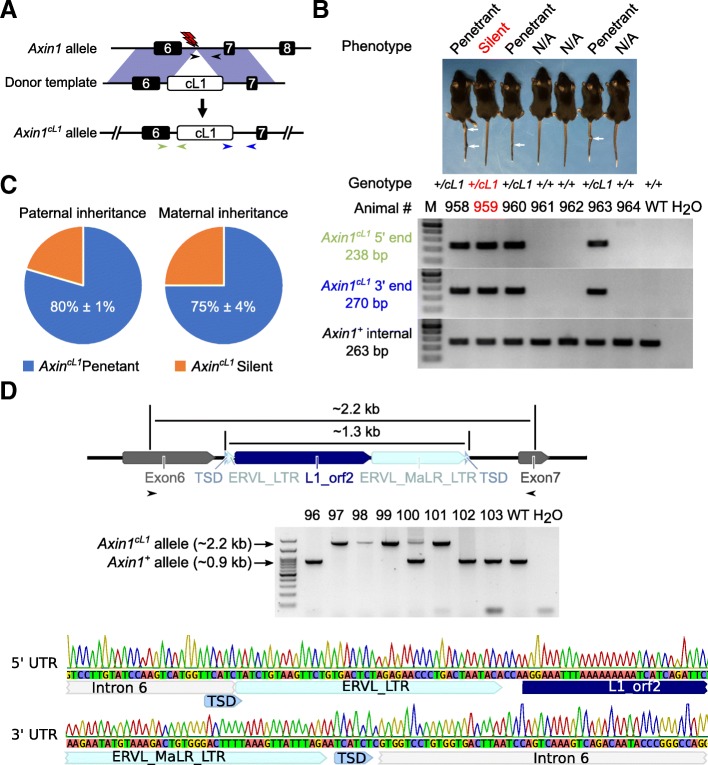
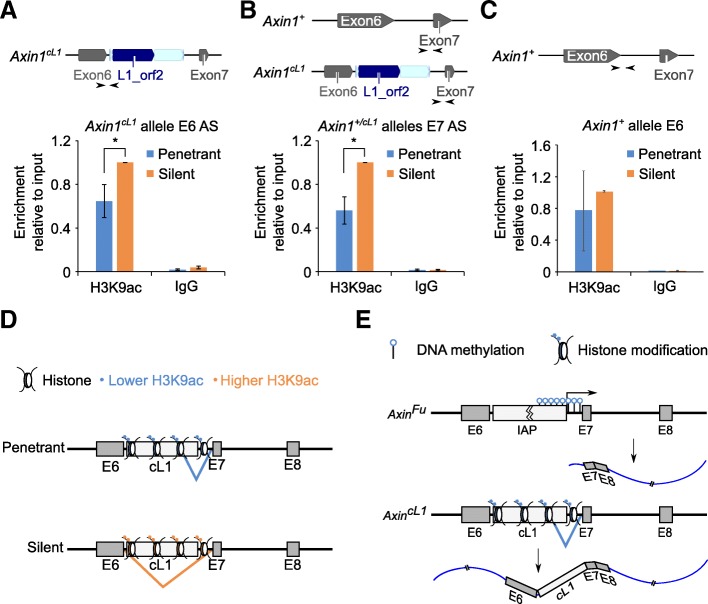
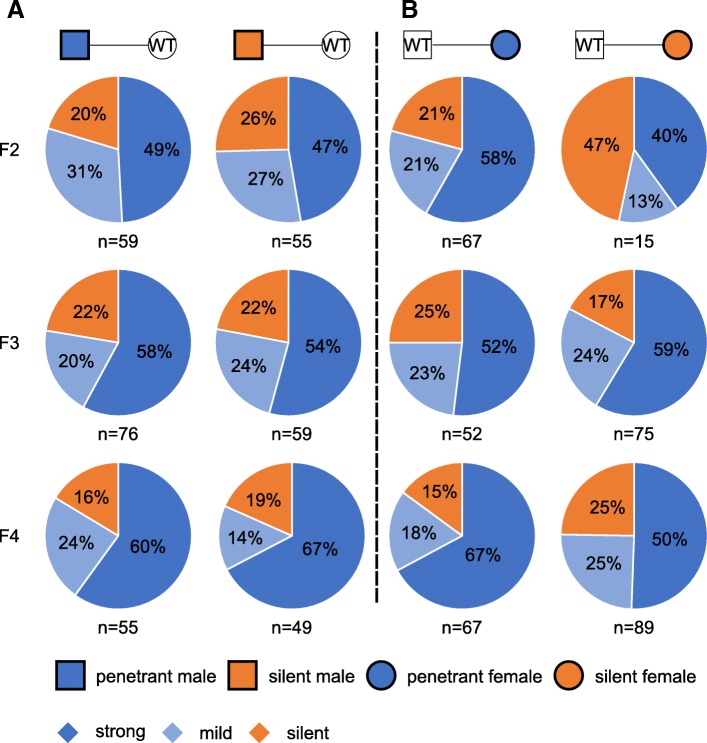
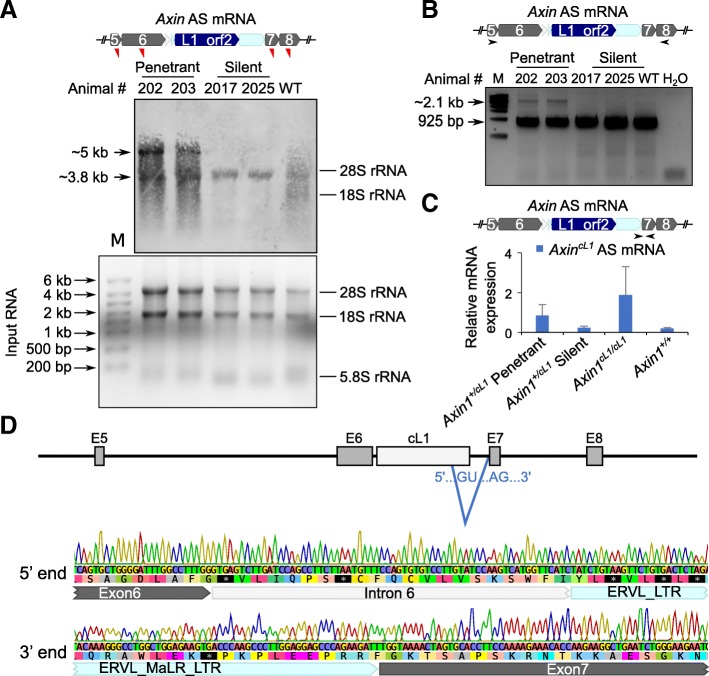
We report here that insertion of a chimeric L1 (cL1), but not IAP solo LTR, into intron 6 of using CRIPSR/Cas9 induced the kinky tail phenotype with ~ 80% penetrance in heterozygous mice. Both penetrant (with kinky tails) and silent (without kinky tails) mice, regardless of sex, could transmit the phenotype to subsequent generations with similar penetrance (~ 80%). Further analyses revealed that a longer transcript isoform containing partial cL1-targeted intron was present in penetrant, but absent in silent and wild type mice, and the production of this unique transcript appeared to correlate with altered levels of an activating histone modification, H3K9ac.
The mechanism for mice is different from those previously identified in mice with spontaneous retrotransposition of IAP, e.g., and , both of which have been associated with DNA methylation changes. Our data suggest that locus is sensitive to genetic and epigenetic alteration by retrotransposons and thus, ideally suited for studying the effects of new retrotransposition events on target gene function in mice.
转座元件(TEs)占人类基因组的比例超过50%,大多数逆转录转座子插入是截断的,且许多位于内含子中。然而,逆转录转座对宿主基因的影响仍不完全清楚。
我们在此报告,通过CRISPR/Cas9将嵌合L1(cL1)而非IAP单独长末端重复序列插入 的内含子6中,在杂合 小鼠中诱导出约80%外显率的扭尾表型。有扭尾的外显型小鼠和无扭尾的沉默型小鼠,无论性别如何,都能将该表型以相似的外显率(约80%)传递给后代。进一步分析表明,在有扭尾的外显型小鼠中存在一种较长的 转录本异构体,其包含部分cL1靶向的内含子,而在沉默型和野生型小鼠中不存在,这种独特 转录本的产生似乎与激活组蛋白修饰H3K9ac水平的改变相关。
小鼠的机制与先前在IAP自发逆转录转座的小鼠(如 和 )中所鉴定的机制不同,后两者均与DNA甲基化变化有关。我们的数据表明, 位点对逆转录转座子引起的遗传和表观遗传改变敏感,因此,非常适合用于研究新的逆转录转座事件对小鼠靶基因功能的影响。