Carletto Sara, Porcaro Camillo, Settanta Carmen, Vizzari Vincenzo, Stanizzo Maria Rosa, Oliva Francesco, Torta Riccardo, Fernandez Isabel, Coletti Moja Mario, Pagani Marco, Ostacoli Luca
Department of Clinical and Biological Sciences, University of Turin, Turin, Italy.
Institute of Cognitive Sciences and Technologies, Consiglio Nazionale delle Ricerche, Rome, Italy.
Eur J Psychotraumatol. 2019 Apr 25;10(1):1600832. doi: 10.1080/20008198.2019.1600832. eCollection 2019.
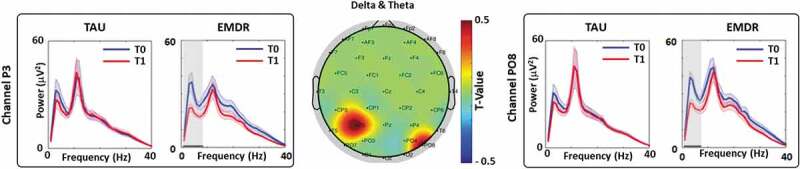
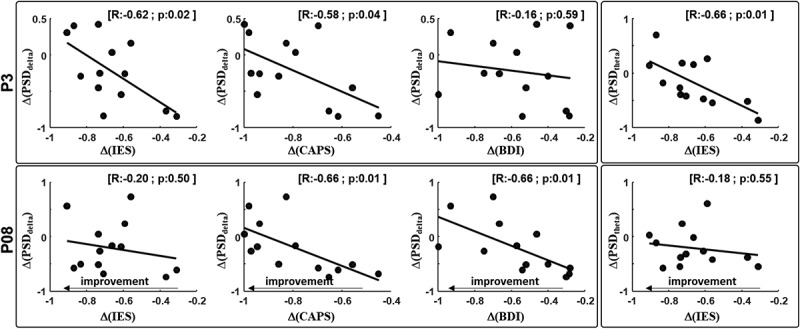
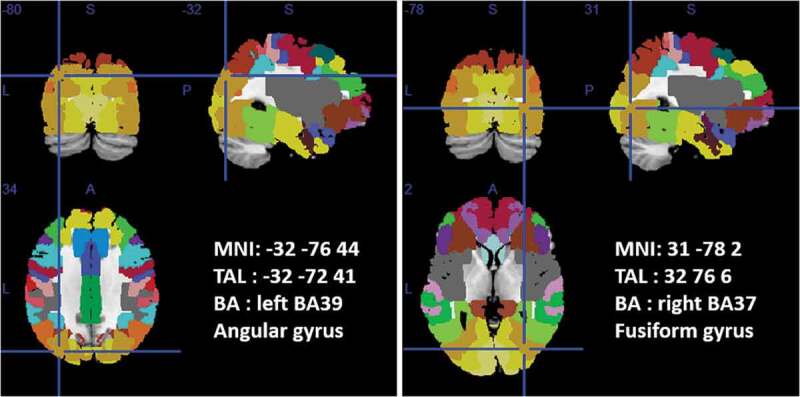
: Breast cancer (BC) is one of the most common invasive types of cancer among women, with important consequences on both physical and psychological functioning. Patients with BC have a great risk of developing posttraumatic stress disorder (PTSD), but few studies have evaluated the efficacy of psychological interventions to treat it. Furthermore, no neuroimaging studies have evaluated the neurobiological effects of psychotherapeutic treatment for BC-related PTSD. : The study aimed to evaluate the efficacy of Eye Movement Desensitization and Reprocessing therapy (EMDR) as compared to Treatment as Usual (TAU) in BC patients with PTSD, identifying by electroencephalography (EEG) the neurophysiological changes underlying treatments effect and their correlation with clinical symptoms. : Thirty patients with BC and PTSD diagnosis were included, receiving either EMDR ( 15) or TAU ( 15). Patients were assessed before and after treatments with clinical questionnaires and EEG. The proportion of patients who no longer meet criteria for PTSD after the intervention and changes in clinical scores, both between and within groups, were evaluated. Two-sample permutation -tests among EEG channels were performed to investigate differences in power spectral density between groups. Pearson correlation analysis was carried out between power bands and clinical scores. : At post-treatment, all patients treated with EMDR no longer met criteria for PTSD, while all patients treated with TAU maintained the diagnosis. A significant decrease in depressive symptoms was found only in the EMDR group, while anxiety remained stable in all patients. EEG results corroborated these findings, showing significant differences in delta and theta bands in left angular and right fusiform gyri only in the EMDR group. : It is essential to detect PTSD symptoms in patients with BC, in order to offer proper interventions. The efficacy of EMDR therapy in reducing cancer-related PTSD is supported by both clinical and neurobiological findings.
乳腺癌(BC)是女性中最常见的侵袭性癌症类型之一,对身体和心理功能都会产生重大影响。乳腺癌患者患创伤后应激障碍(PTSD)的风险很高,但很少有研究评估心理干预对其治疗的效果。此外,尚无神经影像学研究评估心理治疗对乳腺癌相关创伤后应激障碍的神经生物学影响。
本研究旨在评估眼动脱敏再处理疗法(EMDR)与常规治疗(TAU)相比,对患有创伤后应激障碍的乳腺癌患者的疗效,通过脑电图(EEG)确定治疗效果背后的神经生理变化及其与临床症状的相关性。
纳入了30名诊断为乳腺癌和创伤后应激障碍的患者,分别接受EMDR治疗(15例)或常规治疗(15例)。在治疗前后,使用临床问卷和脑电图对患者进行评估。评估干预后不再符合创伤后应激障碍标准的患者比例以及组间和组内临床评分的变化。对脑电图通道进行双样本置换检验,以研究组间功率谱密度的差异。对频段与临床评分进行Pearson相关分析。
治疗后,所有接受EMDR治疗的患者均不再符合创伤后应激障碍标准,而所有接受常规治疗的患者仍维持该诊断。仅在EMDR组中发现抑郁症状显著减轻,而所有患者的焦虑症状保持稳定。脑电图结果证实了这些发现,仅在EMDR组中,左角回和右梭状回的δ波和θ波频段存在显著差异。
对于乳腺癌患者,检测创伤后应激障碍症状以提供适当干预至关重要。临床和神经生物学研究结果均支持EMDR疗法在减轻癌症相关创伤后应激障碍方面的疗效。