Laboratory of Genetics, Wageningen University and Research, Wageningen, The Netherlands.
Laboratory of Food Microbiology, Wageningen University and Research, Wageningen, The Netherlands.
PLoS One. 2019 May 10;14(5):e0215658. doi: 10.1371/journal.pone.0215658. eCollection 2019.
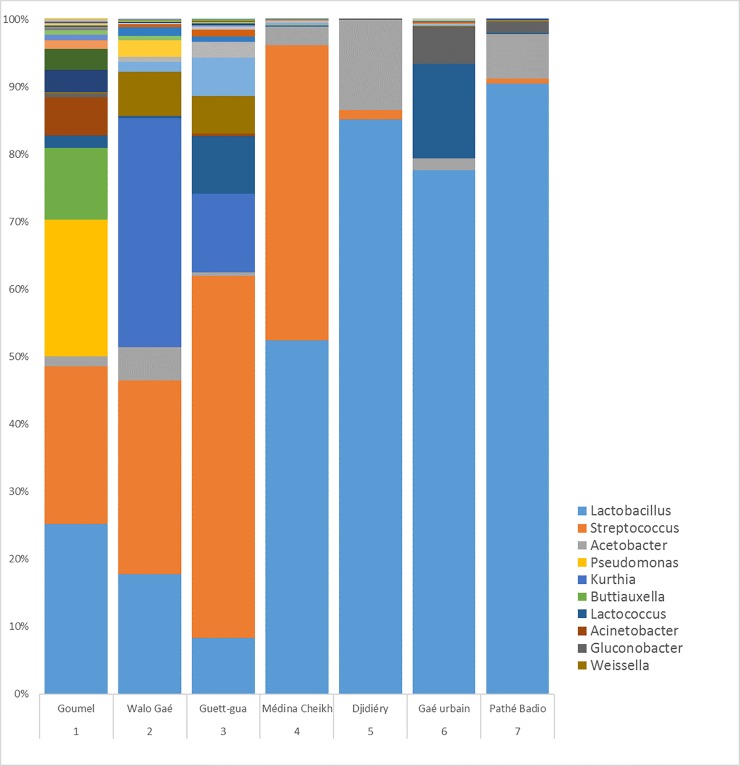
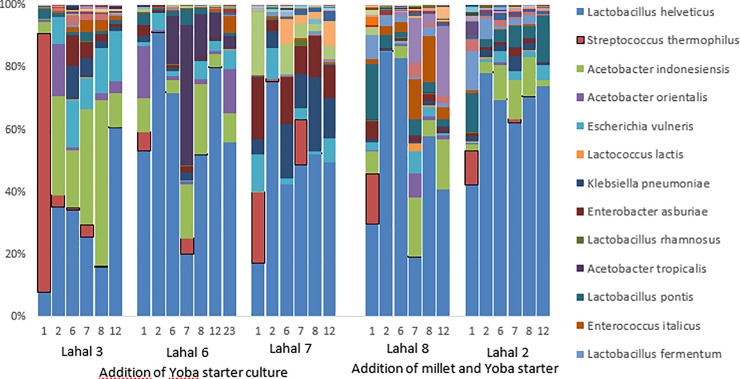
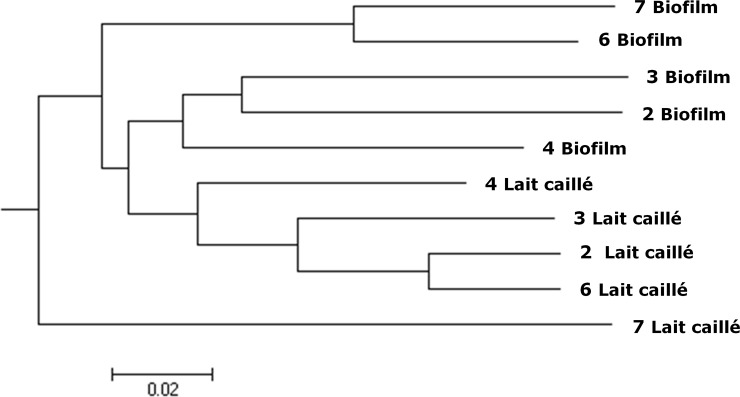
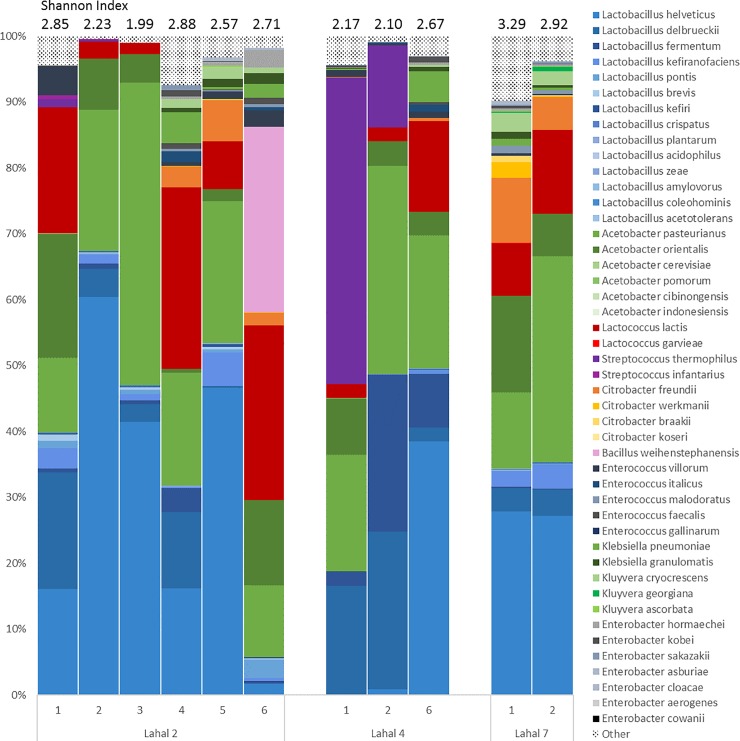
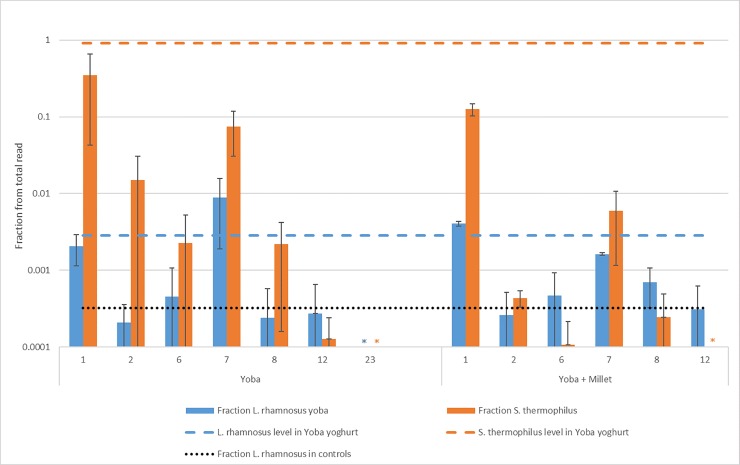
Spontaneously fermented food products contain a complex, natural microbial community with potential probiotic activity. The addition of a health-promoting, probiotic bacterium to these products ensures the delivery of that probiotic activity to consumers. Here, we assess the microbial community of a traditional Senegalese milk product produced by spontaneous fermentation, called lait caillé. We produced the lait caillé in a traditional way and added a probiotic starter containing Lactobacillus rhamnosus yoba 2012 to the traditional process. We found various species that are known for their ability to ferment milk, including species from the genera Lactobacillus, Acetobacter, Lactococcus, and Streptococcus. Our results show that the addition of L. rhamnosus to the inoculum, can result in detectable levels of this strain in the final product, ranging between 0.2 and 1 percent of the total bacterial population. Subsequent rounds of fermentation using passive back-slopping without the addition of new L. rhamnosus led to a loss of this strain from the community of fermenting bacteria. Our results suggest that the addition of probiotic strains at every fermentation cycle can enrich the existing complex communities of traditionally fermented lait caillé while traditional bacterial strains remain dominant in the bacterial communities.
自然发酵的食品产品含有复杂的天然微生物群落,具有潜在的益生菌活性。向这些产品中添加具有促进健康的益生菌细菌可确保将这种益生菌活性传递给消费者。在这里,我们评估了一种传统塞内加尔牛奶产品的微生物群落,该产品通过自然发酵制成,称为凝乳牛奶。我们以传统方式生产凝乳牛奶,并在传统工艺中添加含有鼠李糖乳杆菌 yoba 2012 的益生菌启动剂。我们发现了各种已知能够发酵牛奶的物种,包括来自乳杆菌属、醋杆菌属、乳球菌属和链球菌属的物种。我们的结果表明,向接种物中添加 L. rhamnosus 可导致最终产品中该菌株的可检测水平,在总细菌种群的 0.2%至 1%之间。随后使用没有添加新的 L. rhamnosus 的被动反向接种进行的发酵会导致该菌株从发酵细菌群落中消失。我们的结果表明,在每个发酵周期添加益生菌菌株可以丰富传统发酵的凝乳牛奶的现有复杂群落,同时传统细菌菌株仍然是细菌群落中的优势菌株。