Han Jiarui, Shi Jiaxin, Xie Zhining, Xu Jun, Guo Baohua
Key Laboratory of Advanced Materials of Ministry of Education of China, Department of Chemical Engineering, Tsinghua University, Beijing 100084, China.
Materials (Basel). 2019 May 9;12(9):1507. doi: 10.3390/ma12091507.
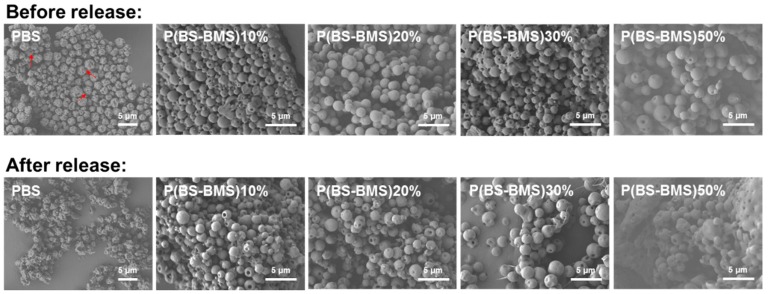
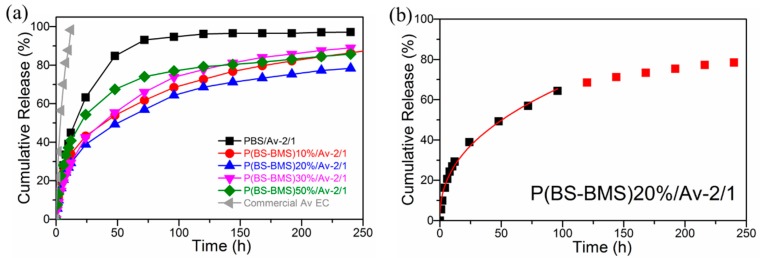
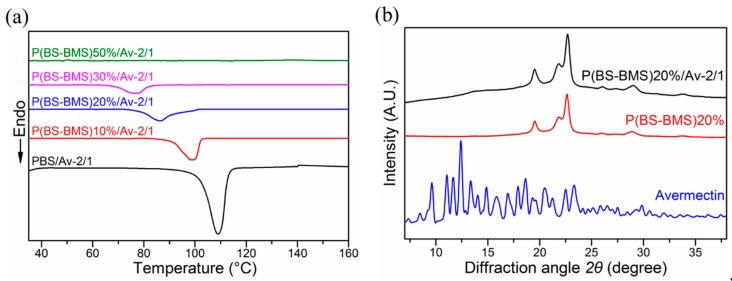
A novel biobased and biodegradable polyester, i.e., poly(butylene succinate--butylene 2-methylsuccinate) (P(BS-BMS)) was synthesized by succinic acid (SA), 2-methylsuccinic acid (MSA), and 1,4-butanediol (BDO) via a typically two-step esterification and polycondensation procedure. The chemical structure and macromolecular weight of obtained copolymers were characterized by H NMR, C NMR, and GPC. The melting temperature and degree of crystallinity were also studied by DSC, and it was found that the values were gradually decreased with increasing of MSA content, while the thermal stability remained almost unchanged which was tested by TGA. In addition, the biodegradation rate of the P(BS-BMS) copolymers could be controlled by adjusting the ratio of SA and MSA, and such biodegradability could make P(BS-BMS) copolymers avoid microplastic pollution which may be brought to the environment for applications in agricultural field. When we applied P(BS-BMS) copolymers as pesticide carriers which were prepared by premix membrane emulsification (PME) method for controlling Avermectin delivery, an improvement of dispersion and utilization of active ingredient was obviously witnessed. It showed a burst release process first followed by a sustained release of Avermectin for a long period, which had a great potential to be an effective and environmental friendly pesticide-release vehicle.
通过琥珀酸(SA)、2-甲基琥珀酸(MSA)和1,4-丁二醇(BDO),采用典型的两步酯化和缩聚工艺合成了一种新型的生物基可生物降解聚酯,即聚(丁二酸丁二醇酯-2-甲基丁二酸丁二醇酯)(P(BS-BMS))。通过1H NMR、13C NMR和GPC对所得共聚物的化学结构和分子量进行了表征。还通过DSC研究了其熔点和结晶度,发现随着MSA含量的增加,这些值逐渐降低,而通过TGA测试发现热稳定性几乎保持不变。此外,P(BS-BMS)共聚物的生物降解速率可以通过调整SA和MSA的比例来控制,这种生物降解性可以使P(BS-BMS)共聚物避免在农业领域应用时可能给环境带来的微塑料污染。当我们将通过预混膜乳化(PME)方法制备的P(BS-BMS)共聚物用作农药载体来控制阿维菌素的释放时,活性成分的分散和利用率有了明显提高。它首先呈现出突释过程,随后阿维菌素长期持续释放,具有成为一种有效且环保的农药释放载体的巨大潜力。