UMR408 SQPOV Sécurité et Qualité des Produits d'Origine Végétale, INRA, Avignon, France.
UMR408 SQPOV Sécurité et Qualité des Produits d'Origine Végétale, Avignon Université, Avignon, France.
Appl Environ Microbiol. 2019 Jul 1;85(14). doi: 10.1128/AEM.00486-19. Print 2019 Jul 15.
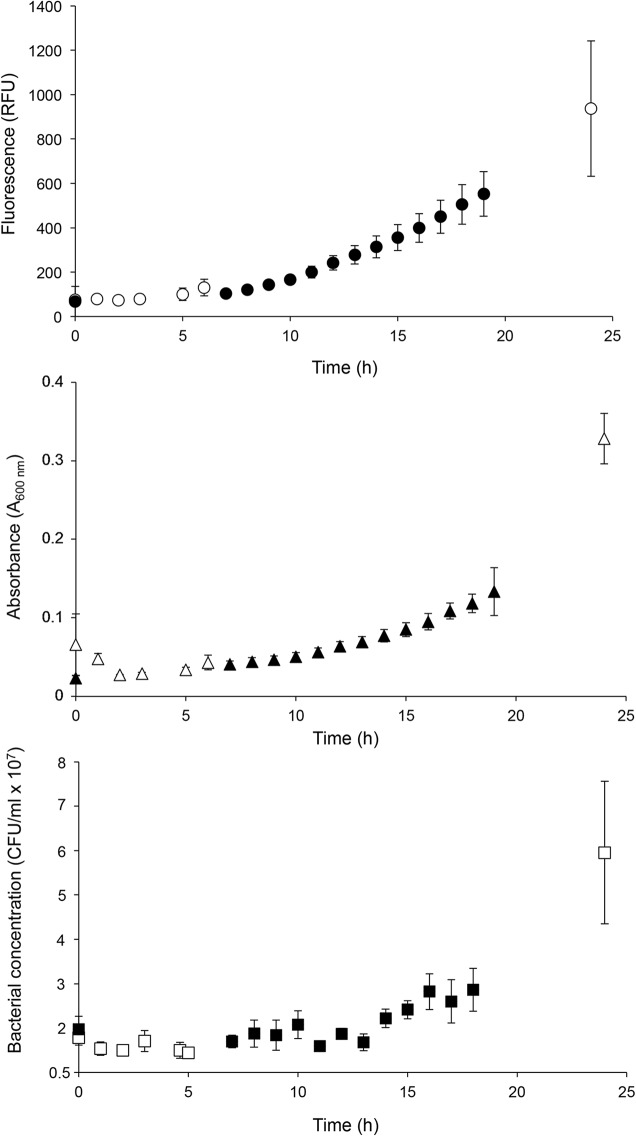
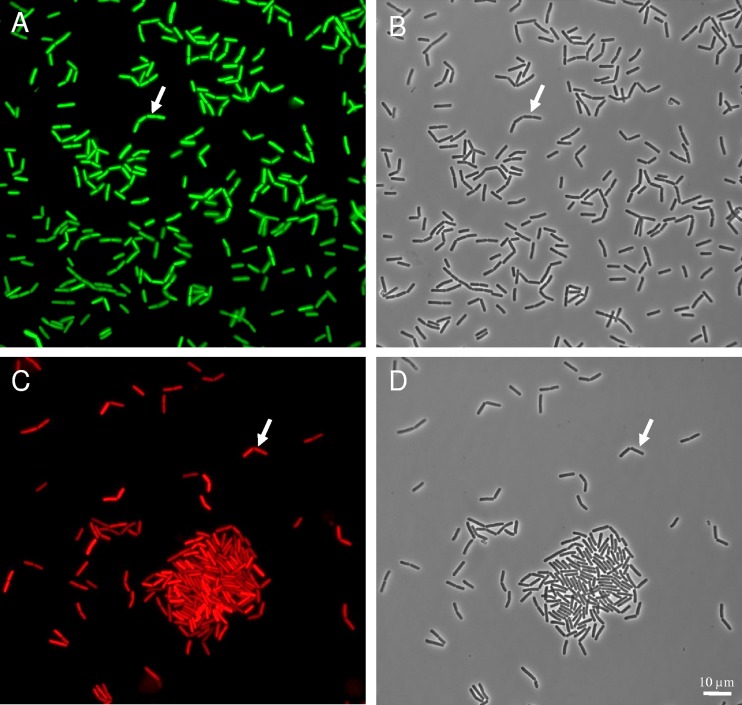
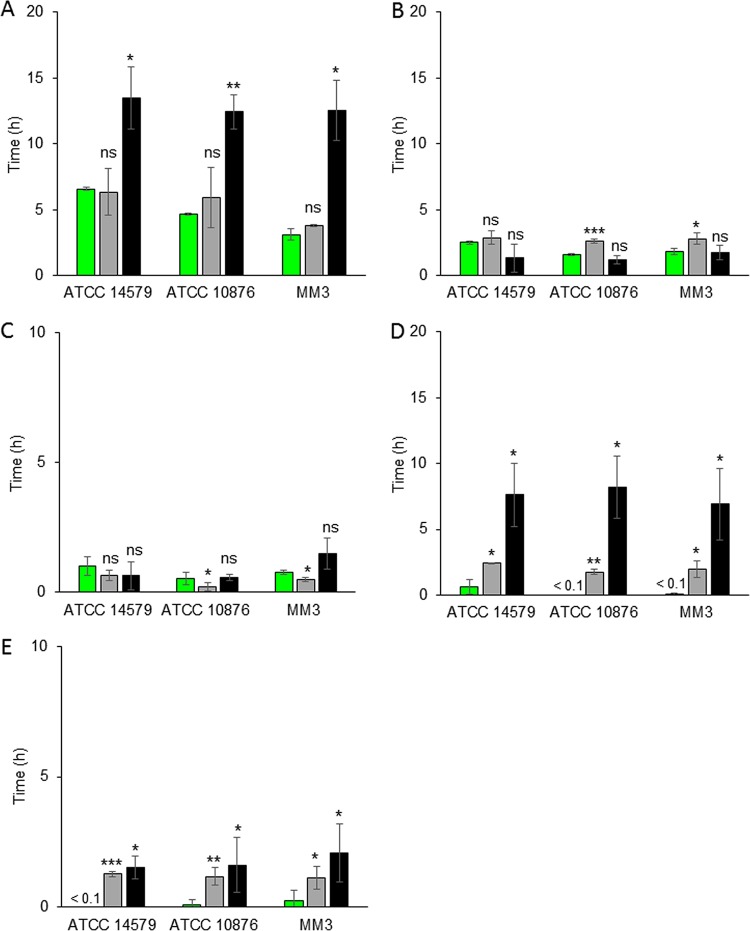
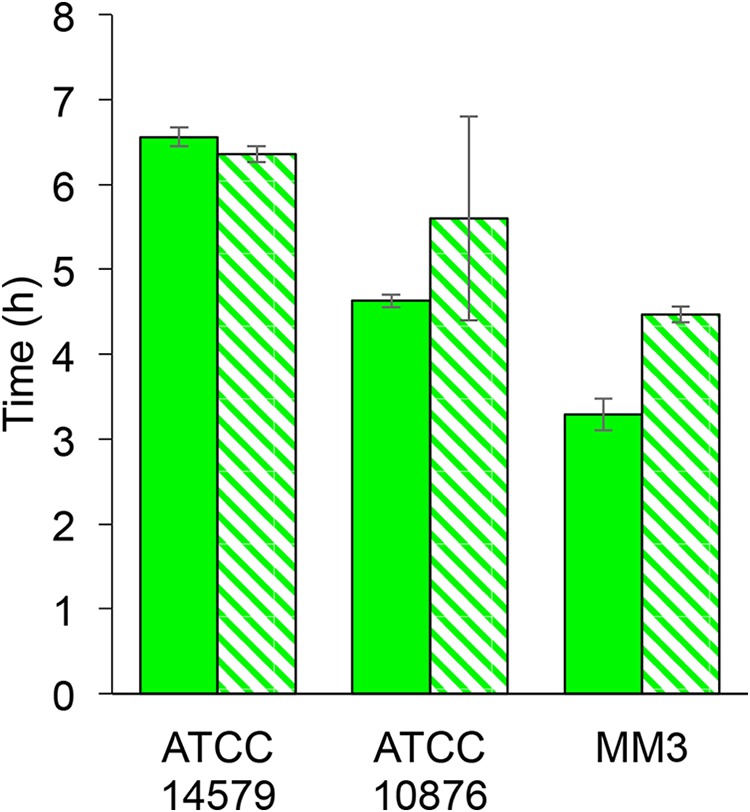
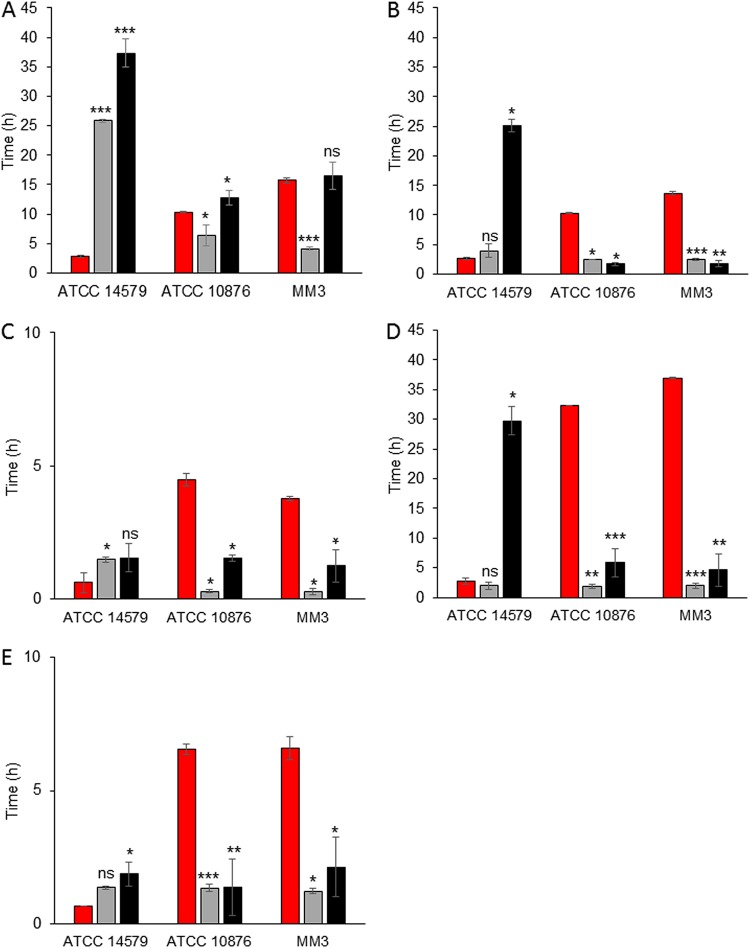
Bacterial adaptation is characterized by a lag phase during which cells do not multiply or modify their physiology to cope with the constraints of their environment. Our aim was to determine a sequence of events during the lag phase of growth at low temperature and pH for three strains. The onsets of expression of two genes, one of which is essential for stress adaptation (, coding for a RNA helicase) and one of which is involved in the transition between lag phase and exponential phase (, coding for a transition regulator), were determined using fluorescent transcriptional reporter systems. Regardless of the stressing conditions and the tested strains, the promoter was active very early, while the biomass increased and always did so before the first cell division. At 12°C and pH 7.0, the onset of promoter activity occurred at between 3 h and 7 h, while the bacterial counts started to increase at between 12 h and 13 h. At pH 5.0 and at 20°C or 30°C, the onset of promoter activity occurred before 1 h and earlier than at pH 7.0. In contrast, the onset of promoter activity depended on the strain and the stressing conditions. In the ATCC 14579 strain, the onset of promoter activity always started at between 30 min and 3 h, before biomass increased and cell division occurred. For the other strains, it took place along with the first cell division at 12°C but did so much later during growth under the other tested conditions. The spore-forming bacterium is a major cause of foodborne outbreaks in Europe. Some strains can grow at low temperatures and low pH in many processed foods. Modeling of the bacterial lag time is hampered by a lack of knowledge of the timing of events occurring during this phase. In this context, the identification of lag phase markers, not currently available, could be a real advance for the better prediction of lag time duration. Currently, no molecular markers of this phase are available. By determining that was always expressed early during the lag phase, we provide a molecular marker of the early adaptation process of cells when exposed to low temperature and pH.
细菌适应的特点是存在一个迟滞期,在此期间,细胞不会增殖或改变其生理机能以适应环境的限制。我们的目的是确定在三种菌株的低温和低 pH 值生长的迟滞期内发生的一系列事件。使用荧光转录报告系统确定了两个基因的表达起始,其中一个基因(编码 RNA 解旋酶)对压力适应至关重要,另一个基因(编码过渡调节因子)则参与从迟滞期到指数生长期的转变。无论应激条件和测试菌株如何, 启动子的活性很早就开始了,而生物量增加,并总是在第一次细胞分裂之前增加。在 12°C 和 pH 7.0 下, 启动子活性的起始时间在 3 到 7 小时之间,而细菌计数则在 12 到 13 小时之间开始增加。在 pH 5.0 和 20°C 或 30°C 下, 启动子活性的起始时间早于 1 小时,并且早于 pH 7.0。相比之下, 启动子活性的起始取决于菌株和应激条件。在 ATCC 14579 菌株中, 启动子活性的起始时间总是在生物量增加和细胞分裂之前的 30 分钟到 3 小时之间。对于其他菌株,它与 12°C 下的第一次细胞分裂同时发生,但在其他测试条件下的生长过程中要晚得多。产芽孢细菌 是欧洲食源性疾病爆发的主要原因。一些 菌株可以在许多加工食品中在低温和低 pH 值下生长。由于缺乏对该阶段发生事件时间的了解,因此对细菌迟滞时间的建模受到阻碍。在这种情况下,目前尚不可用的迟滞期标记物的鉴定可能是更好地预测迟滞时间持续时间的真正进展。目前,没有此阶段的分子标记物。通过确定 总是在迟滞期的早期表达,我们为 细胞在低温和低 pH 值下暴露时的早期适应过程提供了一个分子标记物。