Clark M A, Barrett E L
J Bacteriol. 1987 Jun;169(6):2391-7. doi: 10.1128/jb.169.6.2391-2397.1987.
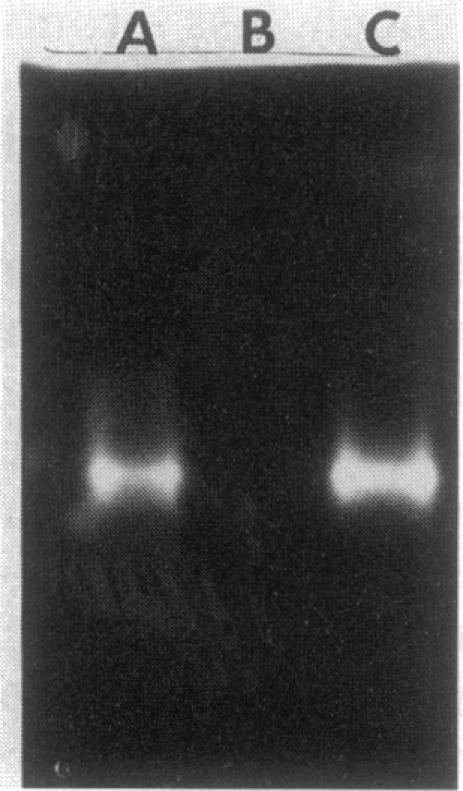
Salmonella typhimurium produces H2S from thiosulfate or sulfite. The respective pathways for the two reductions must be distinct as mutants carrying motations in phs, chlA, and menB reduced sulfite, but not thiosulfate, to H2S, and glucose repressed the production of H2S from thiosulfate while it stimulated its production from sulfite. The phs and chlA mutants also lacked a methyl viologen-linked thiosulfate reductase activity present in anaerobically grown wild-type cultures. A number of hydroxylamine, transposon Tn10 insertion, and Mu d1(Apr lac) operon fusion mutants defective in phs were characterized. One of the hydroxylamine mutants was an amber mutant, as indicated by suppression of its mutation in a supD background. The temperature-sensitive phs mutants produced H2S and methyl viologen-linked thiosulfate reductase at 30 degrees C but not at 42 degrees C. The reductases in all such mutants grown at 30 degrees C were as thermostable as the wild-type enzyme and did not differ in electrophoretic relative mobility, suggesting that phs is not the structural gene for thiosulfate reductase. Expression of beta-galactosidase in phs::Mu d1(Apr lac) mutants was dependent on anaerobiosis and the presence of reduced sulfur. It was also strongly influenced by carbon source and growth stage. The results are consistent with a model in which the phs gene encodes a regulatory protein essential for the reduction of thiosulfate to hydrogen sulfide.
鼠伤寒沙门氏菌可利用硫代硫酸盐或亚硫酸盐产生硫化氢。这两种还原反应的各自途径必定不同,因为在phs、chlA和menB中携带突变的突变体可将亚硫酸盐而非硫代硫酸盐还原为硫化氢,葡萄糖抑制硫代硫酸盐产生硫化氢,而刺激亚硫酸盐产生硫化氢。phs和chlA突变体也缺乏厌氧生长的野生型培养物中存在的与甲基紫精相关的硫代硫酸盐还原酶活性。对许多在phs方面有缺陷的羟胺、转座子Tn10插入和Mud1(Apr lac)操纵子融合突变体进行了表征。其中一个羟胺突变体是琥珀突变体,如在supD背景中其突变的抑制所表明的。温度敏感的phs突变体在30℃时产生硫化氢和与甲基紫精相关的硫代硫酸盐还原酶,而在42℃时则不产生。在30℃生长的所有此类突变体中的还原酶与野生型酶一样耐热,并且电泳相对迁移率没有差异,这表明phs不是硫代硫酸盐还原酶的结构基因。phs::Mud1(Apr lac)突变体中β-半乳糖苷酶的表达取决于厌氧状态和还原态硫的存在。它也受到碳源和生长阶段的强烈影响。结果与一个模型一致,即phs基因编码一种对硫代硫酸盐还原为硫化氢必不可少的调节蛋白。