Department of Genetics and Genome Biology, University of Leicester, Leicester, United Kingdom.
LMGM-CNRS UMR5100, CBI, Toulouse, France.
J Bacteriol. 2019 Jul 10;201(15). doi: 10.1128/JB.00233-19. Print 2019 Aug 1.
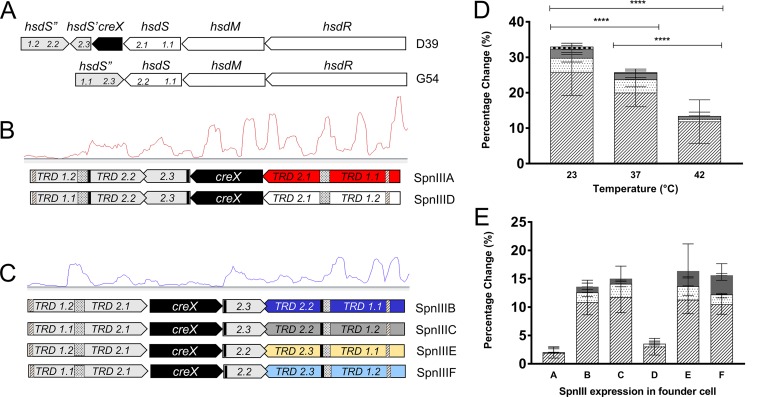
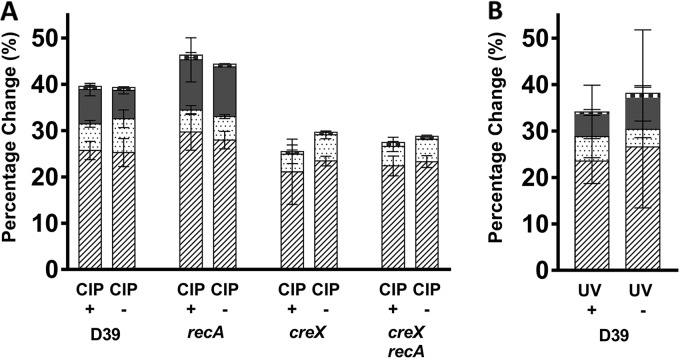
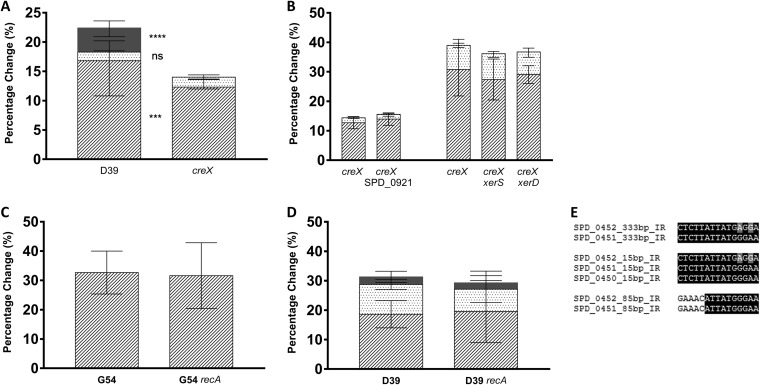
is one of the world's leading bacterial pathogens, causing pneumonia, septicemia, and meningitis. In recent years, it has been shown that genetic rearrangements in a type I restriction-modification system (SpnIII) can impact colony morphology and gene expression. By generating a large panel of mutant strains, we have confirmed a previously reported result that the CreX (also known as IvrR and PsrA) recombinase found within the locus is not essential for inversions. In addition, mutants of homologous recombination pathways also undergo inversions. In this work, we have shown that these genetic rearrangements, which result in different patterns of genome methylation, occur across a wide variety of serotypes and sequence types, including two strains (a 19F and a 6B strain) naturally lacking CreX. Our gene expression analysis, by transcriptome sequencing (RNAseq), confirms that the level of expression is impacted by these genomic rearrangements. In addition, we have shown that the frequency of recombination is temperature dependent. Most importantly, we have demonstrated that the other known pneumococcal site-specific recombinases XerD, XerS, and SPD_0921 are not involved in recombination, suggesting that a currently unknown mechanism is responsible for the recombination of these phase-variable type I systems. is a leading cause of pneumonia, septicemia, and meningitis. The discovery that genetic rearrangements in a type I restriction-modification locus can impact gene regulation and colony morphology led to a new understanding of how this pathogen switches from harmless colonizer to invasive pathogen. These rearrangements, which alter the DNA specificity of the type I restriction-modification enzyme, occur across many different pneumococcal serotypes and sequence types and in the absence of all known pneumococcal site-specific recombinases. This finding suggests that this is a truly global mechanism of pneumococcal gene regulation and the need for further investigation of mechanisms of site-specific recombination.
是世界上主要的细菌病原体之一,可导致肺炎、败血症和脑膜炎。近年来,研究表明,I 型限制修饰系统(SpnIII)中的遗传重排可影响菌落形态和基因表达。通过生成大量突变株,我们证实了之前的一个报道结果,即在该基因座内发现的 CreX(也称为 IvrR 和 PsrA)重组酶对于 倒位并非必需。此外,同源重组途径的突变体也会发生 倒位。在这项工作中,我们表明,这些遗传重排导致不同的基因组甲基化模式,发生在广泛的血清型和序列型中,包括两个天然缺乏 CreX 的菌株(19F 和 6B 菌株)。我们的基因表达分析通过转录组测序(RNAseq)证实,这些基因组重排会影响 的表达水平。此外,我们还表明, 重组的频率与温度有关。最重要的是,我们已经证明,其他已知的肺炎链球菌位点特异性重组酶 XerD、XerS 和 SPD_0921 不参与 重组,这表明一种未知的机制负责这些相变异构 I 型系统的重组。是肺炎、败血症和脑膜炎的主要原因。发现 I 型限制修饰基因座中的遗传重排可以影响基因调控和菌落形态,这为我们提供了一种新的认识,即这种病原体如何从无害的定植菌转变为侵袭性病原体。这些重排改变了 I 型限制修饰酶的 DNA特异性,发生在许多不同的肺炎链球菌血清型和序列型中,并且在没有所有已知的肺炎链球菌位点特异性重组酶的情况下也会发生。这一发现表明,这是肺炎链球菌基因调控的一种真正全球性机制,需要进一步研究位点特异性重组的机制。