Jiangsu Key Laboratory of Molecular Medicine, Medical School of Nanjing University, Nanjing, 210093, China.
Center for Translational Medicine, Huaihe Hospital of Henan University, Kaifeng, 475001, Henan Province, China.
J Transl Med. 2019 May 14;17(1):152. doi: 10.1186/s12967-019-1899-y.
The high mortality of patients with non-small cell lung cancer (NSCLC) emphasizes the necessity of identifying a robust and reliable prognostic signature for NSCLC patients. This study aimed to identify and validate a prognostic signature for the prediction of both disease-free survival (DFS) and overall survival (OS) of NSCLC patients by integrating multiple datasets.
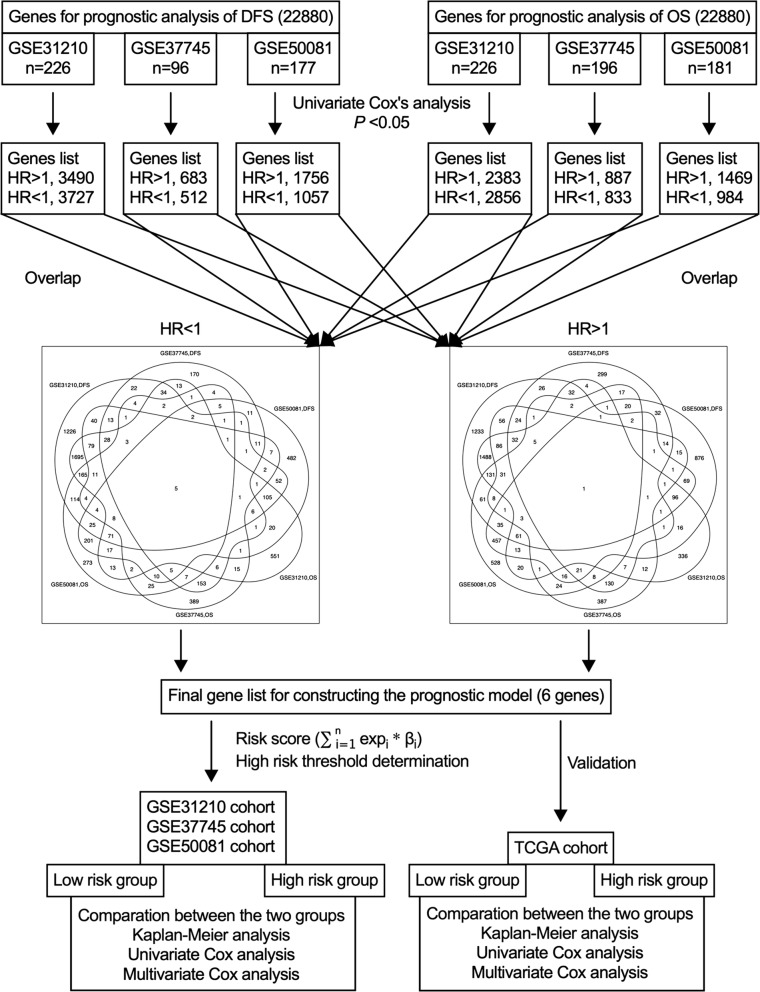
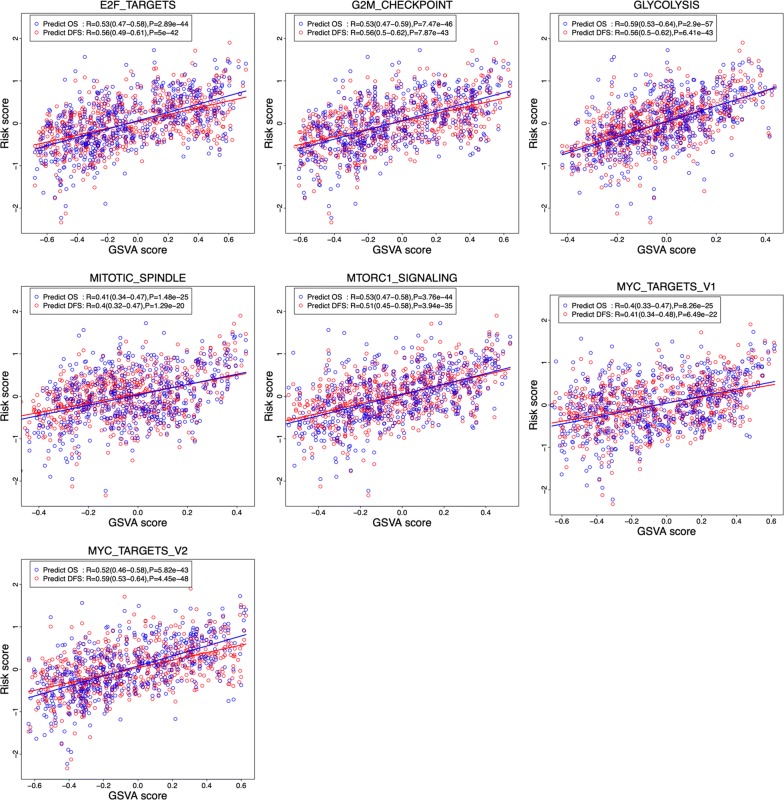
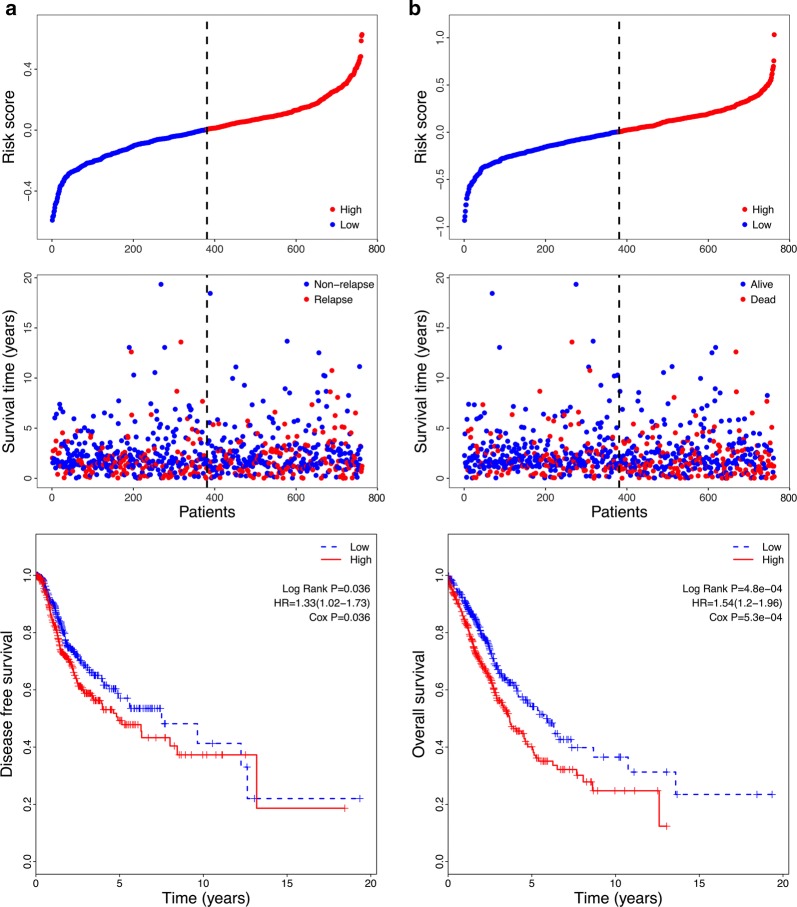
We firstly downloaded three independent datasets under the accessing number of GSE31210, GSE37745 and GSE50081, and then performed an univariate regression analysis to identify the candidate prognostic genes from each dataset, and identified the gene signature by overlapping the candidates. Then, we built a prognostic model to predict DFS and OS using a risk score method. Kaplan-Meier curve with log-rank test was used to determine the prognostic significance. Univariate and multivariate Cox proportional hazard regression models were implemented to evaluate the influences of various variables on DFS and OS. The robustness of the prognostic gene signature was evaluated by re-sampling tests based on the combined GEO dataset (GSE31210, GSE37745 and GSE50081). Furthermore, a The Cancer Genome Atlas (TCGA)-NSCLC cohort was utilized to validate the prediction power of the gene signature. Finally, the correlation of the risk score of the gene signature and the Gene set variation analysis (GSVA) score of cancer hallmark gene sets was investigated.
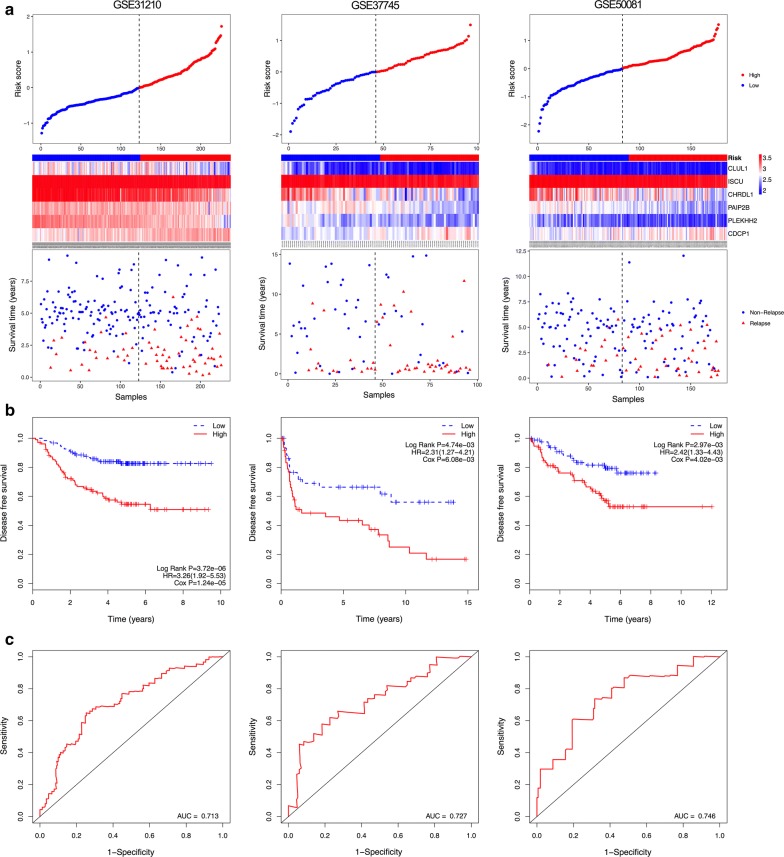
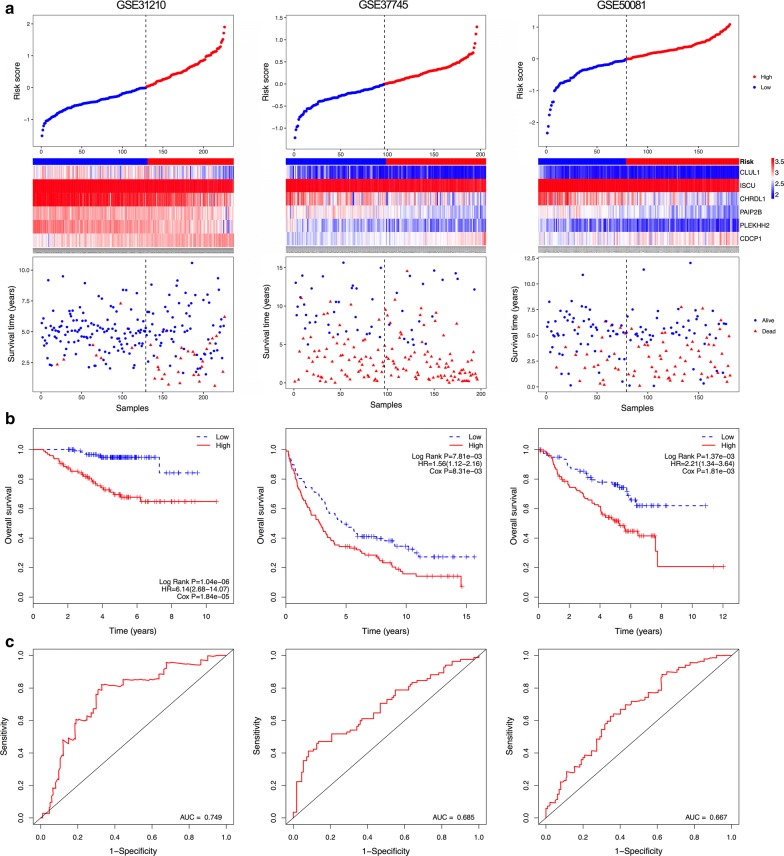
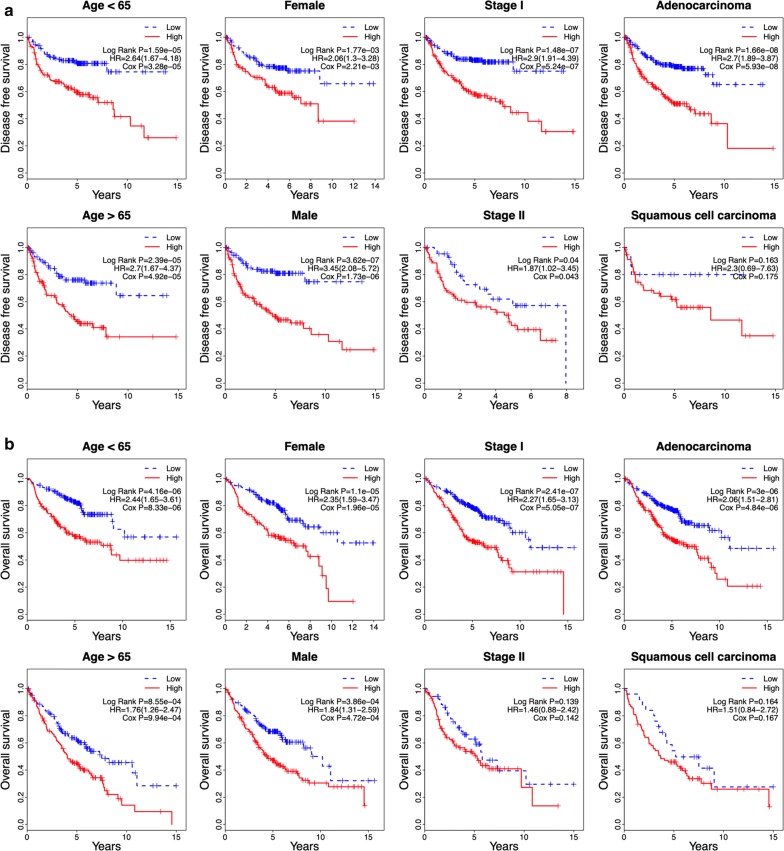
We identified and validated a six-gene prognostic signature in this study. This prognostic signature stratified NSCLC patients into the low-risk and high-risk groups. Multivariate regression and stratification analyses demonstrated that the six-gene signature was an independent predictive factor for both DFS and OS when adjusting for other clinical factors. Re-sampling analysis implicated that this six-gene signature for predicting prognosis of NSCLC patients is robust. Moreover, the risk score of the gene signature is correlated with the GSVA score of 7 cancer hallmark gene sets.
This study provided a robust and reliable gene signature that had significant implications in the prediction of both DFS and OS of NSCLC patients, and may provide more effective treatment strategies and personalized therapies.
非小细胞肺癌(NSCLC)患者的高死亡率强调了识别稳健可靠的 NSCLC 患者预后标志物的必要性。本研究旨在通过整合多个数据集,鉴定并验证一个用于预测 NSCLC 患者无病生存期(DFS)和总生存期(OS)的预后标志物。
我们首先下载了三个独立数据集,其访问编号分别为 GSE31210、GSE37745 和 GSE50081,然后分别进行单变量回归分析,从每个数据集中识别候选预后基因,并通过重叠候选基因来鉴定基因标志物。接着,我们使用风险评分方法构建了一个预测 DFS 和 OS 的预后模型。Kaplan-Meier 曲线和对数秩检验用于确定预后意义。实施单变量和多变量 Cox 比例风险回归模型,以评估各种变量对 DFS 和 OS 的影响。基于合并的 GEO 数据集(GSE31210、GSE37745 和 GSE50081)进行重采样检验,评估预后基因标志物的稳健性。此外,我们还利用癌症基因组图谱(TCGA)-NSCLC 队列验证了基因标志物的预测能力。最后,研究了基因标志物的风险评分与癌症标志基因集的基因集变异分析(GSVA)评分之间的相关性。
本研究中,我们鉴定并验证了一个由六个基因组成的预后标志物。该预后标志物将 NSCLC 患者分为低风险和高风险组。多变量回归和分层分析表明,在调整其他临床因素后,该六个基因标志物是 DFS 和 OS 的独立预测因素。重采样分析表明,该六个基因标志物用于预测 NSCLC 患者预后是稳健的。此外,基因标志物的风险评分与 7 个癌症标志基因集的 GSVA 评分相关。
本研究提供了一个稳健可靠的基因标志物,对预测 NSCLC 患者的 DFS 和 OS 具有重要意义,并可能为患者提供更有效的治疗策略和个性化治疗。