Microbiology Laboratory, Hangzhou Center for Disease Control and Prevention, Hangzhou, Zhejiang Province, 310021, China.
Institution of Infectious Disease Control, Hangzhou Center for Disease Control and Prevention, Hangzhou, Zhejiang Province, 310021, China.
Sci Rep. 2019 May 14;9(1):7345. doi: 10.1038/s41598-019-43560-5.
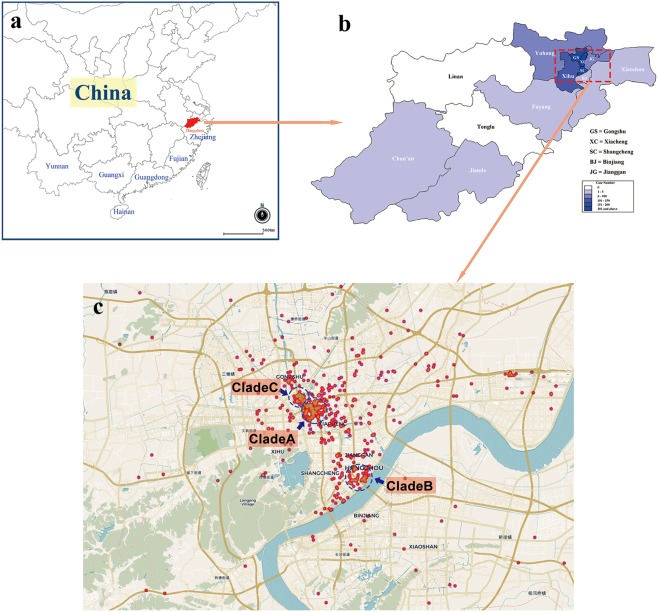
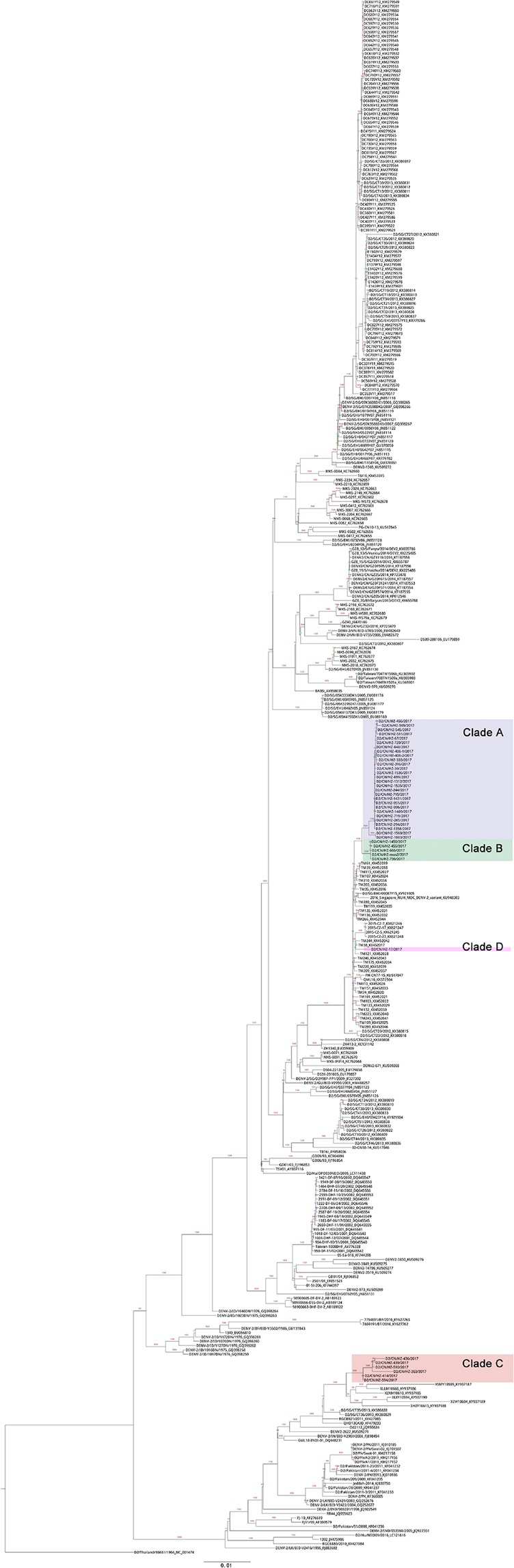
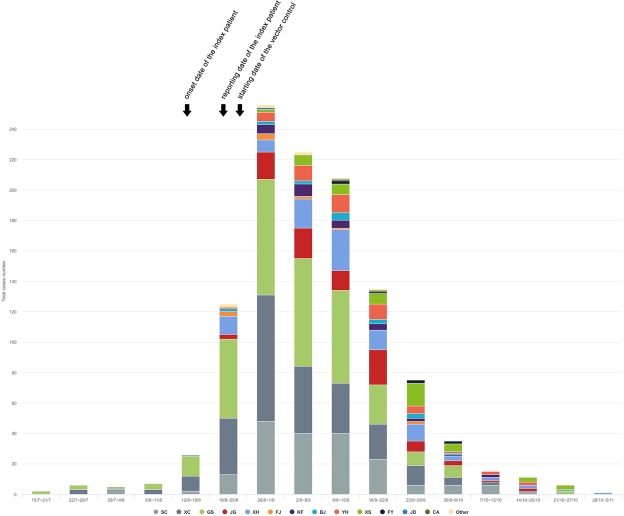
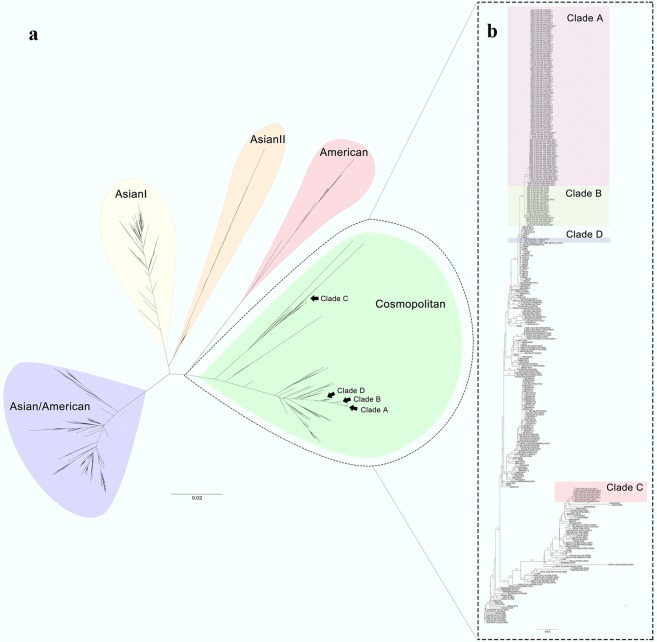
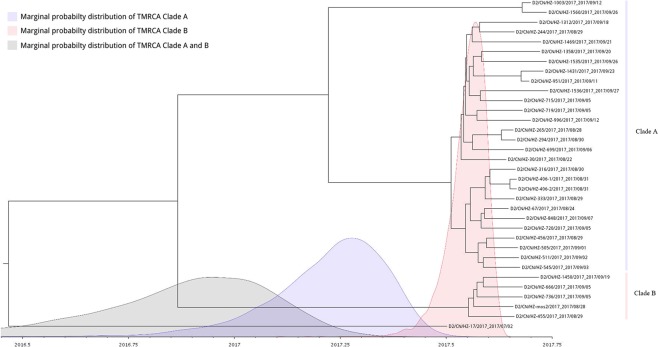
During July to November 2017, a large dengue outbreak involving 1,138 indigenous cases occurred in Hangzhou, Zhejiang Province, China. All patients were clinically diagnosed as mild dengue. Epidemiology investigation and phylogenetic analysis of circulating viruses revealed that at least three lineages of dengue virus serotype 2 (DENV-2) Cosmopolitan genotype initiated the outbreak during a short time. The analysis of the time to most recent common ancestor estimated that the putative ancestor of these DENV-2 lineages might rise no later than March, 2017, suggesting independent introductions of these lineages into Hangzhou. We presumed that group travelers visiting dengue-endemic areas gave rise to multiple introductions of these lineages during so short a time. Co-circulating of multiple DENV-2 lineages, emerging of disease in urban areas, hot and humid weather in Hangzhou adequate for mosquito breeding, and limited dengue diagnosis abilities of local hospitals, were the reasons causing the large local outbreak in Hangzhou.
2017 年 7 月至 11 月期间,中国浙江省杭州市发生了一起涉及 1138 例本地感染的大型登革热疫情。所有患者均临床诊断为轻症登革热。通过对流行病毒的流行病学调查和系统进化分析发现,至少有 3 个基因型的登革热病毒 2 型(DENV-2)在短时间内引发了此次疫情。对最近共同祖先时间的分析估计,这些 DENV-2 系的假定祖先可能不晚于 2017 年 3 月出现,提示这些系在杭州的独立传入。我们推测,在如此短的时间内,访问登革热流行地区的旅游团导致了这些系的多次传入。多个 DENV-2 系的共同流行、城市地区出现疾病、杭州炎热潮湿的天气有利于蚊子滋生以及当地医院有限的登革热诊断能力,是导致杭州市发生本地大型疫情的原因。