Afreen Nazia, Naqvi Irshad H, Broor Shobha, Ahmed Anwar, Parveen Shama
Centre for Interdisciplinary Research in Basic Sciences, Jamia Millia Islamia, New Delhi, India.
Dr. M.A. Ansari Health Centre, Jamia Millia Islamia, New Delhi, India.
PLoS One. 2015 Nov 4;10(11):e0141628. doi: 10.1371/journal.pone.0141628. eCollection 2015.
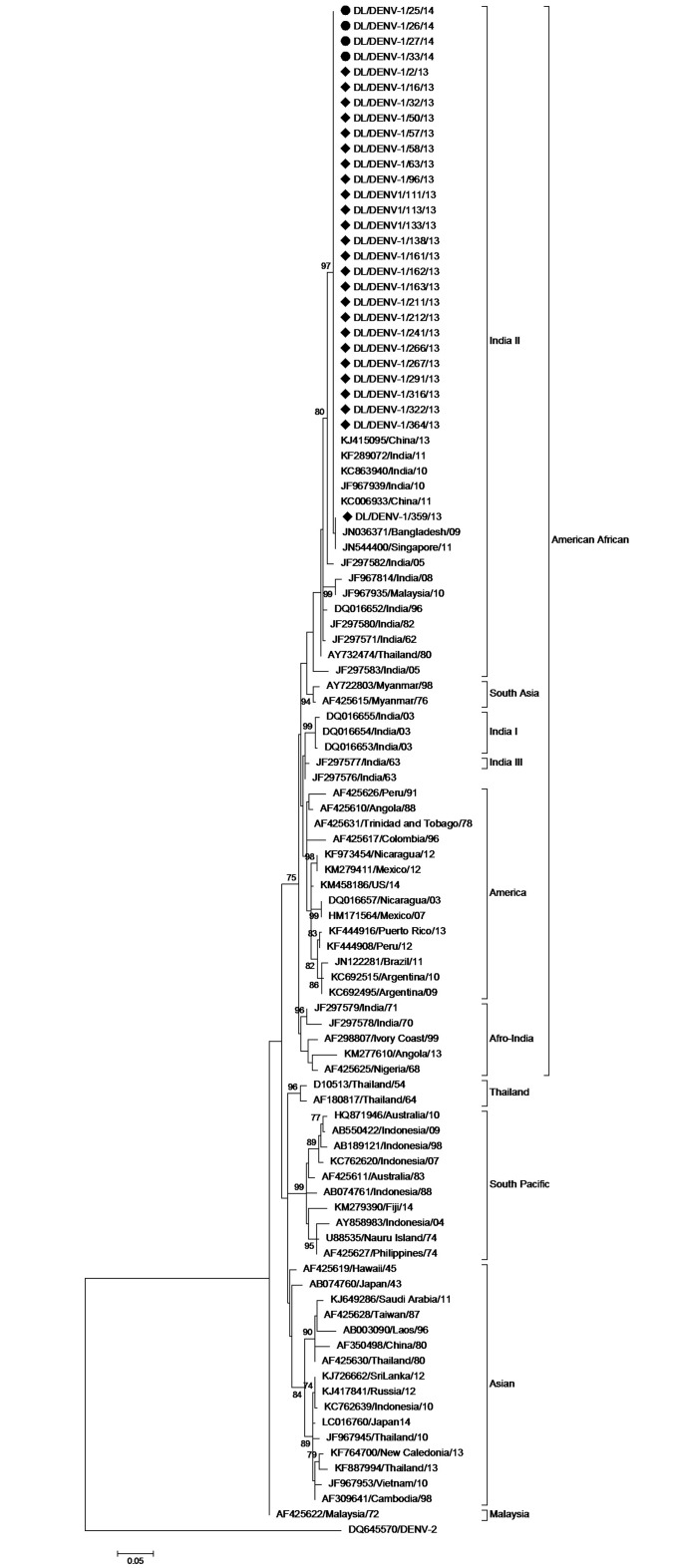
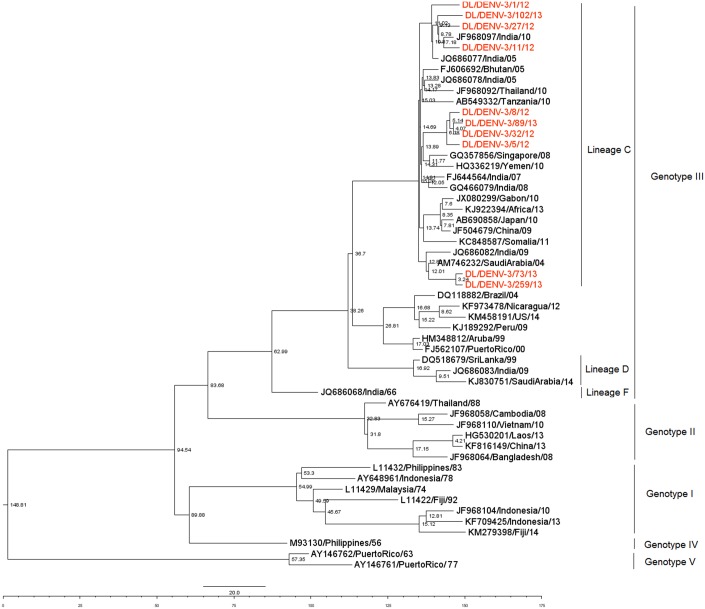
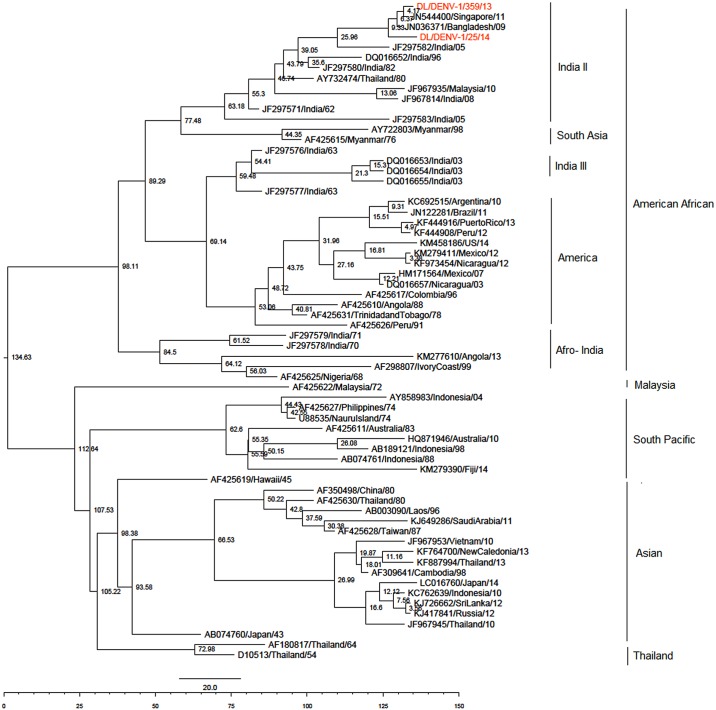
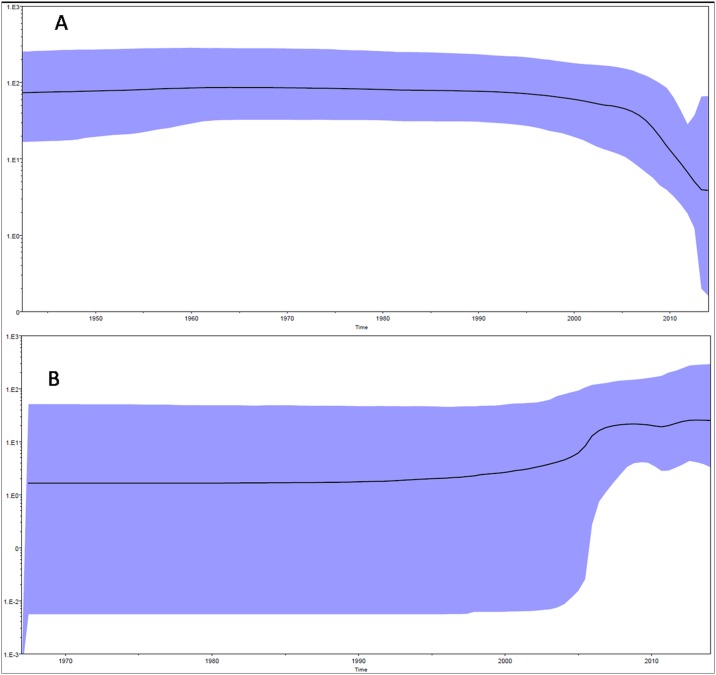
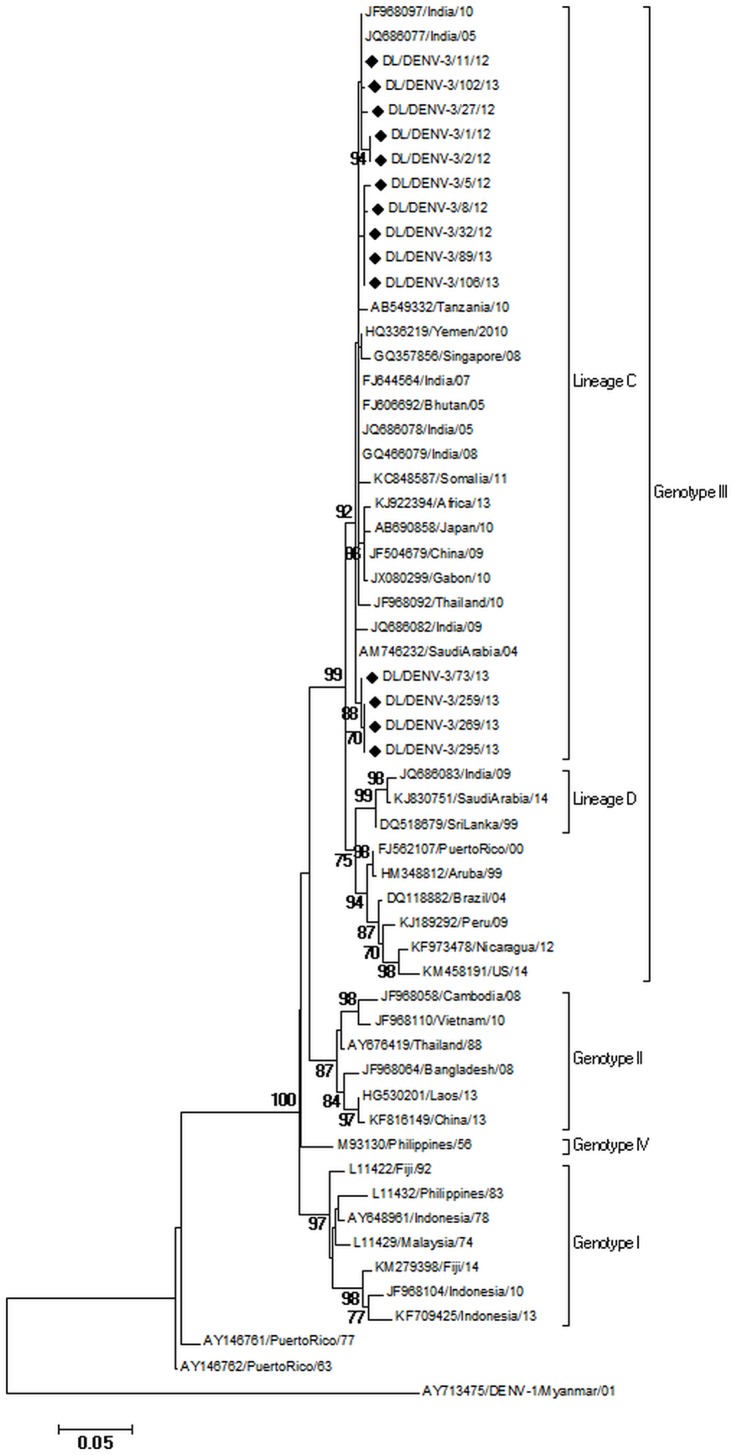
Dengue fever is the most prevalent arboviral disease in the tropical and sub-tropical regions of the world. The present report describes molecular detection and serotyping of dengue viruses in acute phase blood samples collected from New Delhi, India. Phylogenetic and molecular clock analysis of dengue virus serotype 1 and 3 strains were also investigated. Dengue virus infection was detected in 68.87% out of 604 samples tested by RT-PCR between 2011 & 2014. Dengue serotype 1 was detected in 25.48% samples, dengue serotype 2 in 79.56% samples and dengue serotype 3 in 11.29% samples. Dengue serotype 4 was not detected. Co-infection by more than one dengue serotype was detected in 18.26% samples. Envelope gene of 29 DENV-1 and 14 DENV-3 strains were sequenced in the study. All the DENV-1 strains grouped with the American African genotype. All DENV-3 strains were found to belong to Genotype III. Nucleotide substitution rates of dengue 1 and 3 viruses were determined in the study. Time to the most recent common ancestor (TMRCA) of dengue 1 viruses was determined to be 132 years. TMRCA of DENV-3 viruses was estimated to be 149 years. Bayesian skyline plots were constructed for Indian DENV-1 and 3 strains which showed a decrease in population size since 2005 in case of DENV- 1 strains while no change was observed in recent years in case of DENV-3 strains. The study also revealed a change in the dominating serotype in Delhi, India in recent years. The study will be helpful in formulating control strategies for the outbreaks. In addition, it will also assist in tracking the movement and evolution of this emerging virus.
登革热是世界热带和亚热带地区最普遍的虫媒病毒病。本报告描述了从印度新德里采集的急性期血样中登革病毒的分子检测和血清分型。还对登革病毒1型和3型毒株进行了系统发育和分子钟分析。在2011年至2014年期间,通过逆转录聚合酶链反应(RT-PCR)检测的604份样本中,68.87%检测到登革病毒感染。25.48%的样本检测到登革1型,79.56%的样本检测到登革2型,11.29%的样本检测到登革3型。未检测到登革4型。18.26%的样本检测到一种以上登革血清型的共同感染。研究中对29株登革病毒1型和14株登革病毒3型的包膜基因进行了测序。所有登革病毒1型毒株均与美洲-非洲基因型聚类。所有登革病毒3型毒株均属于基因型III。研究中确定了登革1型和3型病毒的核苷酸替换率。登革1型病毒的最近共同祖先时间(TMRCA)确定为132年。登革病毒3型的TMRCA估计为149年。构建了印度登革病毒1型和3型毒株的贝叶斯天际线图,结果显示,登革病毒1型毒株自2005年以来种群数量减少,而登革病毒3型毒株近年来未观察到变化。该研究还揭示了近年来印度德里主要血清型的变化。该研究将有助于制定疫情控制策略。此外,它还将有助于追踪这种新兴病毒的传播和演变。