Eze Nnamdi, Lo Ying-Chun, Burtness Barbara
1Section of Medical Oncology, Department of Internal Medicine, Yale University School of Medicine and Yale Cancer Center, 333 Cedar Street, Room WWW-221, P.O. Box 208028, New Haven, CT 06520 USA.
2Department of Pathology, Yale University School of Medicine, New Haven, CT USA.
Cancers Head Neck. 2017 Aug 29;2:6. doi: 10.1186/s41199-017-0025-1. eCollection 2017.
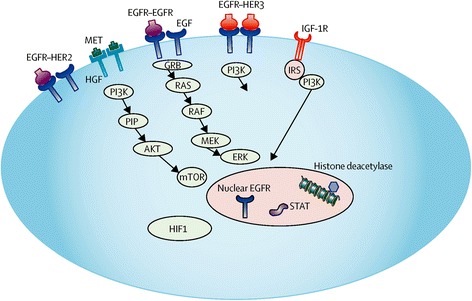
Treatment modalities of head and neck squamous cell cancer include surgery, radiation, chemotherapy, targeted agents and immune checkpoint inhibition. Treatment is often toxic and can affect long-term function and quality of life. In this context, identification of biomarker data that can help tailor therapy on an individualized basis and reduce treatment-related toxicity would be highly beneficial. A variety of predictive biomarkers have been discovered and are already utilized in clinical practice, while many more are being explored. We will review p16 overexpression as a surrogate biomarker in HPV-associated head and neck cancer and plasma EBV DNA as a biomarker in nasopharyngeal carcinoma, the two established biomarkers currently utilized in clinical practice. We will also examine novel predictive biomarkers that are in clinical development and may shape the future landscape of targeted head and neck cancer therapy. These emerging biomarkers include the tyrosine kinases and their signaling pathway, immune checkpoint biomarkers, tumor suppressor abnormalities, and molecular predictors of hypoxia-targeted therapy. We will also look at futuristic biomarkers including detection of circulating DNA from clinical specimens and rapid tumor profiling. We will highlight the ongoing effort that will see a shift from prognostic to predictive biomarker development in head and neck cancer with the goal of delivering individualized cancer therapy.
N/A.
头颈部鳞状细胞癌的治疗方式包括手术、放疗、化疗、靶向药物和免疫检查点抑制。治疗往往具有毒性,会影响长期功能和生活质量。在此背景下,识别有助于个体化定制治疗并降低治疗相关毒性的生物标志物数据将非常有益。已发现多种预测性生物标志物并已应用于临床实践,同时还有更多正在探索中。我们将综述p16过表达作为人乳头瘤病毒相关头颈部癌的替代生物标志物以及血浆EB病毒DNA作为鼻咽癌的生物标志物,这两种是目前临床实践中已使用的既定生物标志物。我们还将研究正在临床开发中且可能塑造头颈部癌靶向治疗未来格局的新型预测性生物标志物。这些新兴生物标志物包括酪氨酸激酶及其信号通路、免疫检查点生物标志物、肿瘤抑制异常以及缺氧靶向治疗的分子预测指标。我们还将探讨未来的生物标志物,包括从临床标本中检测循环DNA和快速肿瘤分析。我们将强调正在进行的努力,即头颈部癌将从预后生物标志物开发转向预测性生物标志物开发,目标是提供个体化癌症治疗。
无。