Laboratorio di Immunoreumatologia e Rigenerazione Tissutale, IRCCS Istituto Ortopedico Rizzoli, 40136 Bologna, Italy.
Int J Mol Sci. 2019 May 15;20(10):2406. doi: 10.3390/ijms20102406.
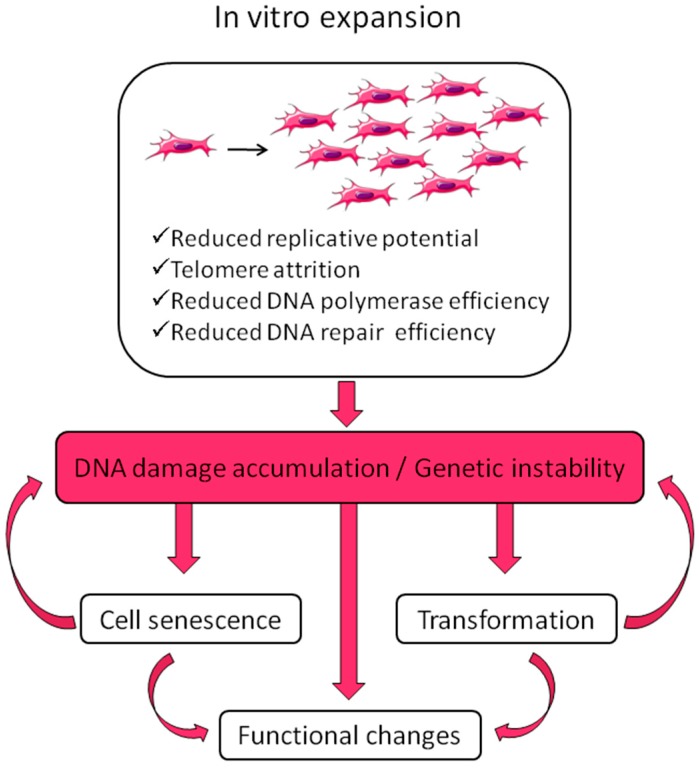
Mesenchymal stem/stromal cells (MSC) show widespread application for a variety of clinical conditions; therefore, their use necessitates continuous monitoring of their safety. The risk assessment of mesenchymal stem cell-based therapies cannot be separated from an accurate and deep knowledge of their biological properties and in vitro and in vivo behavior. One of the most relevant safety issues is represented by the genetic stability of MSCs, that can be altered during in vitro manipulation, frequently required before clinical application. MSC genetic stability has the potential to influence the transformation and the therapeutic effect of these cells. At present, karyotype evaluation represents the definitely prevailing assessment of MSC stability, but DNA alterations of smaller size should not be underestimated. This review will focus on current scientific knowledge about the genetic stability of mesenchymal stem cells. The techniques used and possible improvements together with regulatory aspects will also be discussed.
间充质干细胞(MSC)在多种临床情况下具有广泛的应用,因此,需要对其安全性进行持续监测。基于间充质干细胞的治疗方法的风险评估不能脱离对其生物学特性以及体外和体内行为的准确和深入了解。最相关的安全问题之一是 MSC 的遗传稳定性,其在体外操作过程中可能会发生改变,而这些操作通常是在临床应用之前进行的。MSC 遗传稳定性有可能影响这些细胞的转化和治疗效果。目前,核型评估代表了 MSC 稳定性的绝对主流评估方法,但不应低估较小大小的 DNA 改变。这篇综述将重点介绍关于间充质干细胞遗传稳定性的当前科学知识。还将讨论所使用的技术和可能的改进以及监管方面。