Centre for Inflammation Research at the QMRI, University of Edinburgh, Edinburgh, UK.
J Immunol Res. 2019 Apr 11;2019:1845128. doi: 10.1155/2019/1845128. eCollection 2019.
Idiopathic pulmonary fibrosis (IPF) is a progressive fibrotic interstitial lung disease, with high mortality. Currently, the aetiology and the pathology of IPF are poorly understood, with both innate and adaptive responses previously being implicated in the disease pathogenesis. Heat shock proteins (Hsp) and antibodies to Hsp in patients with IPF have been suggested as therapeutic targets and prognostic biomarkers, respectively. We aimed to study the relationship between the expression of Hsp72 and anti-Hsp72 antibodies in the BAL fluid and serum Aw disease progression in patients with IPF.
A novel indirect ELISA to measure anti-Hsp72 IgG was developed and together with commercially available ELISAs used to detect Hsp72 IgG, Hsp72 IgGAM, and Hsp72 antigen, in the serum and BALf of a cohort of IPF ( = 107) and other interstitial lung disease (ILD) patients ( = 66). Immunohistochemistry was used to detect Hsp72 in lung tissue. The cytokine expression from monocyte-derived macrophages was measured by ELISA.
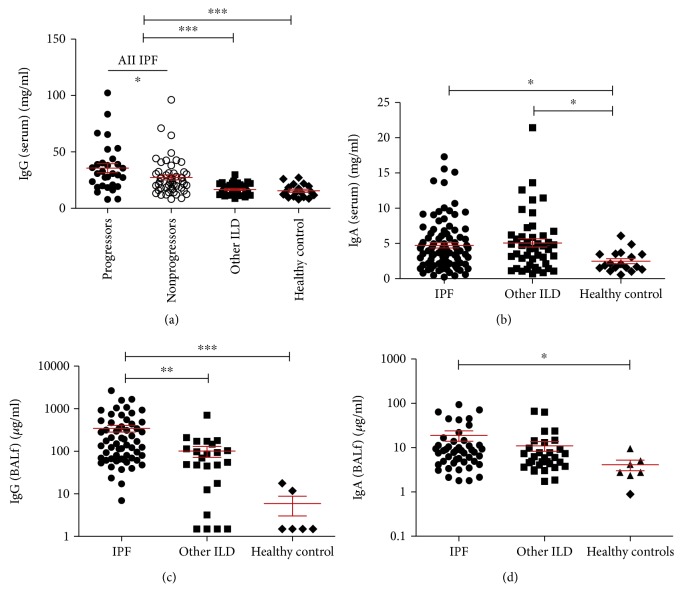
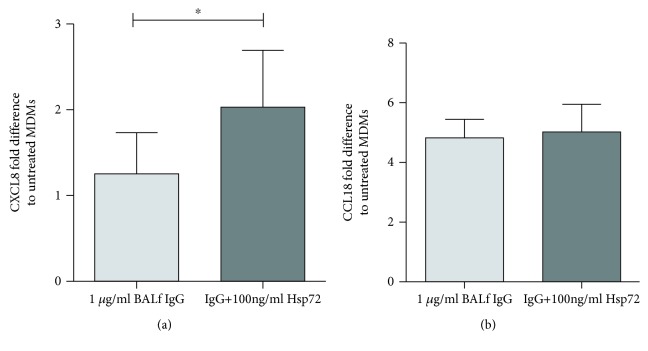
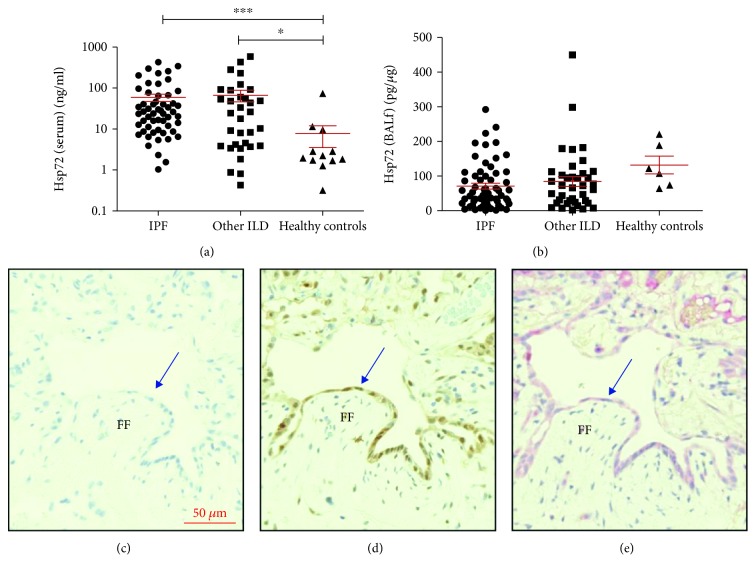
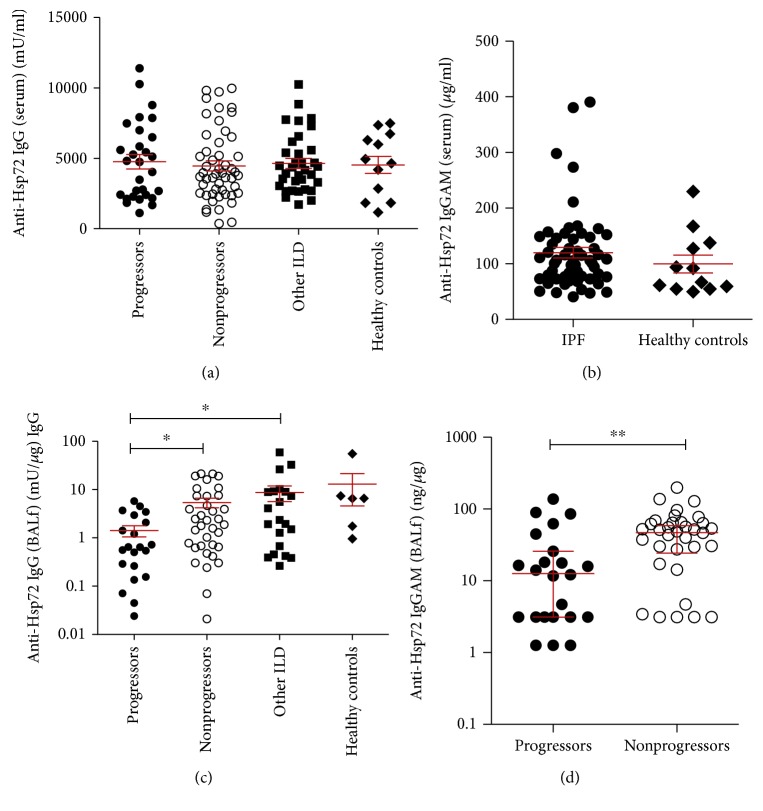
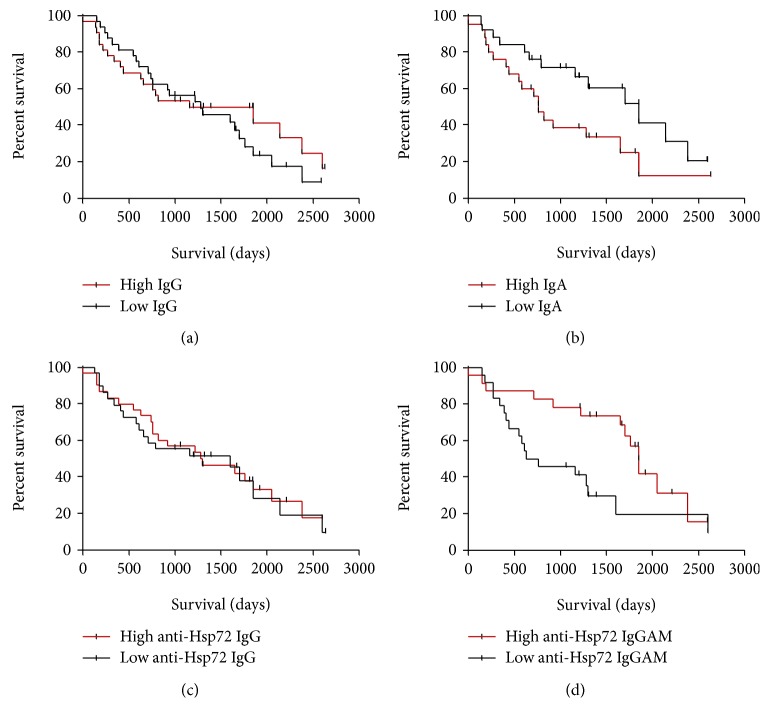
Anti-Hsp72 IgG was detectable in the serum and BALf of IPF ( = 107) and other ILDs ( = 66). Total immunoglobulin concentrations in the BALf showed an excessive adaptive response in IPF compared to other ILDs and healthy controls ( = 0.026). Immunohistochemistry detection of C4d and Hsp72 showed that these antibodies may be targeting high expressing Hsp72 type II alveolar epithelial cells. However, detection of anti-Hsp72 antibodies in the BALf revealed that increasing concentrations were associated with improved patient survival (adjusted HR 0.62, 95% CI 0.45-0.85; = 0.003). experiments demonstrate that anti-Hsp72 complexes stimulate macrophages to secrete CXCL8 and CCL18.
Our results indicate that intrapulmonary anti-Hsp72 antibodies are associated with improved outcomes in IPF. These may represent natural autoantibodies, and anti-Hsp72 IgM and IgA may provide a beneficial role in disease pathogenesis, though the mechanism of action for this has yet to be determined.
特发性肺纤维化(IPF)是一种进行性纤维性间质性肺病,死亡率高。目前,IPF 的病因和病理学知之甚少,先天和适应性反应都被认为与疾病的发病机制有关。热休克蛋白(Hsp)和 IPF 患者的抗 Hsp 在治疗靶点和预后生物标志物方面分别得到了提示。我们旨在研究 BAL 液中 Hsp72 的表达与抗 Hsp72 抗体与 IPF 患者疾病进展的关系。
开发了一种新型间接 ELISA 来测量抗 Hsp72 IgG,并与商业上可获得的 ELISA 一起用于检测血清和 BALf 中的 Hsp72 IgG、Hsp72 IgGAM 和 Hsp72 抗原,该队列包括 107 例 IPF 和 66 例其他间质性肺疾病(ILD)患者。免疫组化用于检测肺组织中的 Hsp72。通过 ELISA 测量单核细胞衍生的巨噬细胞的细胞因子表达。
在 IPF(n=107)和其他 ILD(n=66)的血清和 BALf 中均可检测到抗 Hsp72 IgG。与其他 ILD 和健康对照组相比,BALf 中的总免疫球蛋白浓度显示出过度的适应性反应(n=0.026)。C4d 和 Hsp72 的免疫组化检测表明,这些抗体可能针对高表达的 Hsp72 型 II 肺泡上皮细胞。然而,BALf 中抗 Hsp72 抗体的检测表明,浓度增加与患者生存改善相关(调整后的 HR 0.62,95%CI 0.45-0.85;n=0.003)。实验表明,抗 Hsp72 复合物刺激巨噬细胞分泌 CXCL8 和 CCL18。
我们的结果表明,肺内抗 Hsp72 抗体与 IPF 患者的预后改善相关。这些可能代表天然自身抗体,抗 Hsp72 IgM 和 IgA 可能在疾病发病机制中发挥有益作用,尽管其作用机制尚待确定。