1 Department of Medicine, University of Cambridge, Box 157 Addenbrooke's Hospital, Hills Road, Cambridge CB2 0QQ, UK.
2 London School of Hygiene and Tropical Medicine, Keppel Street, London WC1E 7HT, UK.
Microb Genom. 2019 May;5(5). doi: 10.1099/mgen.0.000267. Epub 2019 May 20.
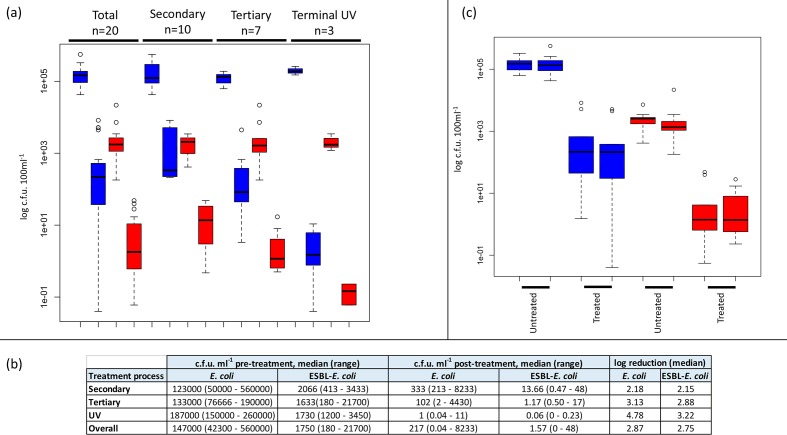
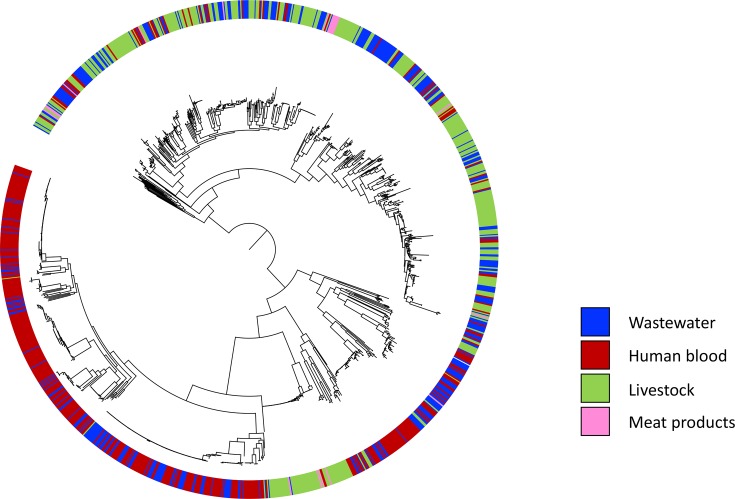
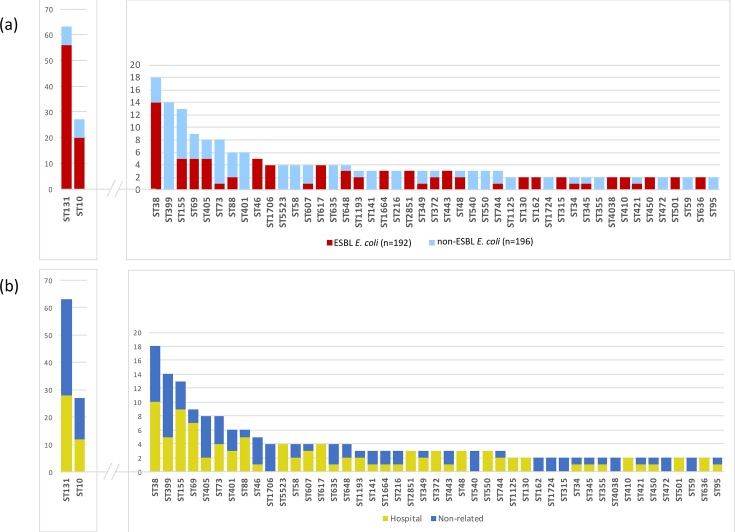
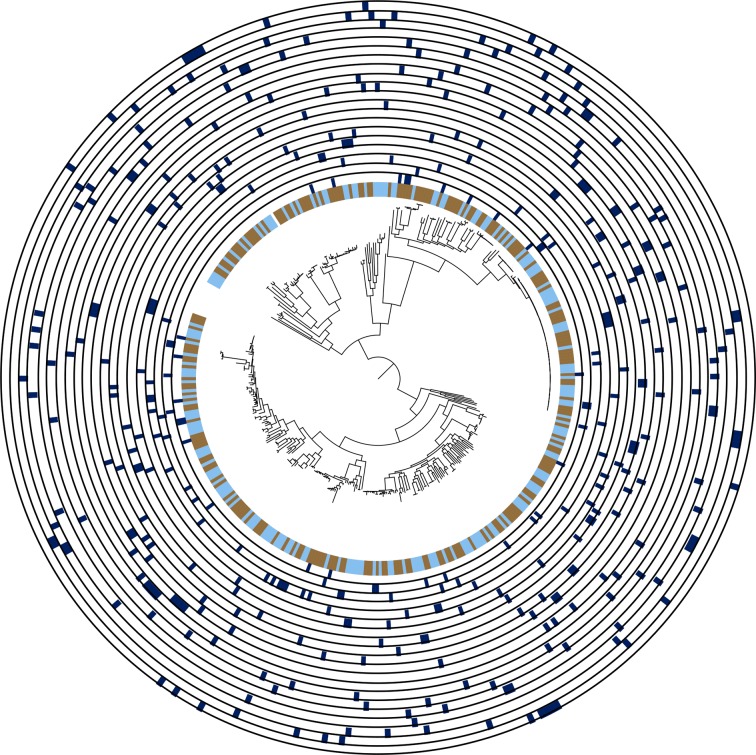
We examined whether genomic surveillance of Escherichia coli in wastewater could capture the dominant E. coli lineages associated with bloodstream infection and livestock in the East of England, together with the antibiotic-resistance genes circulating in the wider E. coli population. Treated and untreated wastewater was taken from 20 municipal treatment plants in the East of England, half in direct receipt of acute hospital waste. All samples were culture positive for E. coli, and all but one were positive for extended-spectrum β-lactamase (ESBL)-producing E. coli. The most stringent wastewater treatment (tertiary including UV light) did not eradicate ESBL-E. coli in 2/3 cases. We sequenced 388 E. coli (192 ESBL, 196 non-ESBL). Multilocus sequence type (ST) diversity was similar between plants in direct receipt of hospital waste versus the remainder (93 vs 95 STs, respectively). We compared the genomes of wastewater E. coli with isolates from bloodstream infection (n=437), and livestock farms and retail meat (n=431) in the East of England. A total of 19/20 wastewater plants contained one or more of the three most common STs associated with bloodstream infection (ST131, ST73, ST95), and 14/20 contained the most common livestock ST (ST10). In an analysis of 1254 genomes (2 cryptic E. coli were excluded), wastewater isolates were distributed across the phylogeny and intermixed with isolates from humans and livestock. Ten blaCTX-M elements were identified in E. coli isolated from wastewater, together with a further 47 genes encoding resistance to the major antibiotic drug groups. Genes encoding resistance to colistin and the carbapenems were not detected. Genomic surveillance of E. coli in wastewater could be used to monitor new and circulating lineages and resistance determinants of public-health importance.
我们研究了污水中的大肠杆菌基因组监测是否能够捕捉到与英格兰东部血流感染和牲畜相关的主要大肠杆菌谱系,以及广泛的大肠杆菌种群中循环的抗生素耐药基因。我们从英格兰东部的 20 个市政处理厂采集了处理过和未处理的污水,其中一半直接接收急性医院废物。所有样本均培养出大肠杆菌阳性,除一个样本外,所有样本均为产超广谱β-内酰胺酶(ESBL)的大肠杆菌阳性。最严格的污水(包括紫外线的三级处理)未能消除 2/3情况下的 ESBL-大肠杆菌。我们对 388 株大肠杆菌(192 株 ESBL,196 株非 ESBL)进行了测序。直接接收医院废物的工厂和其余工厂之间的多基因序列型(ST)多样性相似(分别为 93 种和 95 种 ST)。我们比较了污水大肠杆菌与英格兰东部血流感染(n=437)、牲畜场和零售肉(n=431)分离株的基因组。共有 19/20 个污水厂含有与血流感染相关的三种最常见 ST 中的一种或多种(ST131、ST73、ST95),14/20 个污水厂含有最常见的牲畜 ST(ST10)。在对 1254 个基因组(排除了 2 个隐秘大肠杆菌)的分析中,污水分离株分布在系统发育树中,并与来自人类和牲畜的分离株混合在一起。从污水中分离出的大肠杆菌中鉴定出 10 个 blaCTX-M 元件,以及另外 47 个编码对抗生素主要药物组耐药的基因。未检测到编码对粘菌素和碳青霉烯类耐药的基因。污水中大肠杆菌的基因组监测可用于监测具有公共卫生重要性的新出现和循环的谱系和耐药决定因素。