Mellai Marta, Annovazzi Laura, Boldorini Renzo, Bertero Luca, Cassoni Paola, De Blasio Pasquale, Biunno Ida, Schiffer Davide
Dipartimento di Scienze della Salute, Scuola di Medicina, Università del Piemonte Orientale "A. Avogadro", Novara, Italy.
Fondazione Edo ed Elvo Tempia Valenta - ONLUS, Biella, Italy.
J Pathol Clin Res. 2020 Jan;6(1):17-29. doi: 10.1002/cjp2.134. Epub 2019 Sep 30.
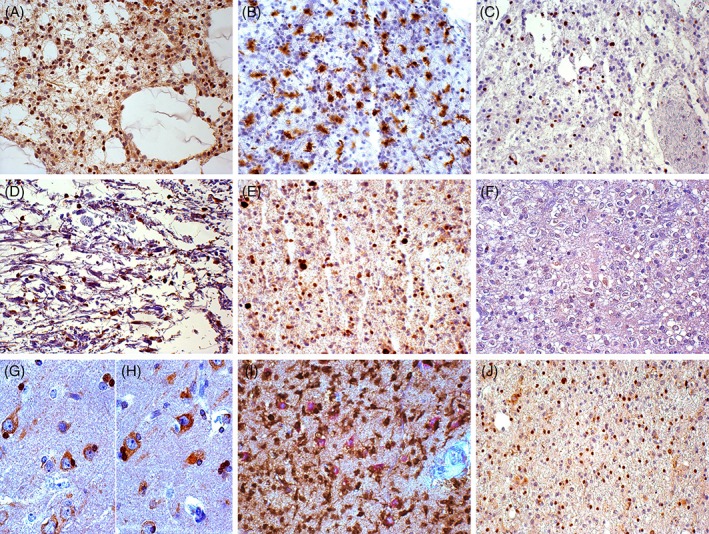
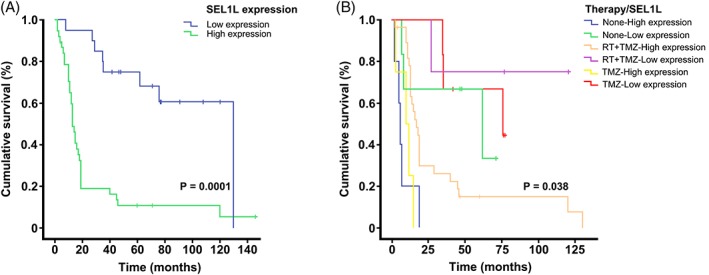
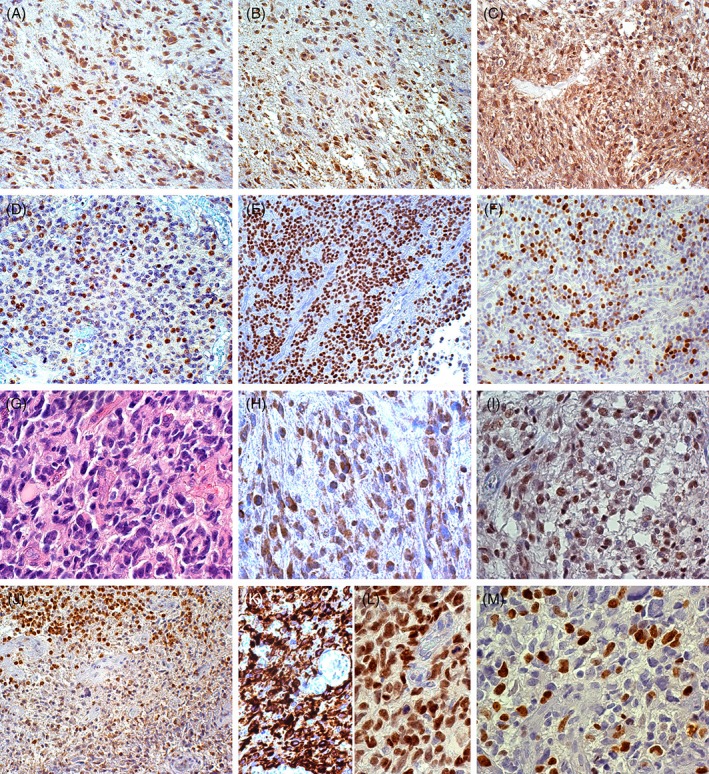
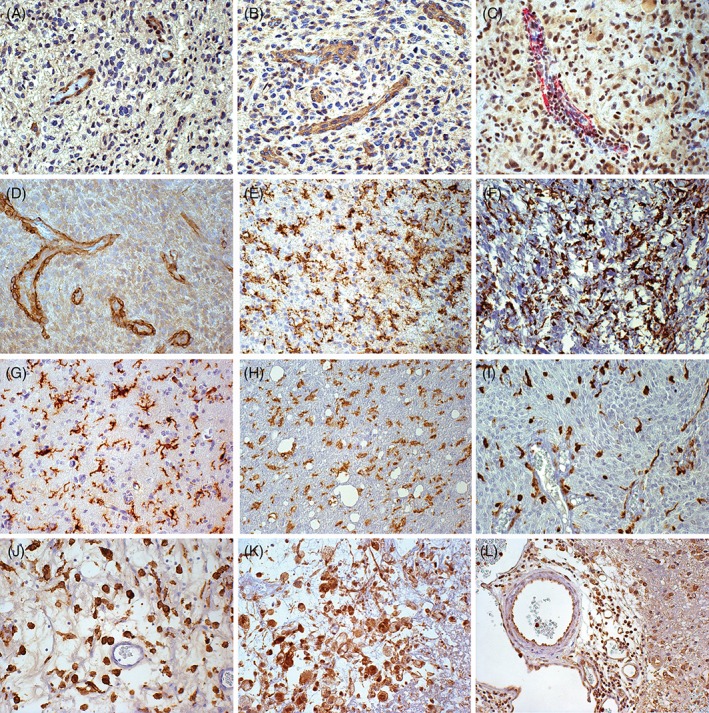
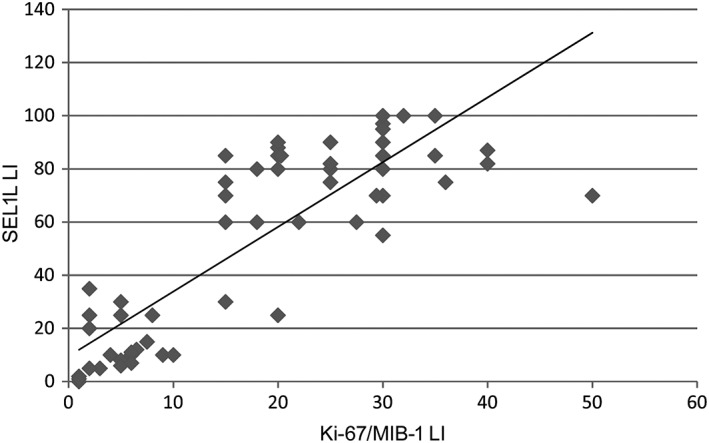
Suppressor of Lin-12-like (C. elegans) (SEL1L) participates in the endoplasmic reticulum-associated protein degradation pathway, malignant transformation and stem cell biology. We explored the role of SEL1L in 110 adult gliomas, of different molecular subtype and grade, in relation to cell proliferation, stemness, glioma-associated microglia/macrophages (GAMs), prognostic markers and clinical outcome. SEL1L protein expression was assessed by immunohistochemistry and Western blotting. Genetic and epigenetic alterations were detected by molecular genetics techniques. SEL1L was overexpressed in anaplastic gliomas (World Health Organization [WHO] grade III) and in glioblastoma (GB, WHO grade IV) with the highest labelling index (LI) in the latter. Immunoreactivity was significantly associated with histological grade (p = 0.002) and cell proliferation index Ki-67/MIB-1 (p = 0.0001). In GB, SEL1L co-localised with stemness markers Nestin and Sox2. Endothelial cells and vascular pericytes of proliferative tumour blood vessels expressed SEL1L suggesting a role in tumour neo-vasculature. GAMs consistently expressed SEL1L. SEL1L overexpression was significantly associated with TERT promoter mutations (p = 0.0001), EGFR gene amplification (p = 0.0013), LOH on 10q (p = 0.0012) but was mutually exclusive with IDH1/2 mutations (p = 0.0001). SEL1L immunoreactivity correlated with tumour progression and cell proliferation, conditioning poor patient survival and response to therapy. This study emphasises SEL1L as a potential biomarker for the most common subgroup of TERT mutant/EGFR amplified/IDH-WT GBs.
类Lin-12抑制因子(秀丽隐杆线虫)(SEL1L)参与内质网相关蛋白降解途径、恶性转化和干细胞生物学过程。我们探讨了SEL1L在110例不同分子亚型和级别的成人胶质瘤中,与细胞增殖、干性、胶质瘤相关小胶质细胞/巨噬细胞(GAMs)、预后标志物及临床结局的关系。通过免疫组织化学和蛋白质印迹法评估SEL1L蛋白表达。采用分子遗传学技术检测基因和表观遗传学改变。SEL1L在间变性胶质瘤(世界卫生组织[WHO]III级)和胶质母细胞瘤(GB,WHO IV级)中过表达,后者的标记指数(LI)最高。免疫反应性与组织学分级(p = 0.002)和细胞增殖指数Ki-67/MIB-1显著相关(p = 0.0001)。在GB中,SEL1L与干性标志物巢蛋白和Sox2共定位。增殖性肿瘤血管的内皮细胞和血管周细胞表达SEL1L,提示其在肿瘤新生血管形成中发挥作用。GAMs持续表达SEL1L。SEL1L过表达与TERT启动子突变(p = 0.0001)、EGFR基因扩增(p = 0.0013)、10q染色体杂合性缺失(p = 0.0012)显著相关,但与IDH1/2突变相互排斥(p = 0.0001)。SEL1L免疫反应性与肿瘤进展和细胞增殖相关,预示患者生存率低且对治疗反应差。本研究强调SEL1L作为TERT突变/EGFR扩增/IDH野生型GBs最常见亚组的潜在生物标志物。