School of Health and Biomedical Sciences, RMIT University, Bundoora, VIC, Australia.
Department of Physiology, The University of Melbourne, Parkville, VIC, Australia.
Autism Res. 2019 Jul;12(7):1043-1056. doi: 10.1002/aur.2127. Epub 2019 May 22.
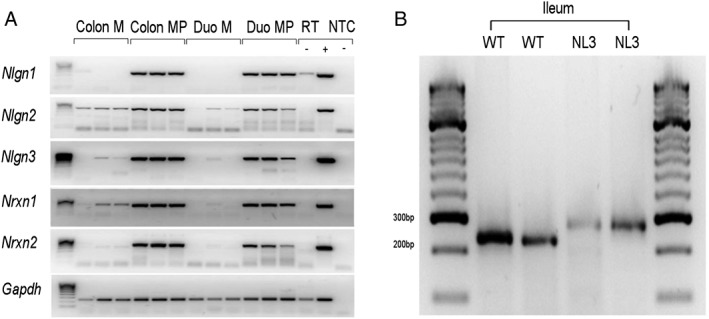
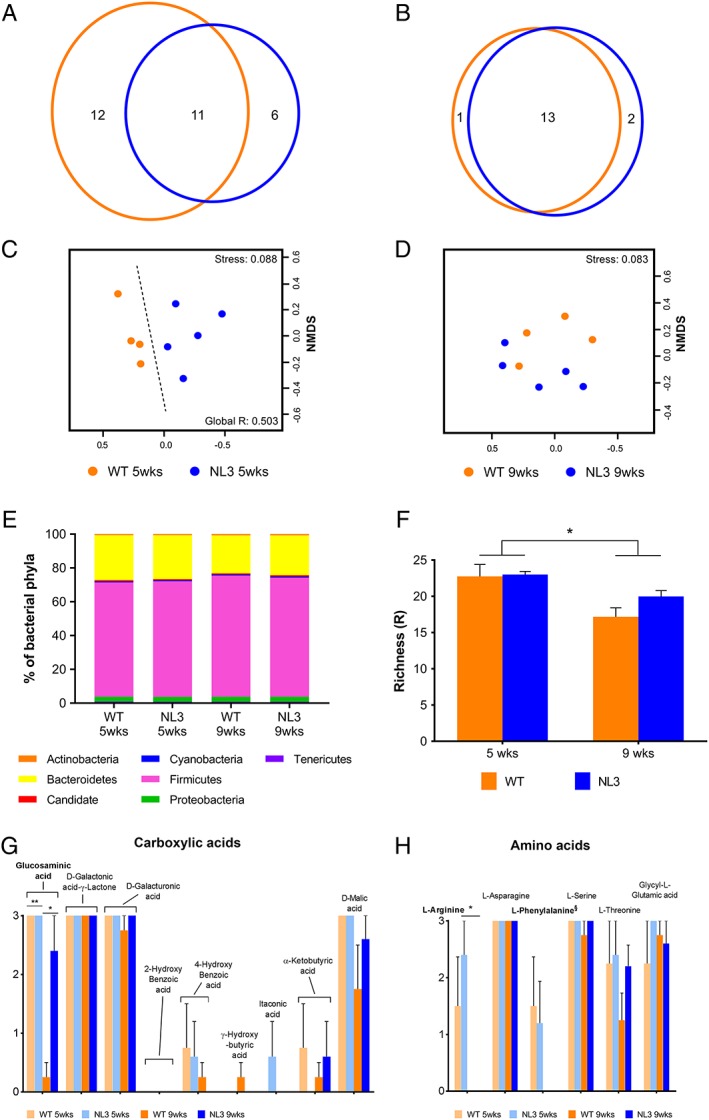
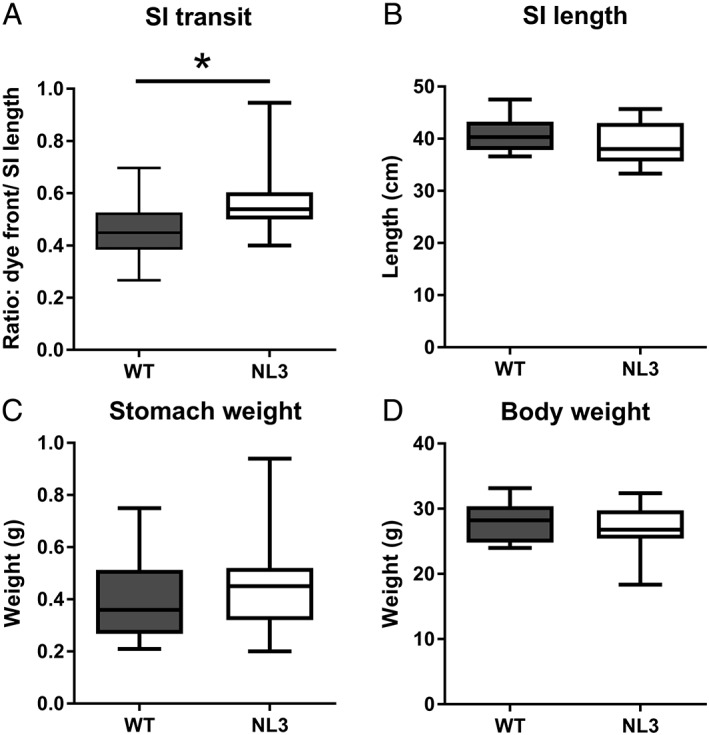
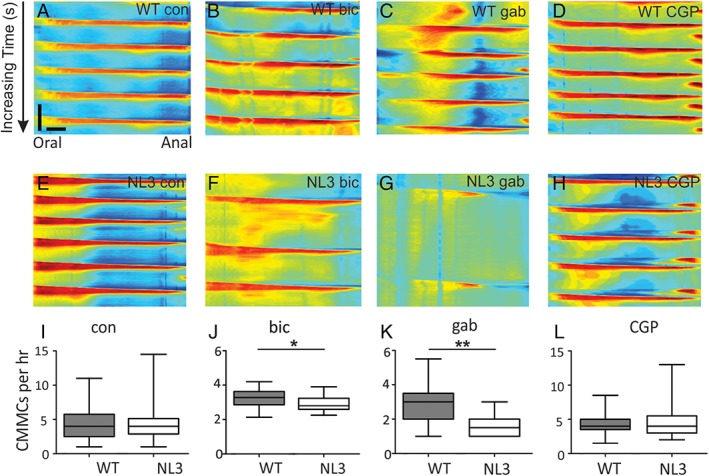
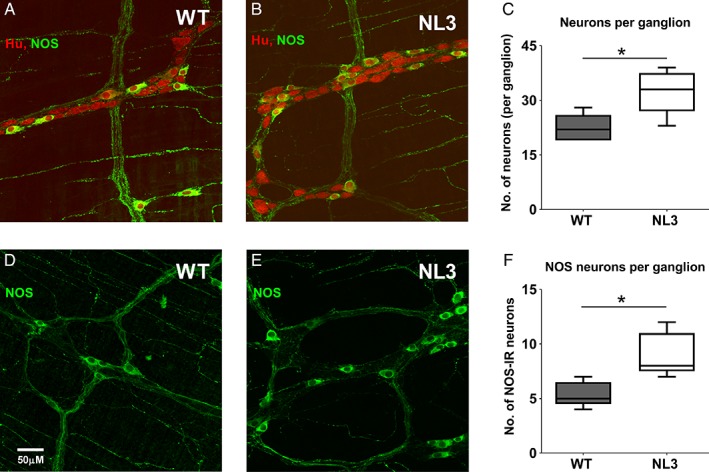
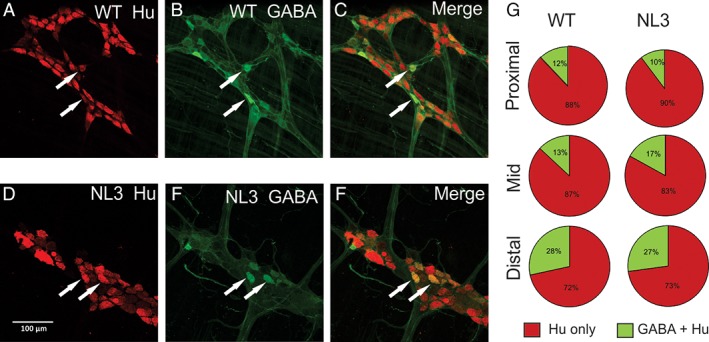
Gastrointestinal (GI) problems constitute an important comorbidity in many patients with autism. Multiple mutations in the neuroligin family of synaptic adhesion molecules are implicated in autism, however whether they are expressed and impact GI function via changes in the enteric nervous system is unknown. We report the GI symptoms of two brothers with autism and an R451C mutation in Nlgn3 encoding the synaptic adhesion protein, neuroligin-3. We confirm the presence of an array of synaptic genes in the murine GI tract and investigate the impact of impaired synaptic protein expression in mice carrying the human neuroligin-3 R451C missense mutation (NL3 ). Assessing in vivo gut dysfunction, we report faster small intestinal transit in NL3 compared to wild-type mice. Using an ex vivo colonic motility assay, we show increased sensitivity to GABA receptor modulation in NL3 mice, a well-established Central Nervous System (CNS) feature associated with this mutation. We further show increased numbers of small intestine myenteric neurons in NL3 mice. Although we observed altered sensitivity to GABA receptor modulators in the colon, there was no change in colonic neuronal numbers including the number of GABA-immunoreactive myenteric neurons. We further identified altered fecal microbial communities in NL3 mice. These results suggest that the R451C mutation affects small intestinal and colonic function and alter neuronal numbers in the small intestine as well as impact fecal microbes. Our findings identify a novel GI phenotype associated with the R451C mutation and highlight NL3 mice as a useful preclinical model of GI dysfunction in autism. Autism Res 2019, 12: 1043-1056. © 2019 International Society for Autism Research, Wiley Periodicals, Inc. LAY SUMMARY: People with autism commonly experience gastrointestinal problems, however the cause is unknown. We report gut symptoms in patients with the autism-associated R451C mutation encoding the neuroligin-3 protein. We show that many of the genes implicated in autism are expressed in mouse gut. The neuroligin-3 R451C mutation alters the enteric nervous system, causes gastrointestinal dysfunction, and disrupts gut microbe populations in mice. Gut dysfunction in autism could be due to mutations that affect neuronal communication.
胃肠道(GI)问题是许多自闭症患者的重要合并症。突触粘附分子神经粘连蛋白家族的多种突变与自闭症有关,但是它们是否通过肠神经系统的变化表达并影响 GI 功能尚不清楚。我们报告了两名自闭症兄弟的胃肠道症状以及编码突触粘附蛋白神经粘连蛋白-3 的 Nlgn3 中的 R451C 突变。我们证实了一系列突触基因在鼠胃肠道中的存在,并研究了携带人类神经粘连蛋白-3 R451C 错义突变(NL3)的小鼠中受损的突触蛋白表达对其的影响。在评估体内肠道功能障碍时,我们报告了 NL3 与野生型小鼠相比,小肠转运更快。通过离体结肠运动测定,我们显示 NL3 小鼠对 GABA 受体调制的敏感性增加,这是与该突变相关的公认的中枢神经系统(CNS)特征。我们还显示 NL3 小鼠的小肠肌间神经元数量增加。尽管我们观察到结肠中 GABA 受体调节剂的敏感性改变,但结肠神经元数量没有变化,包括 GABA 免疫反应性肌间神经元的数量没有变化。我们进一步发现 NL3 小鼠的粪便微生物群落发生改变。这些结果表明,R451C 突变影响小肠和结肠功能,并改变小肠中的神经元数量以及影响粪便微生物。我们的发现确定了与 R451C 突变相关的新型 GI 表型,并强调 NL3 小鼠是自闭症中 GI 功能障碍的有用临床前模型。自闭症研究 2019 年,12:1043-1056。 © 2019 自闭症国际研究协会,威利期刊,公司。 摘要:自闭症患者通常会出现胃肠道问题,但是其病因尚不清楚。我们报告了与自闭症相关的 R451C 突变编码神经粘连蛋白-3 蛋白的患者的肠道症状。我们表明,许多与自闭症相关的基因在小鼠肠道中表达。神经粘连蛋白-3 R451C 突变改变了肠神经系统,导致胃肠道功能障碍,并破坏了小鼠的肠道微生物群。自闭症中的肠道功能障碍可能是由于影响神经元通讯的突变引起的。