Stäubert Claudia, Broom Oliver Jay, Nordström Anders
Swedish Metabolomics Centre, Department of Forest Genetics and Plant Physiology, Swedish University of Agricultural Sciences, Umeå, Sweden.
Department of Molecular Biology, Umeå University, Umeå, Sweden.
Oncotarget. 2015 Aug 14;6(23):19706-20. doi: 10.18632/oncotarget.3565.
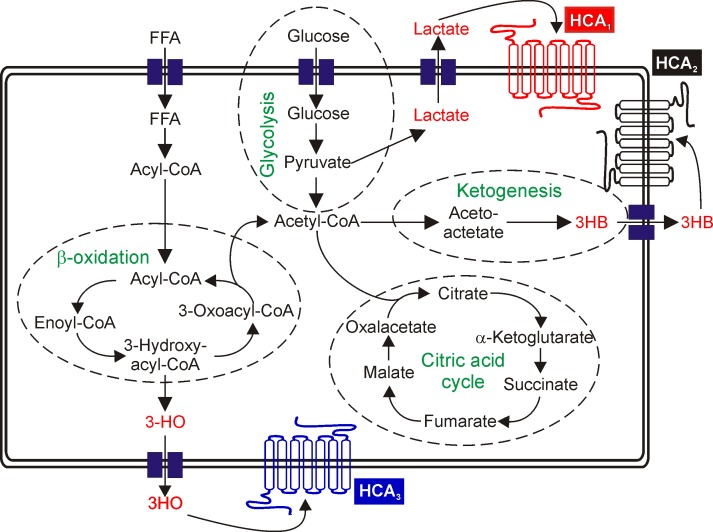
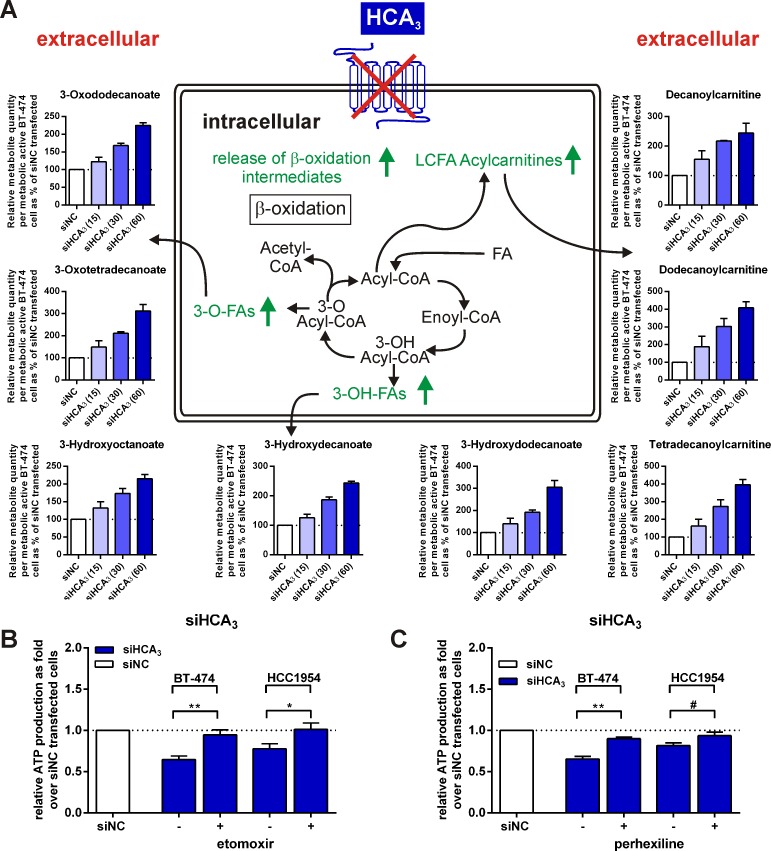
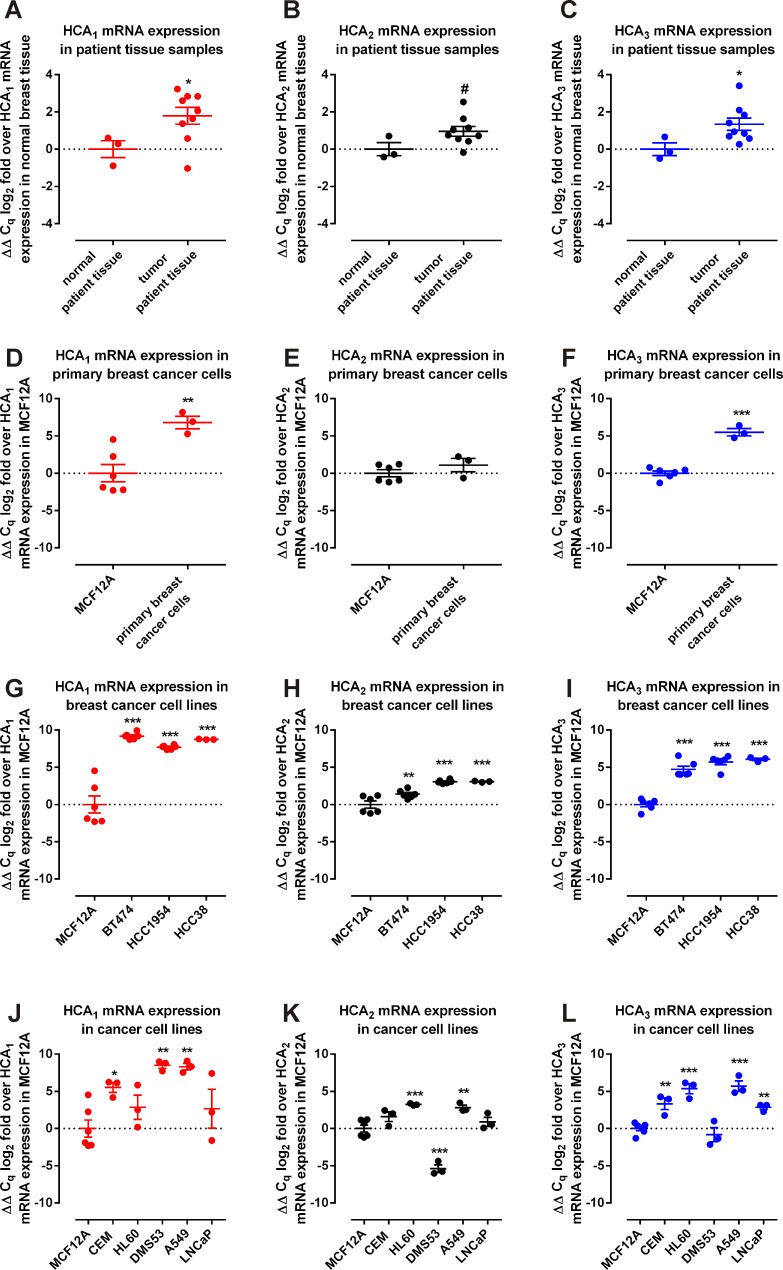
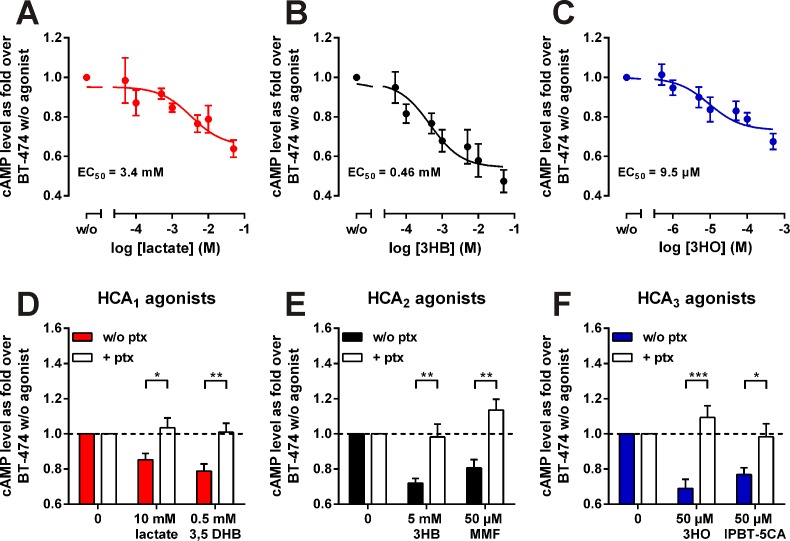
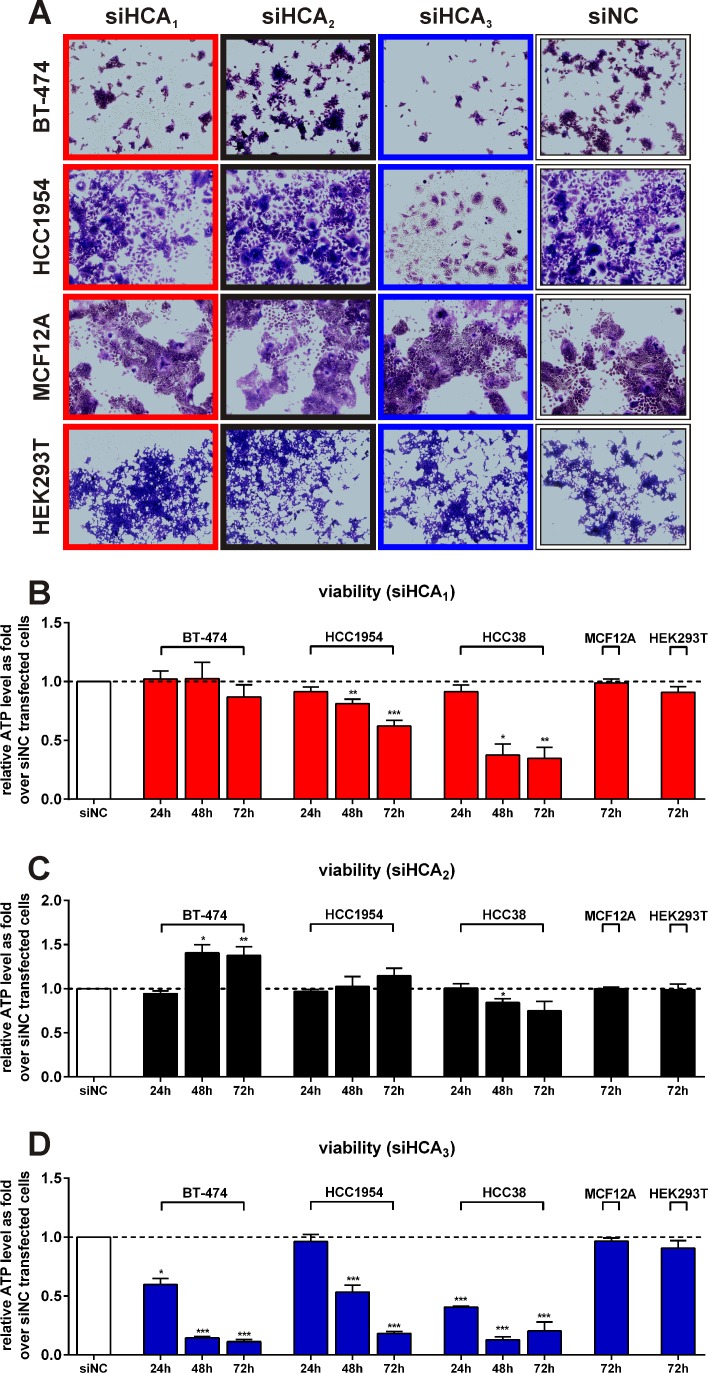
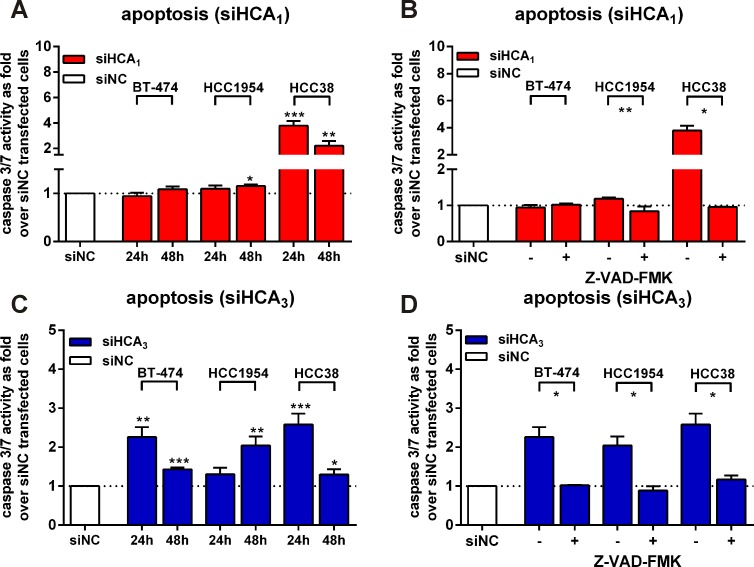
Cancer cells exhibit characteristic changes in their metabolism with efforts being made to address them therapeutically. However, targeting metabolic enzymes as such is a major challenge due to their essentiality for normal proliferating cells. The most successful pharmaceutical targets are G protein-coupled receptors (GPCRs), with more than 40% of all currently available drugs acting through them.We show that, a family of metabolite-sensing GPCRs, the Hydroxycarboxylic acid receptor family (HCAs), is crucial for breast cancer cells to control their metabolism and proliferation.We found HCA1 and HCA3 mRNA expression were significantly increased in breast cancer patient samples and detectable in primary human breast cancer patient cells. Furthermore, siRNA mediated knock-down of HCA3 induced considerable breast cancer cell death as did knock-down of HCA1, although to a lesser extent. Liquid Chromatography Mass Spectrometry based analyses of breast cancer cell medium revealed a role for HCA3 in controlling intracellular lipid/fatty acid metabolism. The presence of etomoxir or perhexiline, both inhibitors of fatty acid β-oxidation rescues breast cancer cells with knocked-down HCA3 from cell death.Our data encourages the development of drugs acting on cancer-specific metabolite-sensing GPCRs as novel anti-proliferative agents for cancer therapy.
癌细胞在代谢方面表现出特征性变化,人们正在努力从治疗上解决这些问题。然而,直接靶向代谢酶是一项重大挑战,因为它们对正常增殖细胞至关重要。最成功的药物靶点是G蛋白偶联受体(GPCRs),目前所有可用药物中有超过40%是通过它们起作用的。我们发现,一类代谢物感应GPCRs,即羟基羧酸受体家族(HCAs),对于乳腺癌细胞控制其代谢和增殖至关重要。我们发现HCA1和HCA3 mRNA表达在乳腺癌患者样本中显著增加,并且在原发性人类乳腺癌患者细胞中可检测到。此外,siRNA介导的HCA3敲低诱导了相当数量的乳腺癌细胞死亡,HCA1敲低也有同样效果,不过程度较轻。基于液相色谱质谱分析的乳腺癌细胞培养基显示HCA3在控制细胞内脂质/脂肪酸代谢中发挥作用。脂肪酸β氧化抑制剂依托莫昔或哌克昔林的存在可使HCA3敲低的乳腺癌细胞免于死亡。我们的数据鼓励开发作用于癌症特异性代谢物感应GPCRs的药物,作为癌症治疗的新型抗增殖剂。