Department of Biochemistry and Molecular Biology, University of British Columbia, Vancouver, British Columbia, Canada.
Department of Chemistry, University of Houston, Houston, Texas, United States of America.
PLoS One. 2019 May 23;14(5):e0216423. doi: 10.1371/journal.pone.0216423. eCollection 2019.
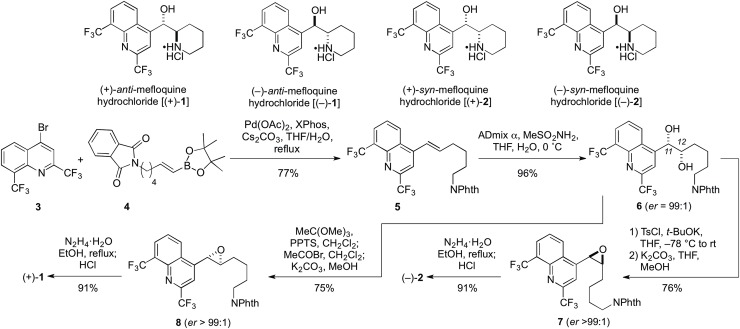
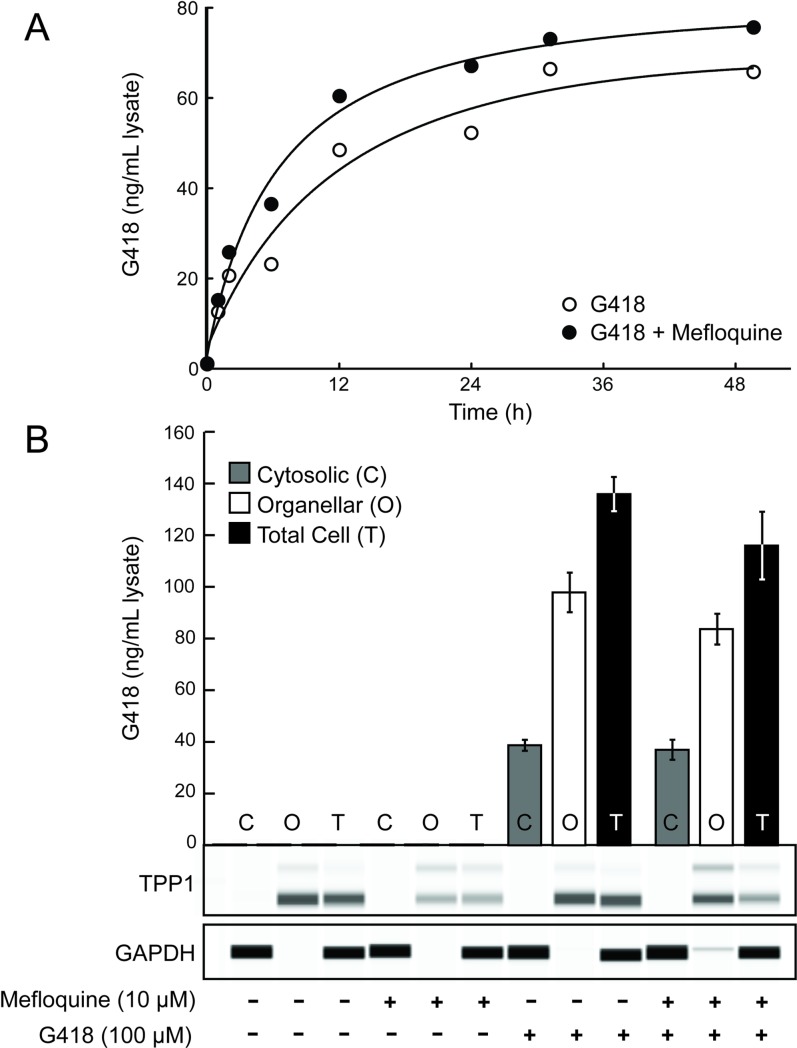
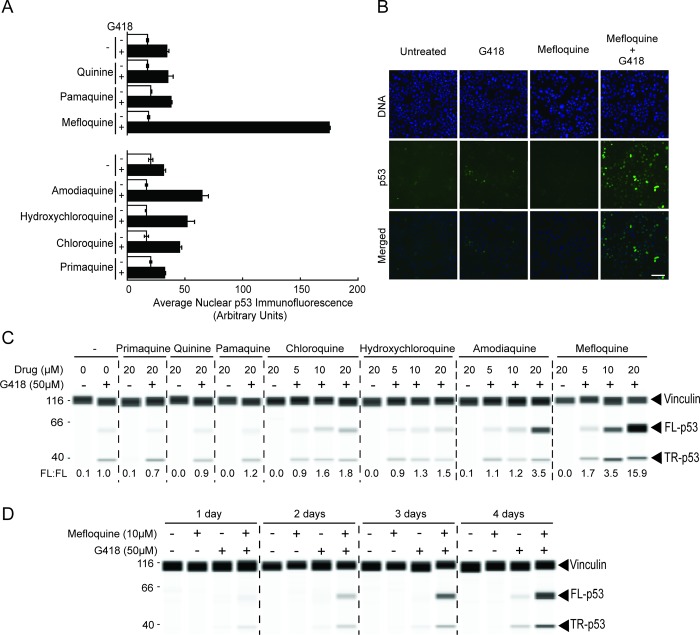
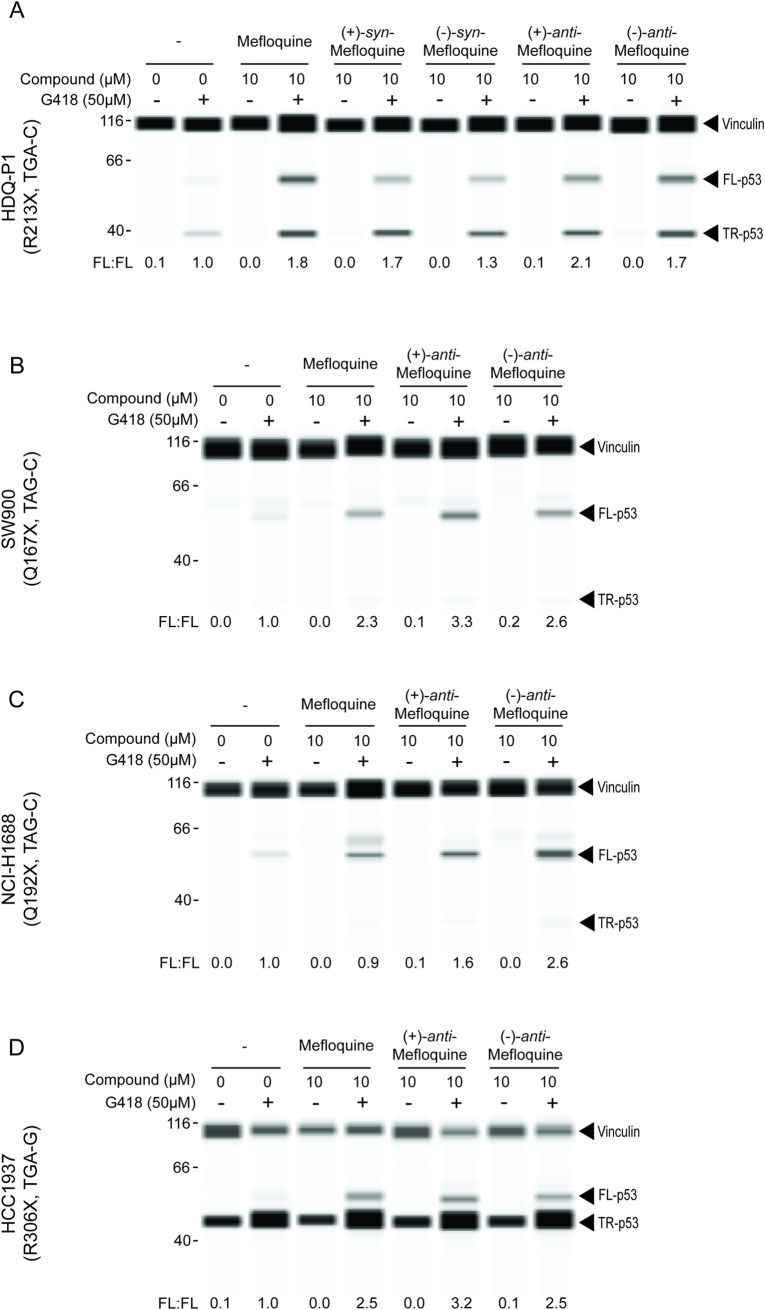
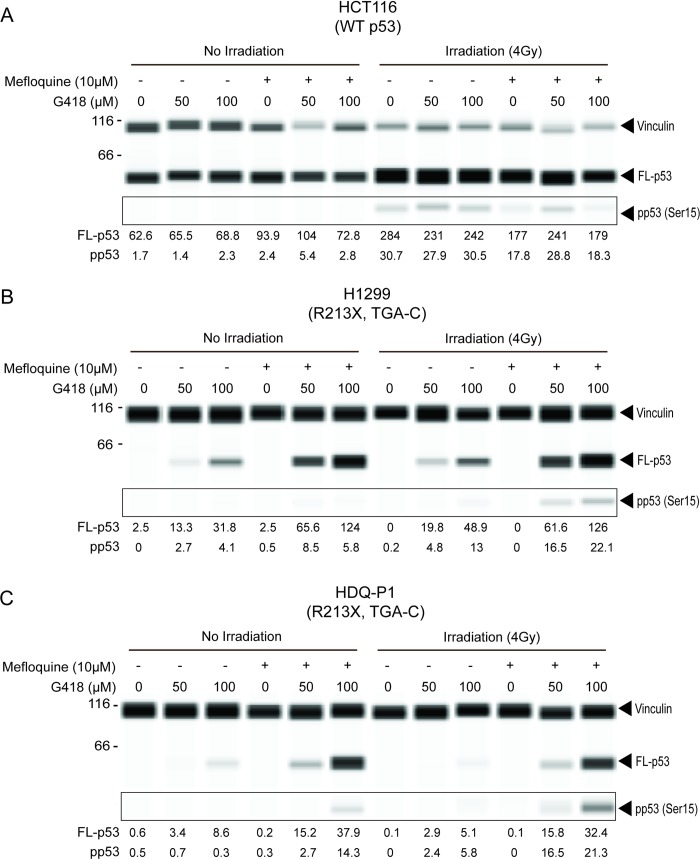
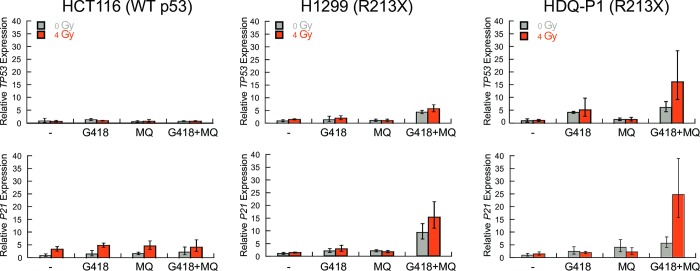
Nonsense mutations constitute ~10% of TP53 mutations in cancer. They introduce a premature termination codon that gives rise to truncated p53 protein with impaired function. The aminoglycoside G418 can induce TP53 premature termination codon readthrough and thus increase cellular levels of full-length protein. Small molecule phthalimide derivatives that can enhance the readthrough activity of G418 have also been described. To determine whether readthrough enhancers exist among drugs that are already approved for use in humans, we tested seven antimalarial drugs for readthrough of the common R213X TP53 nonsense mutation in HDQ-P1 breast cancer cells. Mefloquine induced no TP53 readthrough activity as a single agent but it strongly potentiated readthrough by G418. The two enantiomers composing pharmaceutical mefloquine potentiated readthrough to similar levels in HDQ-P1 cells and also in SW900, NCI-H1688 and HCC1937 cancer cells with different TP53 nonsense mutations. Exposure to G418 and mefloquine increased p53 phosphorylation at Ser15 and P21 transcript levels following DNA damage, indicating p53 produced via readthrough was functional. Mefloquine does not appear to enhance readthrough via lysosomotropic effects as it did not significantly affect lysosomal pH, the cellular levels of G418 or its distribution in organellar or cytosolic fractions. The availability of a readthrough enhancer that is already approved for use in humans should facilitate study of the therapeutic potential of TP53 readthrough in preclinical cancer models.
无义突变约占癌症中 TP53 突变的 10%。它们引入一个提前终止密码子,导致截短的 p53 蛋白功能受损。氨基糖苷类抗生素 G418 可以诱导 TP53 提前终止密码子通读,从而增加全长蛋白的细胞水平。也已经描述了可以增强 G418 通读活性的小分子邻苯二甲酰亚胺衍生物。为了确定在已经批准用于人类的药物中是否存在通读增强剂,我们在 HDQ-P1 乳腺癌细胞中测试了七种抗疟药物对常见 R213X TP53 无义突变的通读。作为单一药物,甲氟喹不能诱导 TP53 通读活性,但它强烈增强了 G418 的通读。构成药物甲氟喹的两个对映异构体在 HDQ-P1 细胞中和具有不同 TP53 无义突变的 SW900、NCI-H1688 和 HCC1937 癌细胞中均能增强通读至相似水平。G418 和甲氟喹暴露会增加 DNA 损伤后 Ser15 和 P21 转录物水平的 p53 磷酸化,表明通过通读产生的 p53 具有功能。甲氟喹似乎不是通过溶酶体增敏作用来增强通读,因为它对溶酶体 pH、G418 的细胞水平或其在细胞器或胞质部分的分布没有显著影响。已经批准用于人类的通读增强剂的可用性应该有助于在临床前癌症模型中研究 TP53 通读的治疗潜力。