Key Laboratory of Agricultural Animal Genetics, Breeding and Reproduction Ministry of Education, College of Animal science and Technology and College of Veterinary Medicine, Huazhong Agricultural University, Wuhan 430070, China.
Cells. 2019 May 24;8(5):501. doi: 10.3390/cells8050501.
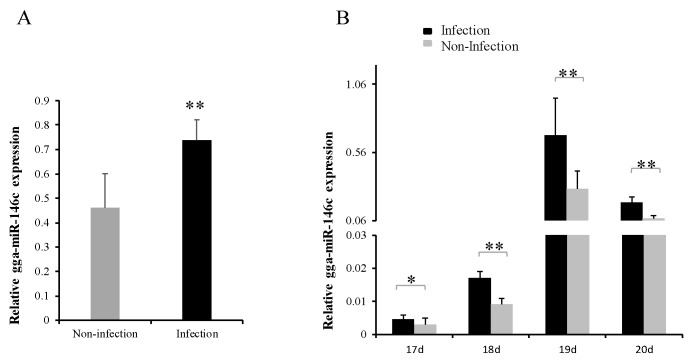
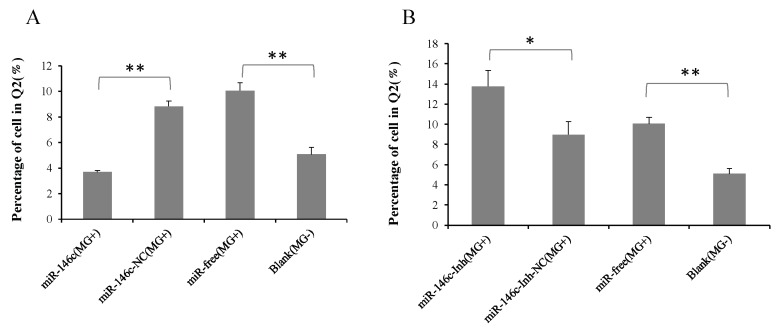
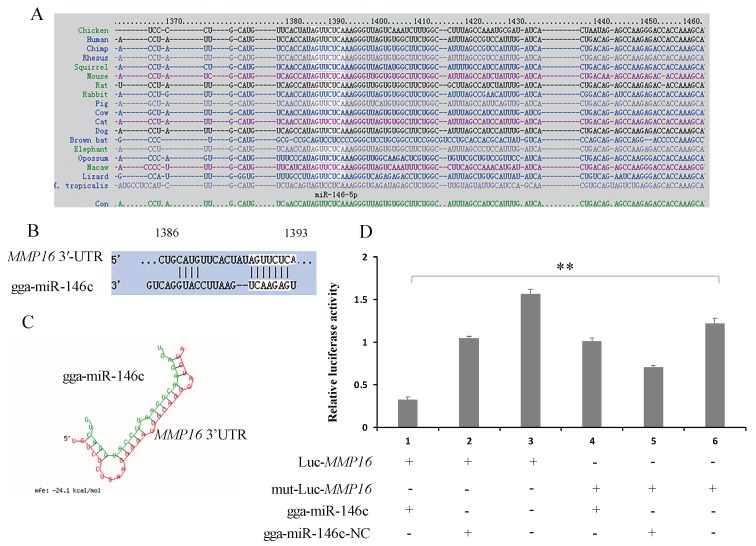
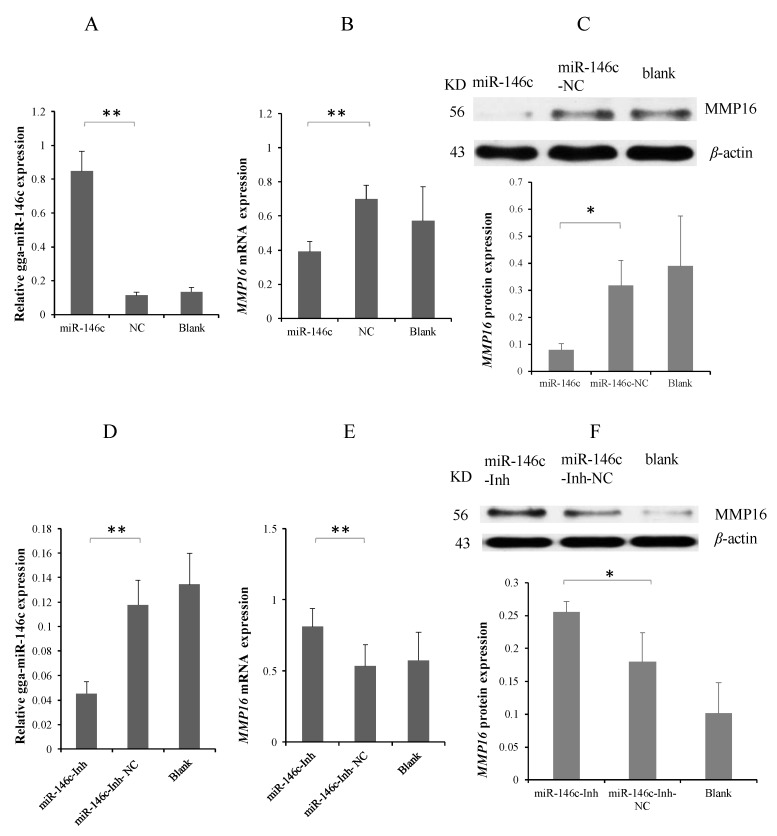
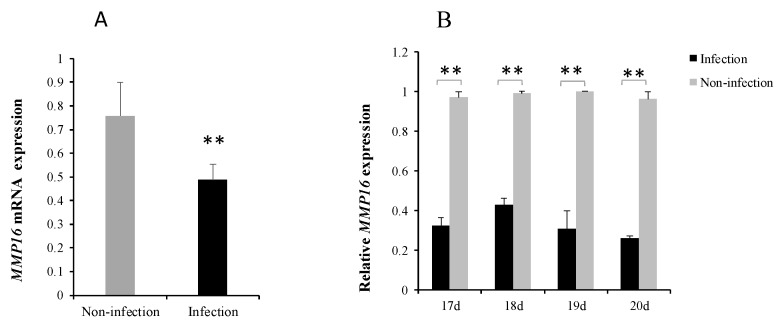
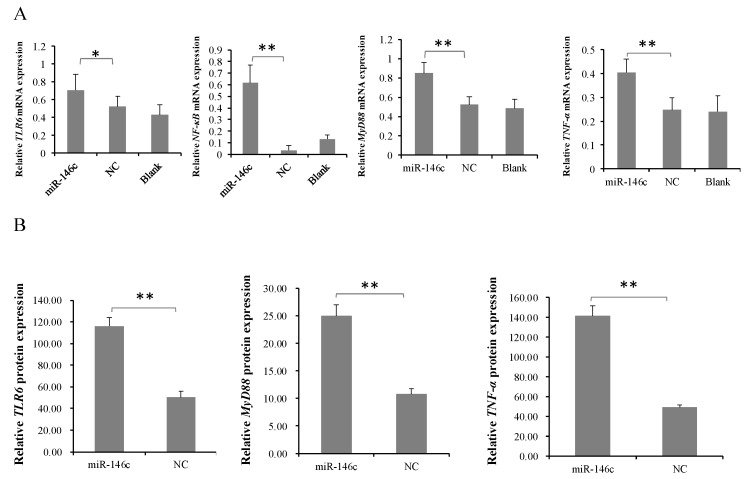
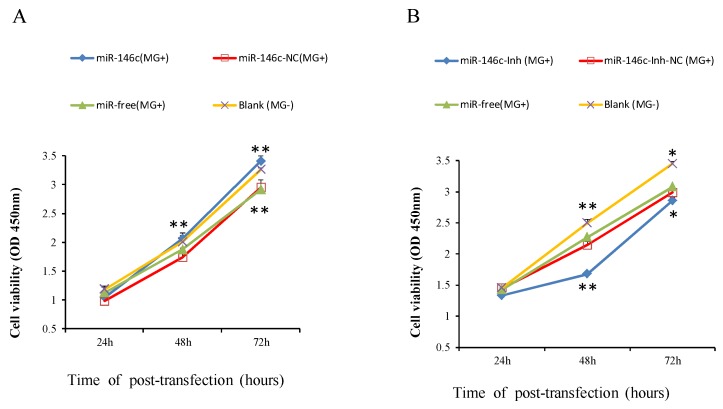
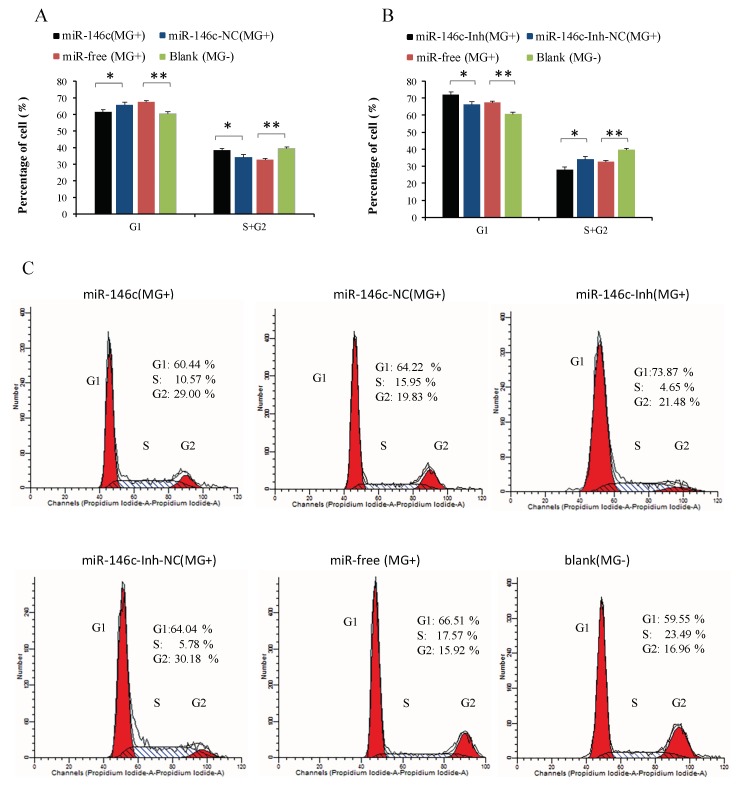
(), a pathogen that infects chickens and some other birds, triggers chronic respiratory disease (CRD) in chickens, which is characterized by inflammation. The investigation of microbial pathogenesis would contribute to the deep understanding of infection control. Since microribonucleic acids (miRNAs) play a key role in this process, gga-mir-146c, an upregulated miRNA upon infection, was selected according to our previous RNA-sequencing data. In this paper, we predicted and validated that is one of gga-miR-146c target genes. Results show that is the target of gga-miR-146c and gga-miR-146c can downregulate expression within limits. gga-miR-146c upregulation significantly increased the expression of TLR6, NF-κB p65, MyD88, and TNF-α, whereas the gga-miR-146c inhibitor led to an opposite result. gga-miR-146c upregulation effectively decreased apoptosis and stimulated DF-1 cells proliferation upon infection. On the contrary, gga-miR-146c inhibitor promoted apoptosis and repressed the proliferation. Collectively, our results suggest that gga-miR-146c upregulation upon MG infection represses expression, activating TLR6/MyD88/NF-κB pathway, promoting cell proliferation by inhibiting cell apoptosis, and, finally, enhancing cell cycle progression to defend against host infection.
()是一种感染鸡和其他一些鸟类的病原体,可引发鸡的慢性呼吸道疾病(CRD),其特征是炎症。对微生物发病机制的研究将有助于深入了解感染控制。由于微小核糖核酸(miRNAs)在此过程中发挥着关键作用,因此根据我们之前的 RNA 测序数据,选择了上调的 miRNA gga-mir-146c 进行研究。在本文中,我们预测并验证了是gga-miR-146c 的一个靶基因。结果表明是 gga-miR-146c 的靶基因,并且 gga-miR-146c 可以在一定范围内下调的表达。gga-miR-146c 的上调显著增加了 TLR6、NF-κB p65、MyD88 和 TNF-α的表达,而 gga-miR-146c 抑制剂则导致相反的结果。gga-miR-146c 的上调有效地减少了感染后 DF-1 细胞的凋亡并刺激了其增殖。相反,gga-miR-146c 抑制剂促进了凋亡并抑制了增殖。总之,我们的结果表明,MG 感染后 gga-miR-146c 的上调抑制了的表达,激活了 TLR6/MyD88/NF-κB 通路,通过抑制细胞凋亡促进细胞增殖,最终增强细胞周期进程以抵抗宿主感染。