Zhang Xuelin, Xiao Saisong, Jiang Xuege, Li Yun, Fan Zhongyi, Yu Yi, Wang Peng, Li Diangeng, Zhao Xian, Liu Changting
1Respiratory Diseases Department, The Second Medical Center of PLA General Hospital, Beijing, 100853 China.
4Hyperbaric Oxygen Department, The First Medical Center of PLA General Hospital, Beijing, 100853 China.
Gut Pathog. 2019 May 21;11:25. doi: 10.1186/s13099-019-0298-5. eCollection 2019.
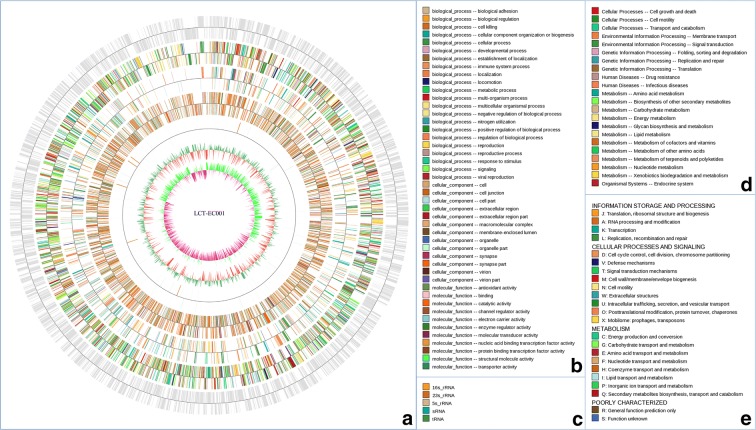
Multidrug resistance is a growing global public health threat with far more serious consequences than generally anticipated. In this study, we investigated the antibiotic resistance and genomic traits of a clinical strain of LCT-EC001.
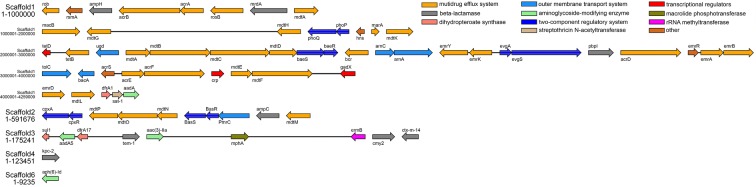
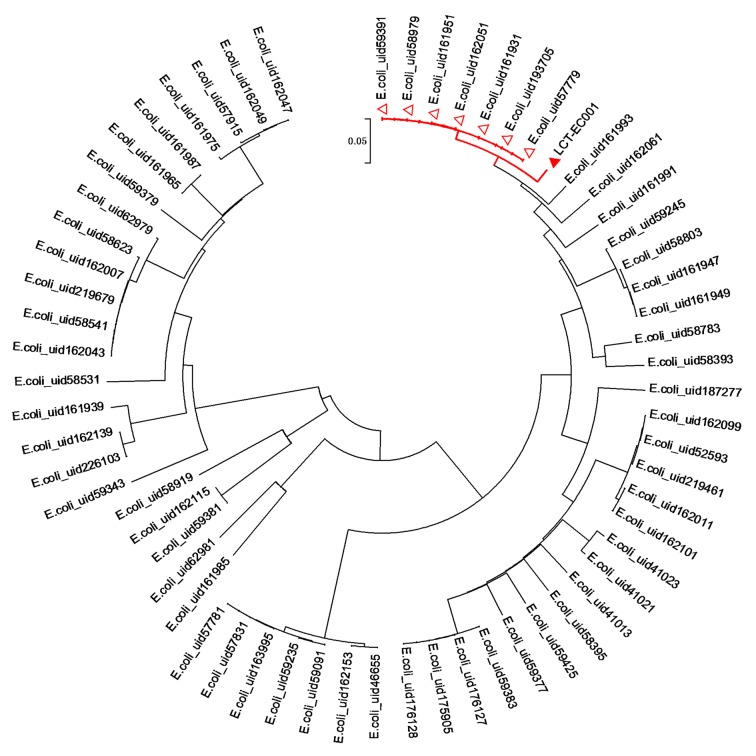
LCT-EC001 was resistant to 16 kinds of widely used antibiotics, including fourth-generation cephalosporins and carbapenems. In total, up to 68 determinants associated with antibiotic resistance were identified, including 8 beta-lactamase genes (notably producing ESBLs and KPCs), 31 multidrug efflux system genes, 6 outer membrane transport system genes, 4 aminoglycoside-modifying enzyme genes, 10 two-component regulatory system genes, and 9 other enzyme or transcriptional regulator genes, covering nearly all known drug-resistance mechanisms in . More than half of the resistance genes were located close to mobile genetic elements, such as plasmids, transposons, genomics islands, and insertion sequences. Phylogenetic analysis revealed that this strain may have evolved from K-12 but is a completely new MLST type.
Antibiotic resistance was extremely severe in LCT-EC001, mainly due to mobile genetic elements that allowed the gain of a large quantity of resistance genes. The antibiotic resistance genes of LCT-EC001 can probably be transferred to other bacteria. To the best of our knowledge, this is the first report of a strain of which has such a large amount of antibiotic resistance genes. Apart from providing an reference genome with an extremely high multidrug-resistant background for future analyses, this work also offers a strategy for investigating the complement and characteristics of genes contributing to drug resistance at the whole-genome level.
多重耐药性是一个日益严重的全球公共卫生威胁,其后果比一般预期的要严重得多。在本研究中,我们调查了临床菌株LCT-EC001的抗生素耐药性和基因组特征。
LCT-EC001对16种广泛使用的抗生素耐药,包括第四代头孢菌素和碳青霉烯类。总共鉴定出多达68个与抗生素耐药性相关的决定因素,包括8个β-内酰胺酶基因(特别是产生超广谱β-内酰胺酶和肺炎克雷伯菌碳青霉烯酶的基因)、31个多药外排系统基因、6个外膜转运系统基因、4个氨基糖苷修饰酶基因、10个双组分调节系统基因和9个其他酶或转录调节基因,涵盖了几乎所有已知的耐药机制。超过一半的耐药基因位于移动遗传元件附近,如质粒、转座子、基因组岛和插入序列。系统发育分析表明,该菌株可能由K-12进化而来,但属于全新的多位点序列分型类型。
LCT-EC001的抗生素耐药性极其严重,主要是由于移动遗传元件使得该菌株获得了大量耐药基因。LCT-EC001的抗生素耐药基因可能会转移到其他细菌。据我们所知,这是首次报道具有如此大量抗生素耐药基因的菌株。除了为未来分析提供具有极高多重耐药背景的参考基因组外,本研究还提供了一种在全基因组水平上研究耐药相关基因组成和特征的策略。