Challacombe Jean F, Pillai Segaran, Kuske Cheryl R
Bioscience Division, Los Alamos National Laboratory, Los Alamos, New Mexico, United States of America.
Office of Laboratory Science and Safety, US Food and Drug Administration, Silver Spring, Maryland, United States of America.
PLoS One. 2017 Aug 24;12(8):e0183554. doi: 10.1371/journal.pone.0183554. eCollection 2017.
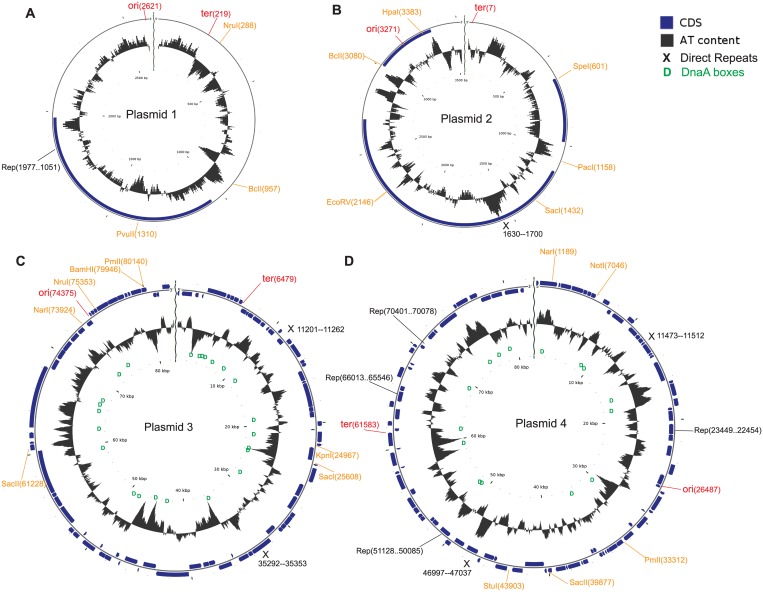
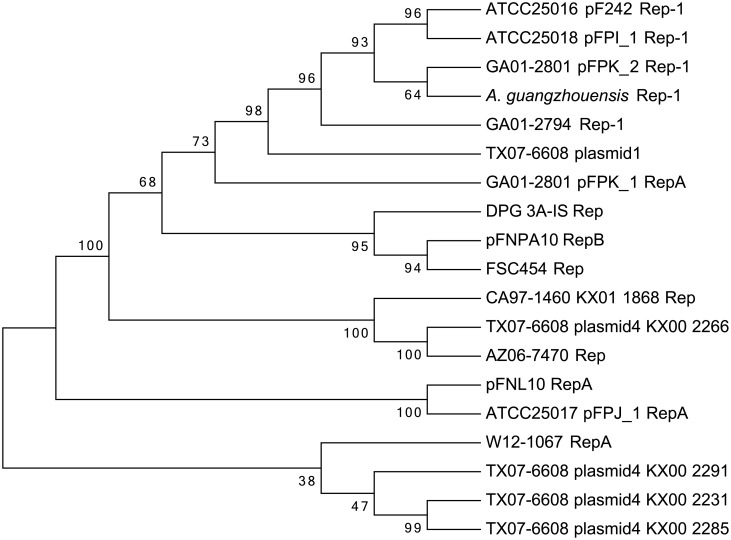
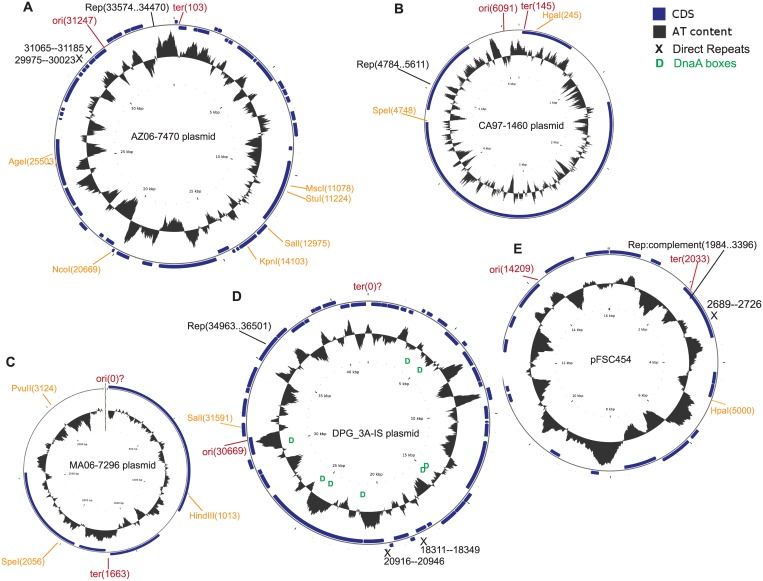
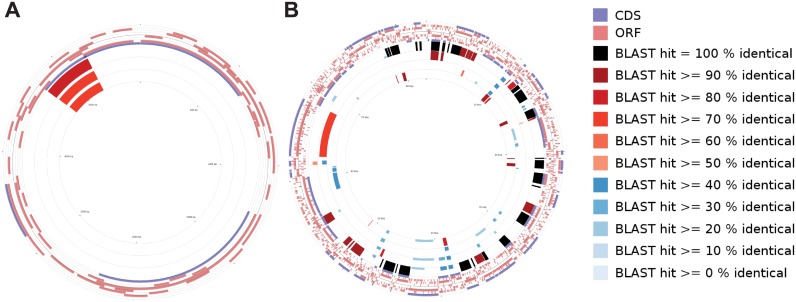
The Francisella genus includes several recognized species, additional potential species, and other representatives that inhabit a range of incredibly diverse ecological niches, but are not closely related to the named species. Francisella species have been obtained from a wide variety of clinical and environmental sources; documented species include highly virulent human and animal pathogens, fish pathogens, opportunistic human pathogens, tick endosymbionts, and free-living isolates inhabiting brackish water. While more than 120 Francisella genomes have been sequenced to date, only a few contain plasmids, and most of these appear to be cryptic, with unknown benefit to the host cell. We have identified several putative cryptic plasmids in the sequenced genomes of three Francisella novicida and F. novicida-like strains (TX07-6608, AZ06-7470, DPG_3A-IS) and two new Francisella species (F. frigiditurris CA97-1460 and F. opportunistica MA06-7296). These plasmids were compared to each other and to previously identified plasmids from other Francisella species. Some of the plasmids encoded functions potentially involved in replication, conjugal transfer and partitioning, environmental survival (transcriptional regulation, signaling, metabolism), and hypothetical proteins with no assignable functions. Genomic and phylogenetic comparisons of these new plasmids to the other known Francisella plasmids revealed some similarities that add to our understanding of the evolutionary relationships among the diverse Francisella species.
弗朗西斯菌属包括几个已被认可的物种、其他潜在物种以及其他一些代表物种,它们栖息于一系列极其多样的生态位中,但与已命名的物种关系并不密切。弗朗西斯菌属的物种已从多种临床和环境来源中分离得到;已记录的物种包括高毒力的人类和动物病原体、鱼类病原体、机会性人类病原体、蜱内共生菌以及生活在微咸水中的自由生活分离株。尽管迄今为止已对120多个弗朗西斯菌基因组进行了测序,但只有少数含有质粒,而且其中大多数似乎是隐蔽型的,对宿主细胞的益处尚不清楚。我们在三株新凶手弗朗西斯菌和类新凶手弗朗西斯菌菌株(TX07 - 6608、AZ06 - 7470、DPG_3A - IS)以及两个新的弗朗西斯菌物种(嗜冷弗朗西斯菌CA97 - 1460和机会性弗朗西斯菌MA06 - 7296)的测序基因组中鉴定出了几个假定的隐蔽型质粒。将这些质粒相互比较,并与先前从其他弗朗西斯菌物种中鉴定出的质粒进行比较。其中一些质粒编码的功能可能涉及复制、接合转移和分配、环境生存(转录调控、信号传导、代谢)以及功能未知的假定蛋白质。将这些新质粒与其他已知的弗朗西斯菌质粒进行基因组和系统发育比较,发现了一些相似之处,这有助于我们进一步了解不同弗朗西斯菌物种之间的进化关系。