Abbina Srinivas, Abbasi Usama, Gill Arshdeep, Wong Kendrew, Kalathottukaren Manu Thomas, Kizhakkedathu Jayachandran N
Department of Pathology and Laboratory Medicine, Center for Blood Research and Life Sciences Institute, and Department of Chemistry, University of British Columbia, Vancouver, British Columbia V6T 1Z3, Canada.
ACS Cent Sci. 2019 May 22;5(5):917-926. doi: 10.1021/acscentsci.9b00284. Epub 2019 Apr 11.
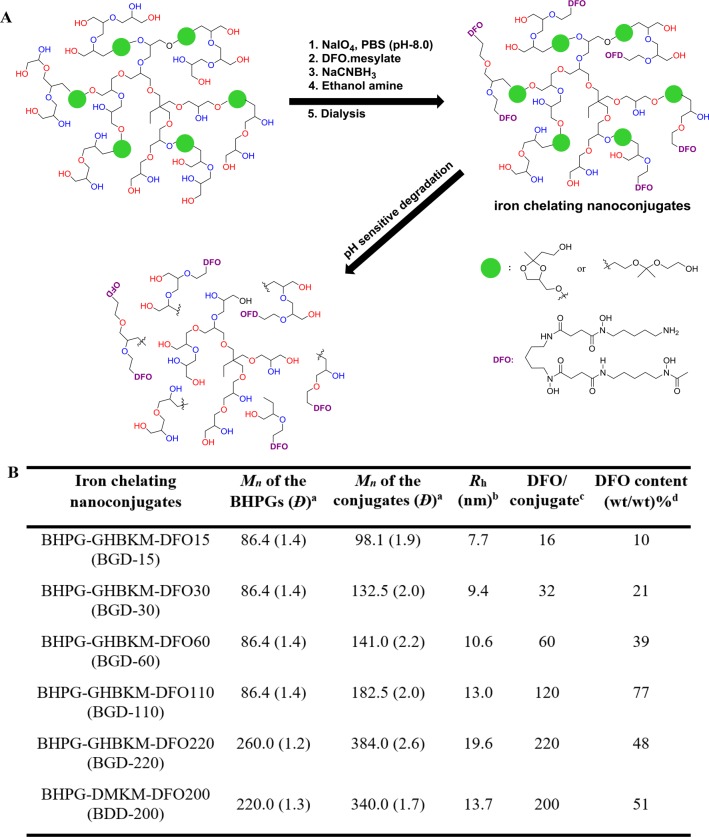
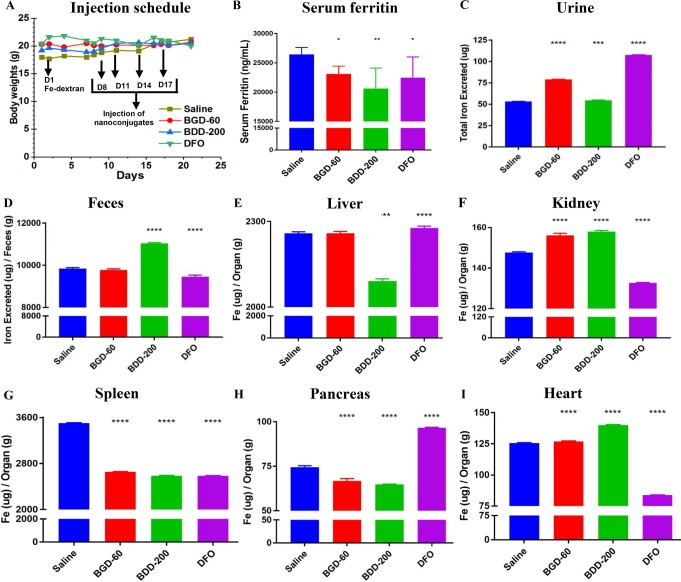
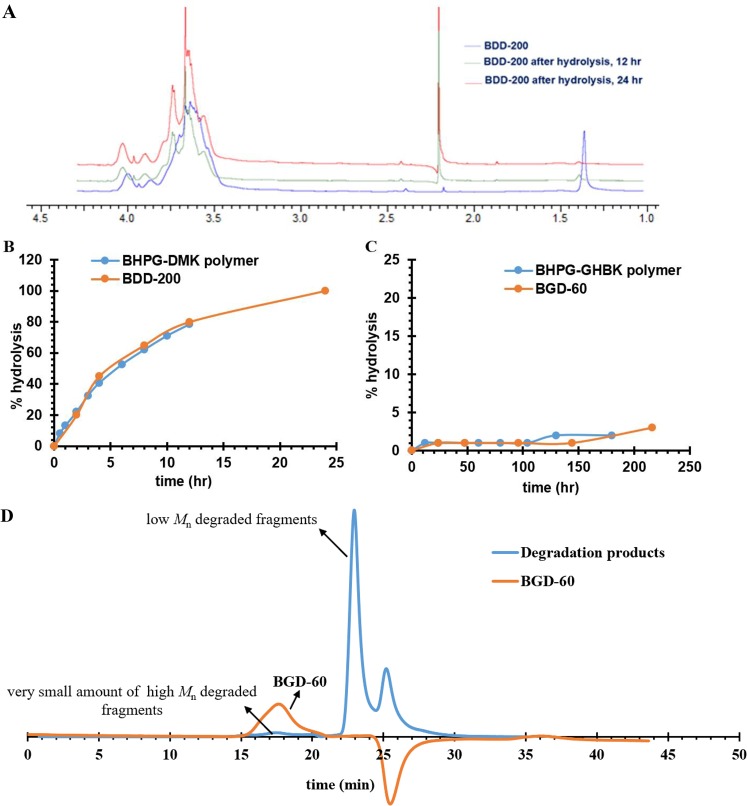
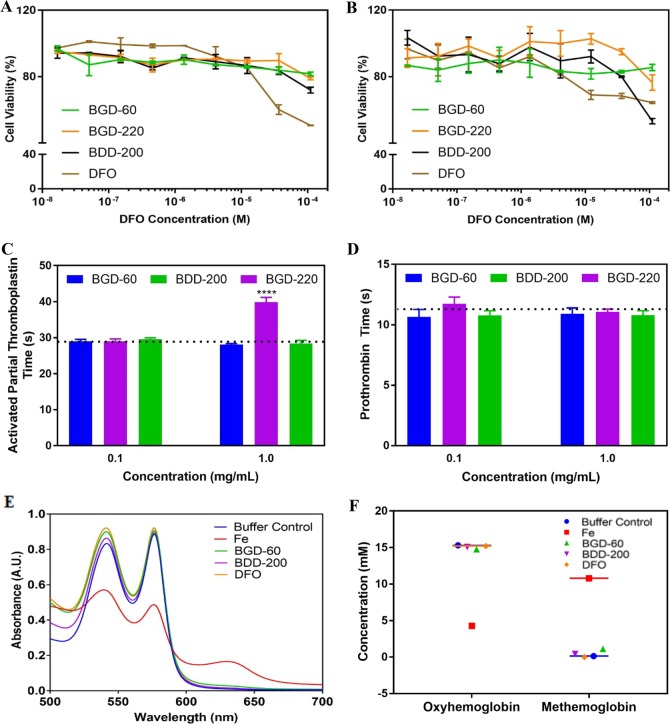
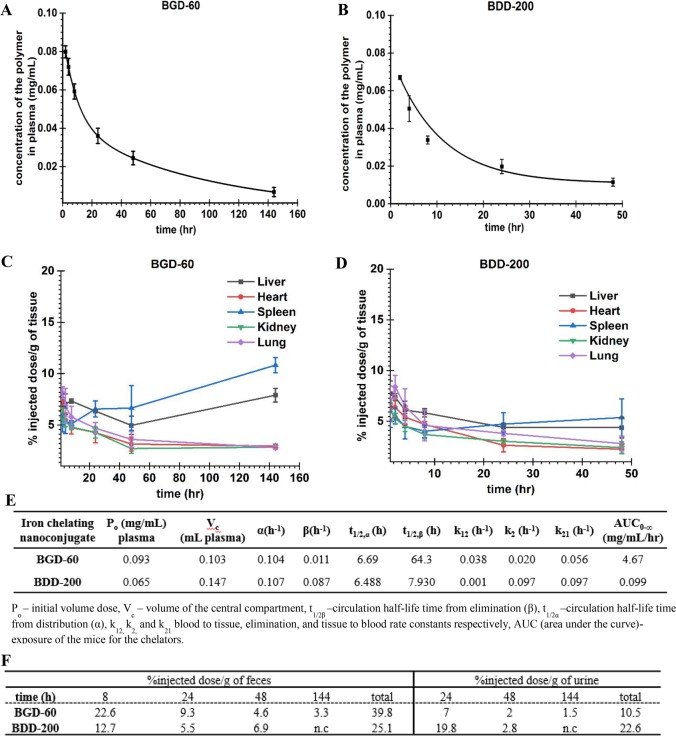
Chronic transfusion of red blood cells (RBCs) to patients with β-thalassemia, sickle cell disease, and other acquired anemic disorders generates significant amounts of bioactive iron deposits in the body. The inactivation and excretion of redox active iron(III) from the blood pool and organs are critical to prevent organ damage, and are the focus of iron chelation therapy (ICT) using low molecular weight Fe(III) specific chelators. However, the current ICT is suboptimal because of the short circulation time of chelators, toxicity, severe side effects, difficult regime of administration, and patient noncompliance. To address this issue, we have designed long circulating and biodegradable nanoconjugates with enhanced circulation time and well-defined biodegradability to improve iron excretion and avoid nonspecific organ accumulation. A series of iron chelating nanoconjugates were generated with deferoxamine (DFO) as the iron(III) specific chelator using polymer scaffolds containing structurally different acidic pH sensitive ketal groups. The type of degradation linkages used in the polymer scaffold significantly influenced the vascular residence time, biodistribution, and mode of excretion of chelators in mice. Remarkably, the conjugate, BGD-60 (140 kDa; , 10.6 nm; cyclic ketal), exhibited the long circulation half-life ( , 64 h), a 768-fold increase compared to DFO, and showed minimal polymer accumulation in major organs. The nanoconjugates were found to be nontoxic and excreted iron significantly better than DFO in iron overloaded mice. BGD-60 showed greater iron mobilization from plasma ( = 0.0390), spleen ( < 0.0001), and pancreas ( < 0.0001) whereas BDD-200 (340 kDa; , 13.7 nm; linear ketal) mobilized iron significantly better from the spleen, liver, and pancreas ( < 0.0001, < 0.0001, and < 0.0001, respectively) compared to DFO at equivalent doses. The nanoconjugate's favorable long blood circulation time, biodegradability, and iron excretion profiles highlight their potential for future clinical translation.
给患有β地中海贫血、镰状细胞病和其他获得性贫血症的患者长期输注红细胞(RBC)会在体内产生大量具有生物活性的铁沉积物。血液池和器官中氧化还原活性铁(III)的失活和排泄对于预防器官损伤至关重要,并且是使用低分子量Fe(III)特异性螯合剂进行铁螯合疗法(ICT)的重点。然而,由于螯合剂的循环时间短、毒性、严重的副作用、给药方案困难以及患者依从性差,目前的ICT并不理想。为了解决这个问题,我们设计了具有延长循环时间和明确生物降解性的长循环且可生物降解的纳米缀合物,以改善铁的排泄并避免非特异性器官蓄积。使用含有结构不同的酸性pH敏感缩酮基团的聚合物支架,以去铁胺(DFO)作为铁(III)特异性螯合剂,制备了一系列铁螯合纳米缀合物。聚合物支架中使用的降解连接类型显著影响了螯合剂在小鼠体内的血管驻留时间、生物分布和排泄方式。值得注意的是,缀合物BGD - 60(140 kDa; ,10.6 nm;环状缩酮)表现出较长的循环半衰期( ,64小时),与DFO相比增加了768倍,并且在主要器官中的聚合物蓄积最少。在铁过载的小鼠中,发现纳米缀合物无毒,并且排泄铁的能力明显优于DFO。BGD - 60在血浆( = 0.0390)、脾脏( < 0.0001)和胰腺( < 0.0001)中表现出更强的铁动员能力,而在等效剂量下,与DFO相比,BDD - 200(340 kDa; ,13.7 nm;线性缩酮)在脾脏、肝脏和胰腺中动员铁的能力明显更强(分别为 < 0.0001、 < 0.0001和 < 0.0001)。纳米缀合物良好的长血液循环时间、生物降解性和铁排泄特性突出了它们未来临床转化的潜力。