Liu Zhi, Simchick Gregory A, Qiao Jing, Ashcraft Morgan M, Cui Shuolin, Nagy Tamas, Zhao Qun, Xiong May P
Department of Pharmaceutical & Biomedical Sciences, College of Pharmacy, University of Georgia, Athens, Georgia 30602, United States.
Bioimaging Research Center, University of Georgia, Athens, Georgia 30602, United States.
ACS Nano. 2021 Jan 26;15(1):419-433. doi: 10.1021/acsnano.0c01083. Epub 2020 Dec 30.
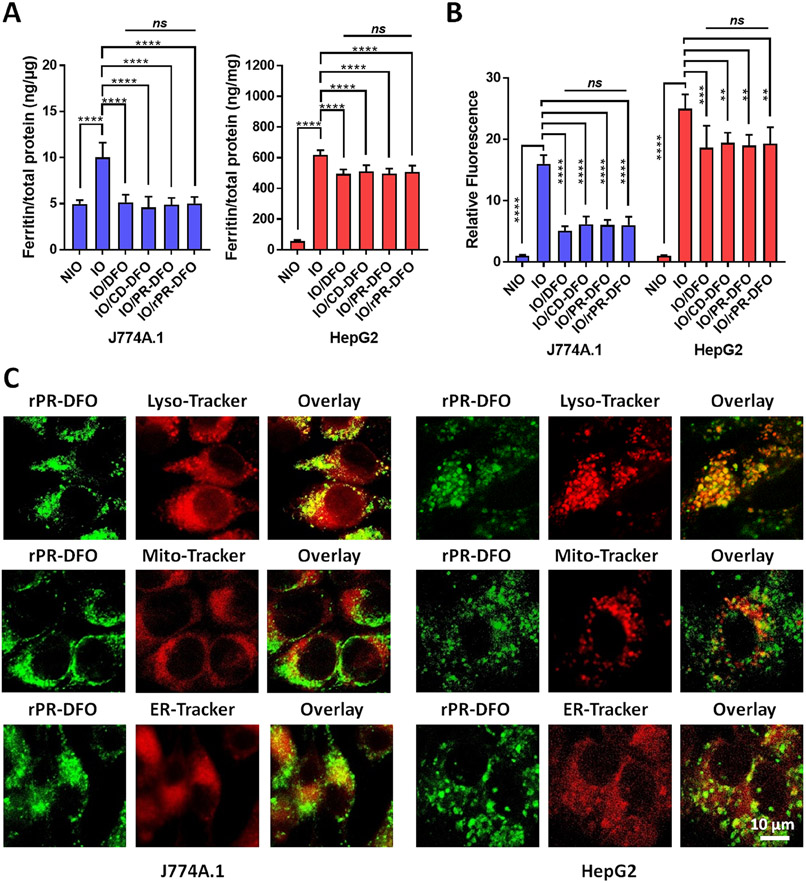
Chronic blood transfusions are used to alleviate anemic symptoms in thalassemia and sickle cell anemia patients but can eventually result in iron overload (IO) and subsequently lead to severe oxidative stress in cells and tissues. Deferoxamine (DFO) is clinically approved to treat transfusional IO, but the use of the iron chelator is hindered by nonspecific toxicity and poor pharmacokinetic (PK) properties in humans, resulting in the need to administer the drug long-term infusion regimens that can often lead to poor patient compliance. Herein, a nanochelator system that uses the characteristic IO physiological environment to dissociate was prepared through the incorporation of DFO and reactive oxygen species (ROS)-sensitive thioketal groups into an α-cyclodextrin-based polyrotaxane platform (rPR-DFO). ROS-induced dissociation of this nanochelator (. 10 nm) into constructs averaging 2 nm in diameter significantly increased urine and fecal elimination of excess iron . In addition to significantly improved PK properties, rPR-DFO was well-tolerated in mice and no adverse side effects were noted in single high dose or multiple dose acute toxicity studies. The overall features of rPR-DFO as a promising system for iron chelation therapy can be attributed to a combination of the nanochelator's improved PK, favorable distribution to the liver, and ROS-induced dissociation properties into constructs <6 nm for faster renal elimination. This ROS-responsive nanochelator design may serve as a promising alternative for safely prolonging the circulation of DFO and more rapidly eliminating iron chelates from the body in iron chelation therapy regimens requiring repeated dosing of nanochelators.
慢性输血用于缓解地中海贫血和镰状细胞贫血患者的贫血症状,但最终可能导致铁过载(IO),并随后在细胞和组织中引发严重的氧化应激。去铁胺(DFO)在临床上被批准用于治疗输血性铁过载,但这种铁螯合剂的使用受到人体非特异性毒性和不良药代动力学(PK)特性的阻碍,导致需要采用长期输注方案给药,这往往会导致患者依从性差。在此,通过将DFO和活性氧(ROS)敏感的硫酮基团引入基于α-环糊精的聚轮烷平台(rPR-DFO),制备了一种利用铁过载特征性生理环境进行解离的纳米螯合剂系统。ROS诱导这种纳米螯合剂(直径约10 nm)解离成平均直径为2 nm的构建体,显著增加了尿液和粪便中过量铁的排泄。除了显著改善的PK特性外,rPR-DFO在小鼠中耐受性良好,在单次高剂量或多次剂量急性毒性研究中未观察到不良副作用。rPR-DFO作为一种有前景的铁螯合治疗系统的总体特征可归因于纳米螯合剂改善的PK、对肝脏的良好分布以及ROS诱导的解离成小于6 nm的构建体以实现更快的肾脏排泄。这种ROS响应性纳米螯合剂设计可能是一种有前景的替代方案,可在需要重复给药纳米螯合剂的铁螯合治疗方案中安全地延长DFO的循环时间,并更迅速地从体内清除铁螯合物。