Shandong Provincial Key Laboratory of Oral Tissue Regeneration, School of Stomatology, Shandong University, Jinan 250014, Shandong, China.
Department of Stomatology, Haiyuan College of Kunming Medical University, Kunming 650000, Yunnan, China.
Genes (Basel). 2019 May 29;10(6):414. doi: 10.3390/genes10060414.
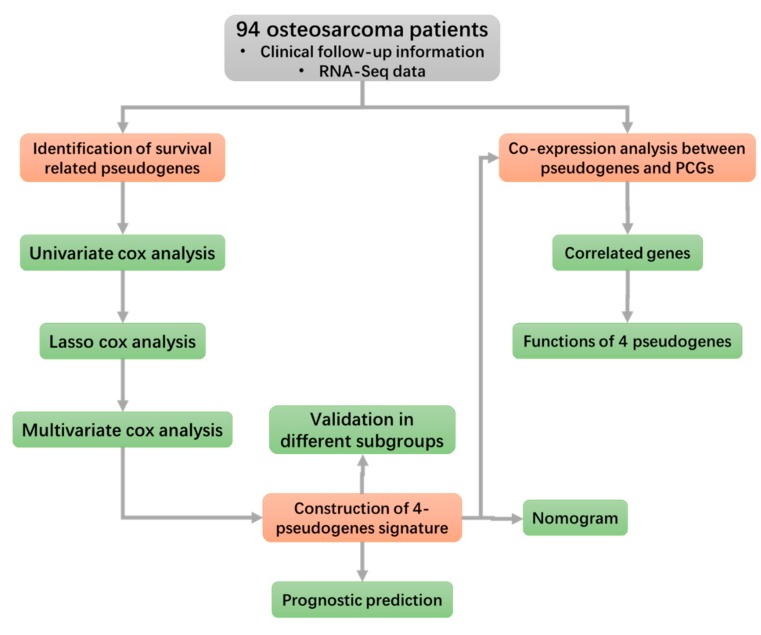
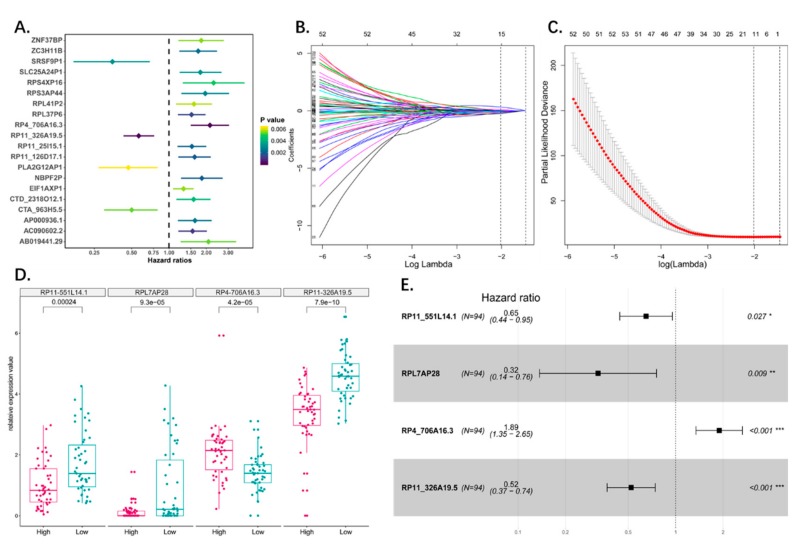
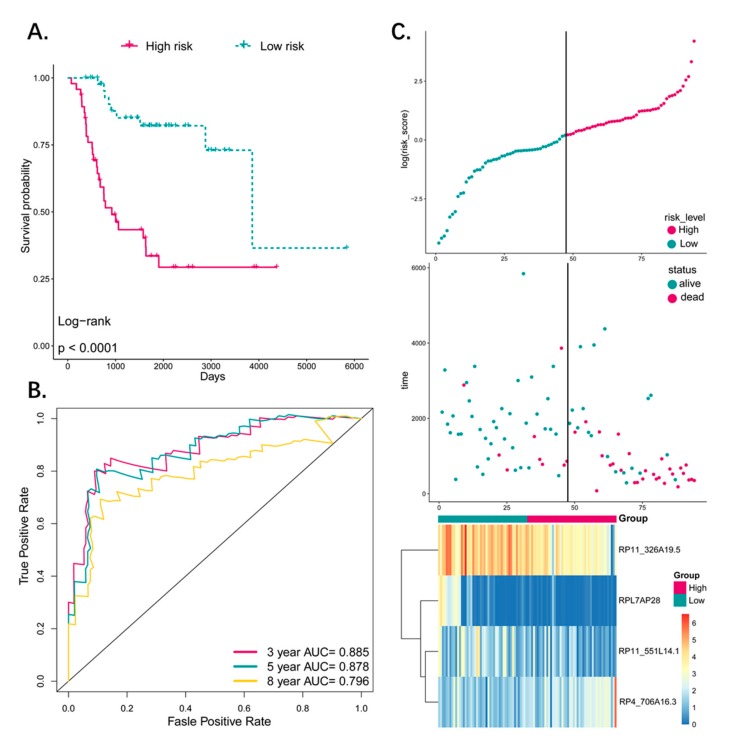
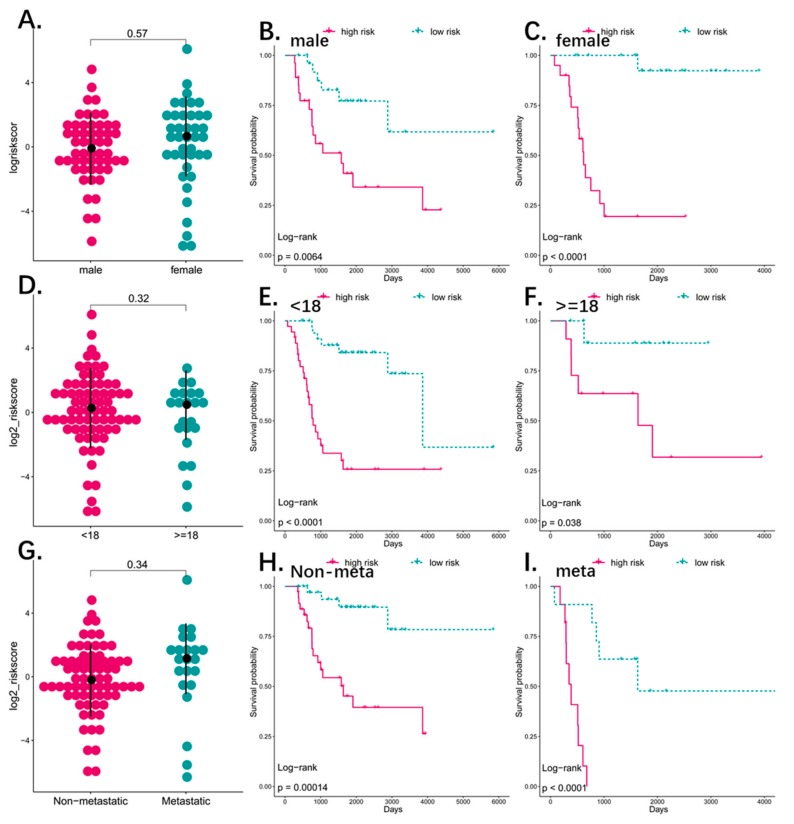
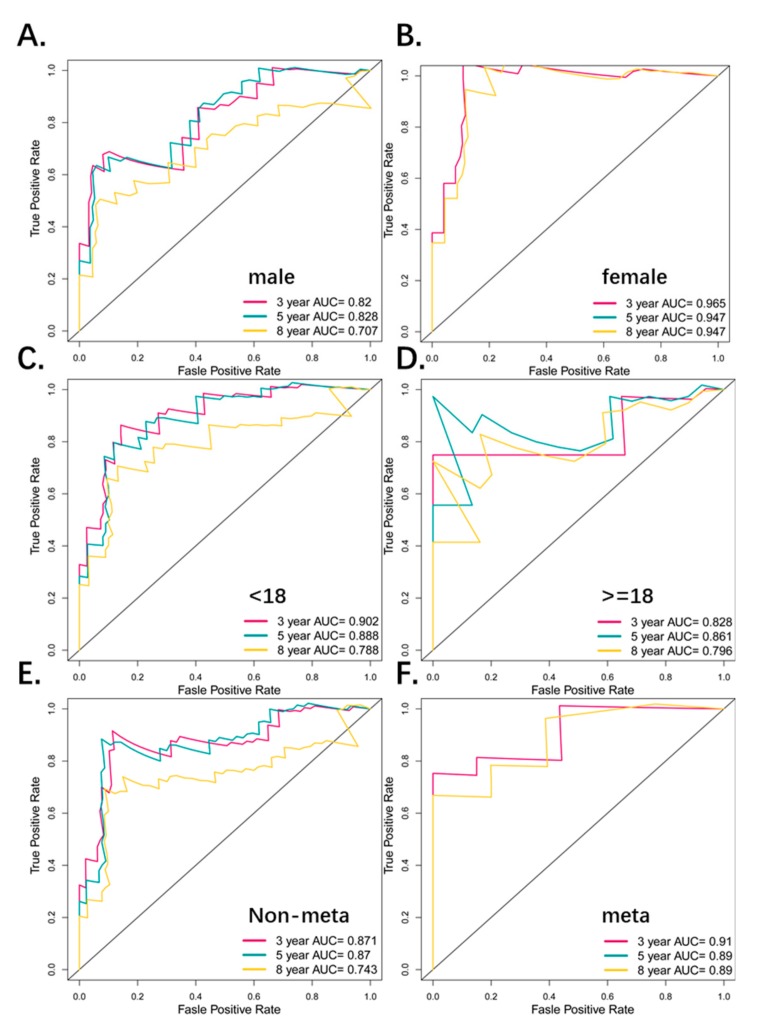
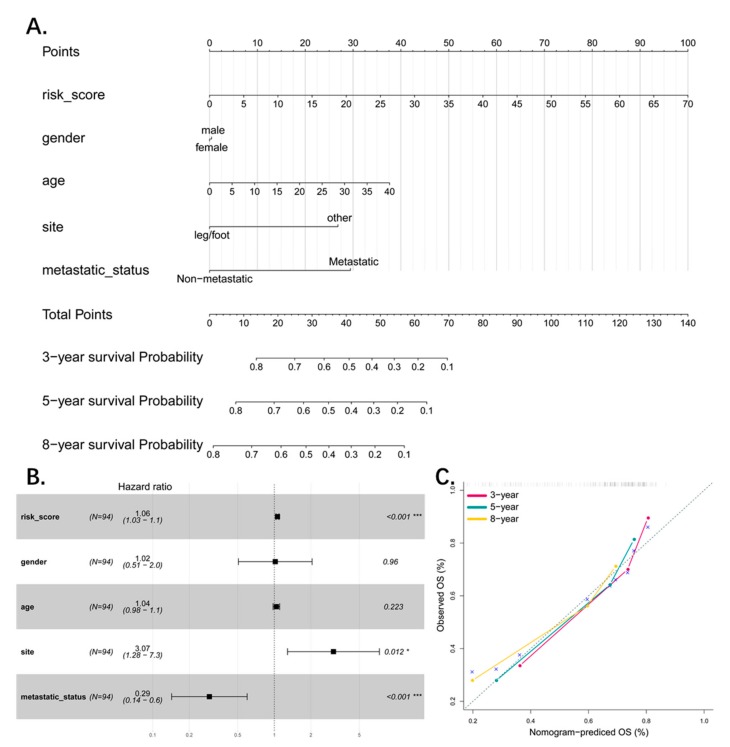
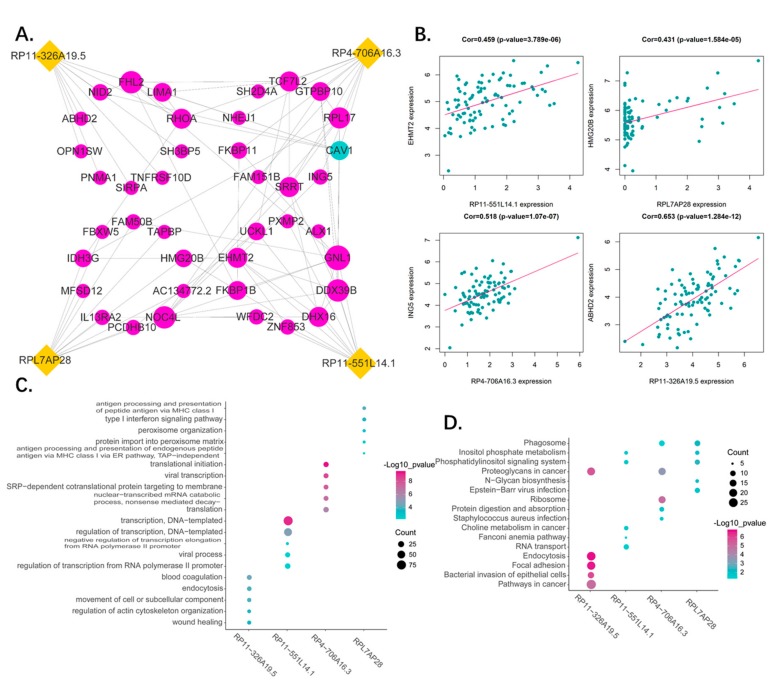
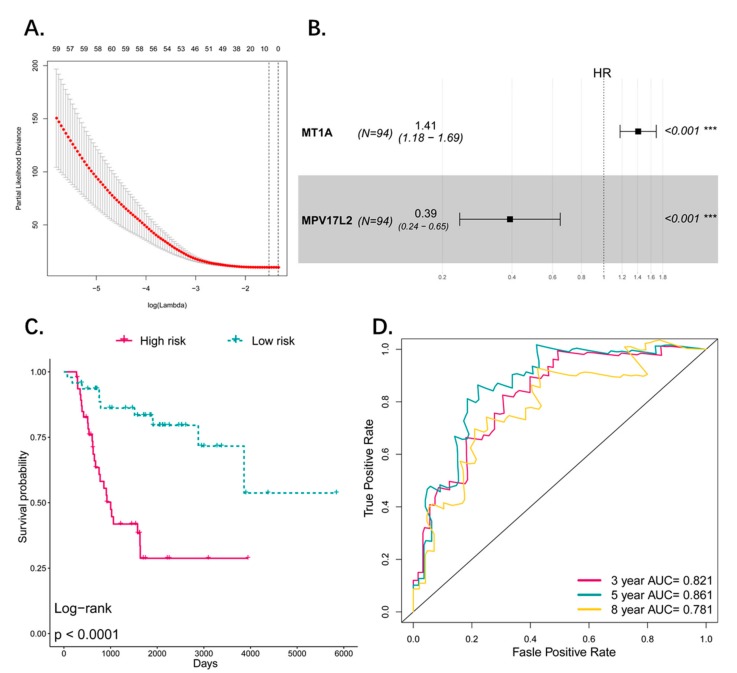
Osteosarcoma is a common malignancy with high mortality and poor prognosis due to lack of predictive markers. Increasing evidence has demonstrated that pseudogenes, a type of non-coding gene, play an important role in tumorigenesis. The aim of this study was to identify a prognostic pseudogene signature of osteosarcoma by machine learning. A sample of 94 osteosarcoma patients' RNA-Seq data with clinical follow-up information was involved in the study. The survival-related pseudogenes were screened and related signature model was constructed by cox-regression analysis (univariate, lasso, and multivariate). The predictive value of the signature was further validated in different subgroups. The putative biological functions were determined by co-expression analysis. In total, 125 survival-related pseudogenes were identified and a four-pseudogene (RPL11-551L14.1, HR: 0.65 (95% CI: 0.44-0.95); RPL7AP28, HR: 0.32 (95% CI: 0.14-0.76); RP4-706A16.3, HR: 1.89 (95% CI: 1.35-2.65); RP11-326A19.5, HR: 0.52(95% CI: 0.37-0.74)) signature effectively distinguished the high- and low-risk patients, and predicted prognosis with high sensitivity and specificity (AUC: 0.878). Furthermore, the signature was applicable to patients of different genders, ages, and metastatic status. Co-expression analysis revealed the four pseudogenes are involved in regulating malignant phenotype, immune, and DNA/RNA editing. This four-pseudogene signature is not only a promising predictor of prognosis and survival, but also a potential marker for monitoring therapeutic schedule. Therefore, our findings may have potential clinical significance.
骨肉瘤是一种常见的恶性肿瘤,由于缺乏预测标志物,死亡率和预后较差。越来越多的证据表明,假基因作为一种非编码基因,在肿瘤发生中起着重要作用。本研究旨在通过机器学习方法鉴定骨肉瘤的预后假基因特征。研究纳入了 94 例具有临床随访信息的骨肉瘤患者的 RNA-Seq 数据样本。通过 Cox 回归分析(单变量、lasso 和多变量)筛选与生存相关的假基因,并构建相关特征模型。进一步在不同亚组中验证该特征模型的预测价值。通过共表达分析确定潜在的生物学功能。总共鉴定出 125 个与生存相关的假基因,并构建了一个由四个假基因(RPL11-551L14.1,HR:0.65(95%CI:0.44-0.95);RPL7AP28,HR:0.32(95%CI:0.14-0.76);RP4-706A16.3,HR:1.89(95%CI:1.35-2.65);RP11-326A19.5,HR:0.52(95%CI:0.37-0.74))组成的特征模型,该模型能够有效区分高风险和低风险患者,具有较高的敏感性和特异性(AUC:0.878)。此外,该特征模型适用于不同性别、年龄和转移状态的患者。共表达分析表明,这四个假基因参与调节恶性表型、免疫和 DNA/RNA 编辑。该四假基因特征不仅是预后和生存的有前途的预测因子,也是监测治疗方案的潜在标志物。因此,我们的研究结果可能具有潜在的临床意义。