Shin Sol-Bi, Woo Sang-Uk, Yim Hyungshin
Department of Pharmacy, College of Pharmacy, Institute of Pharmaceutical Science and Technology, Hanyang University, Ansan, Gyeonggi-do, Korea.
Department of Pharmacy, College of Pharmacy, Institute of Pharmaceutical Science and Technology, Hanyang University, Ansan, Gyeonggi-do 15588, Korea.
Ther Adv Med Oncol. 2019 May 8;11:1758835919846375. doi: 10.1177/1758835919846375. eCollection 2019.
Despite the clinical success of taxanes, they still have limitations, such as chemoresistance. To overcome the limitations of paclitaxel, genetic alterations and targeting effects of altered genes were observed in paclitaxel-resistant cancer. Because paclitaxel-resistant cancer shows high levels of Plk1, a promising target in chemotherapy, the effectiveness of Plk1 inhibitors in paclitaxel-resistant cancer cells has been investigated.
Paclitaxel-resistant cancer cells were developed by exposure of stepwise escalating levels of paclitaxel. Genetic alterations were detected by quantitative reverse transcription polymerase chain reaction (qRT-PCR) and immunoblotting. Using a cell viability assay, combined targeting effects for Plk1 and androgen receptor (AR) were determined. Clinical data were analyzed to understand the relationship between Plk1 and AR in prostate cancer patients.
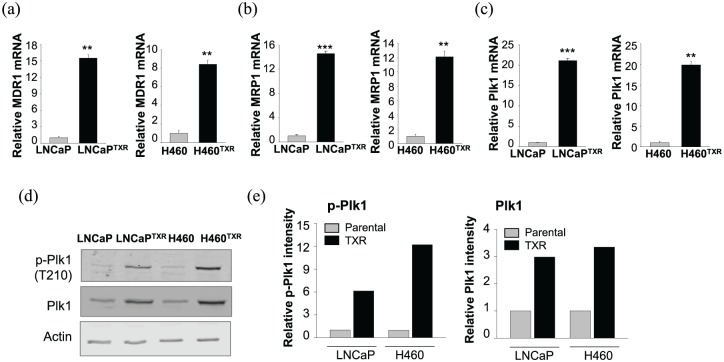
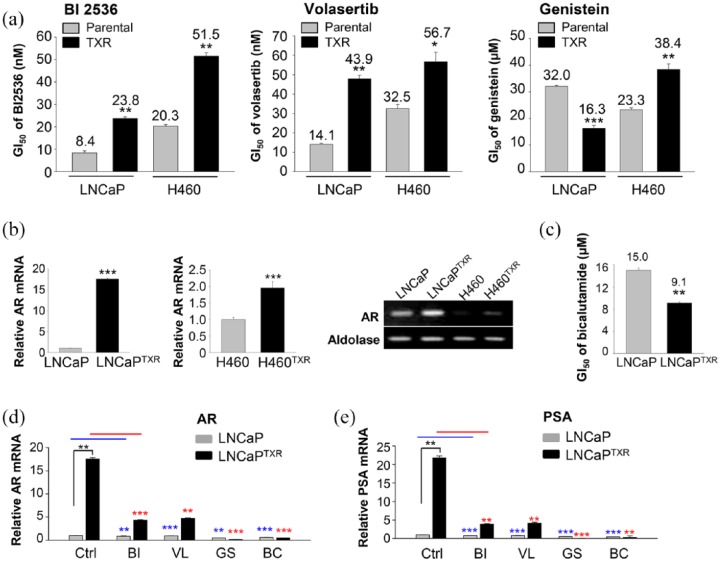
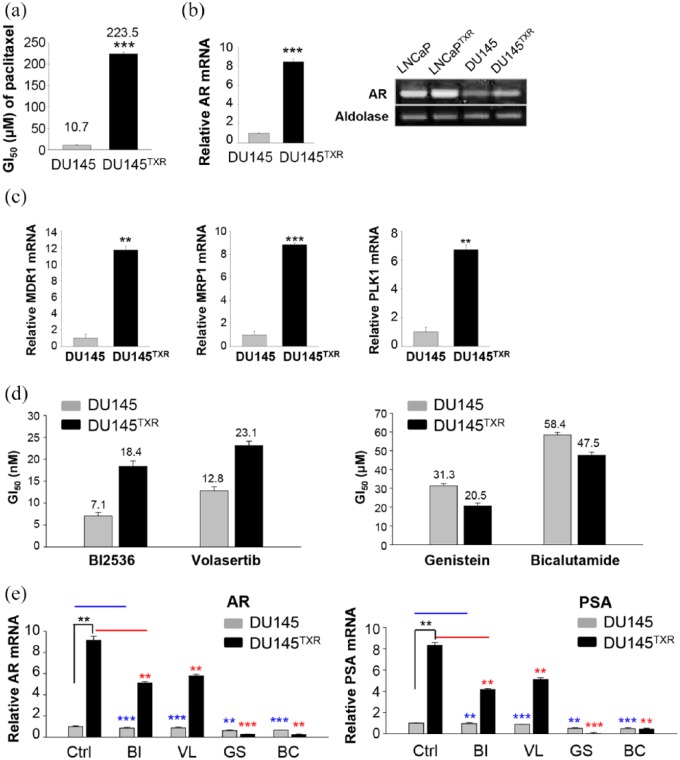
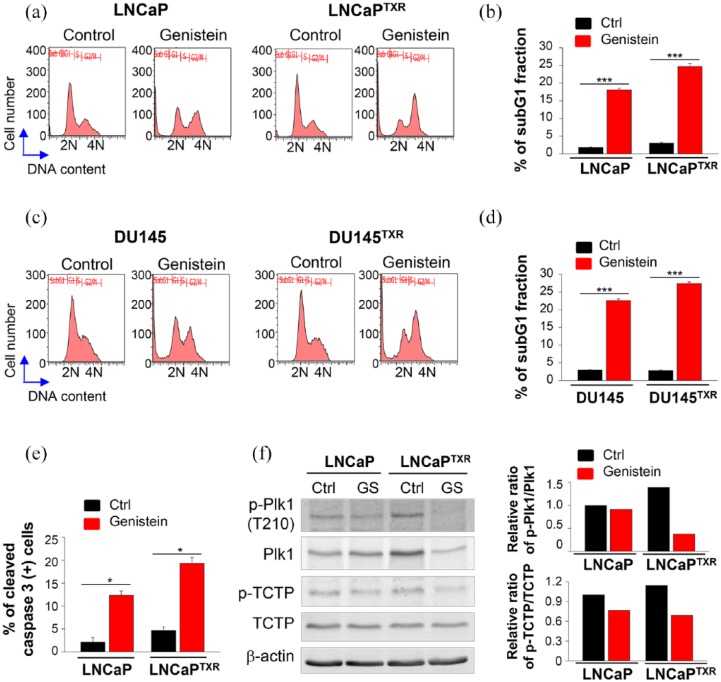
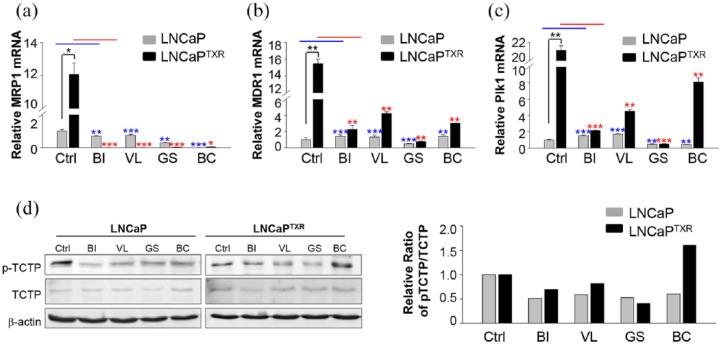
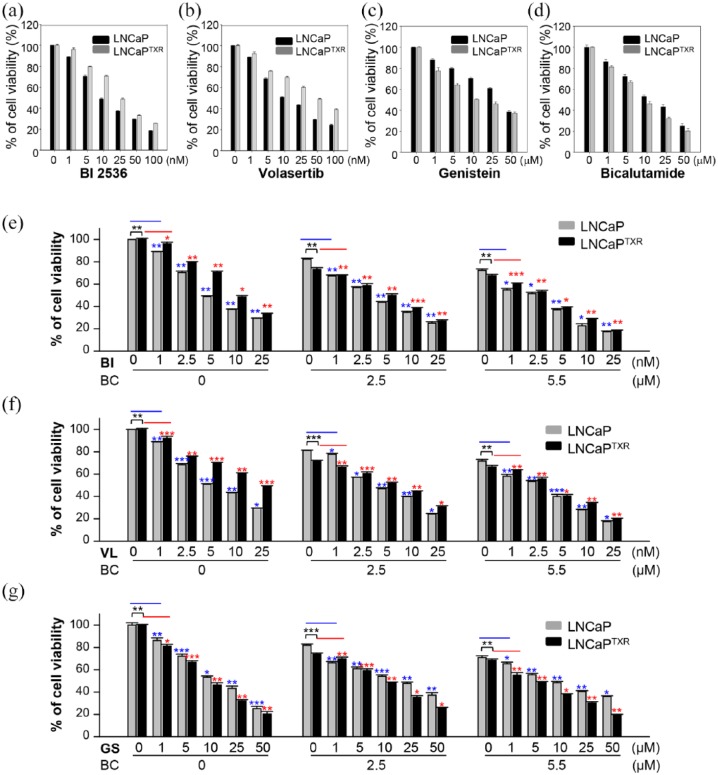
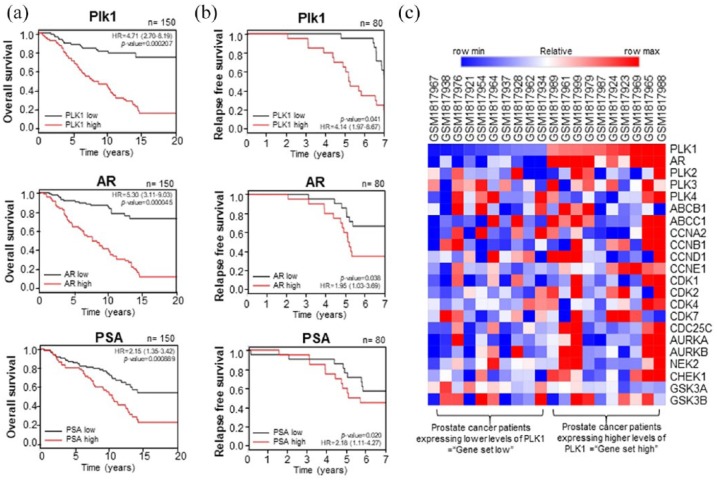
Treatment with Plk1 inhibitors markedly reduced the expression of MDR1, MRP1, and Plk1 in the paclitaxel-resistant cancer. Among Plk1 inhibitors, genistein, recently found as a direct Plk1 inhibitor, tended to be more effective in the paclitaxel-resistant prostate cancer than the parental cancer cells, which was related to the suppression of the AR, as well as inhibition of Plk1 activity. A combination of Plk1 inhibitors and AR antagonist bicalutamide exhibited a synergistic effect in LNCaP, as well as LNCaP cells, by inhibiting Plk1 and AR. Analysis of clinical data provides evidence for the relevance between Plk1 and AR in prostate cancer patients, showing that Plk1 and AR are strong predictors of poor survival rates.
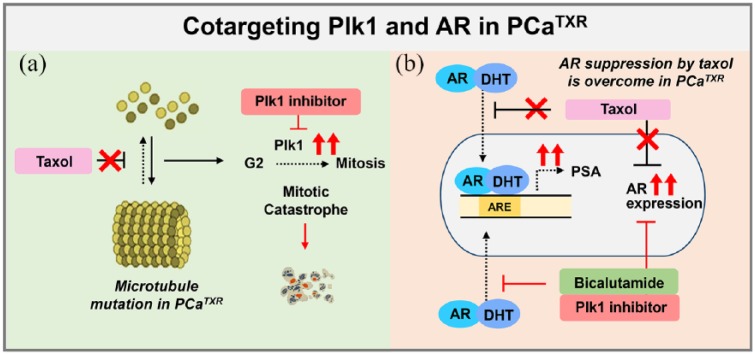
We suggest that cotargeting Plk1 and AR would be effective in advanced chemoresistant prostate cancer cells to overcome the limitations associated with paclitaxel.
尽管紫杉烷类药物在临床上取得了成功,但它们仍存在局限性,如化疗耐药性。为了克服紫杉醇的局限性,在耐紫杉醇的癌症中观察到基因改变以及改变基因的靶向作用。由于耐紫杉醇的癌症显示出高水平的Plk1,这是化疗中有前景的靶点,因此研究了Plk1抑制剂在耐紫杉醇癌细胞中的有效性。
通过逐步提高紫杉醇水平培养出耐紫杉醇的癌细胞。通过定量逆转录聚合酶链反应(qRT-PCR)和免疫印迹检测基因改变。使用细胞活力测定法,确定对Plk1和雄激素受体(AR)的联合靶向作用。分析临床数据以了解前列腺癌患者中Plk1和AR之间的关系。
用Plk1抑制剂处理可显著降低耐紫杉醇癌症中MDR1、MRP1和Plk1的表达。在Plk1抑制剂中,最近发现的直接Plk1抑制剂染料木黄酮,在耐紫杉醇的前列腺癌中往往比亲代癌细胞更有效,这与AR的抑制以及Plk1活性的抑制有关。Plk1抑制剂和AR拮抗剂比卡鲁胺联合使用在LNCaP以及LNCaP细胞中通过抑制Plk1和AR表现出协同作用。临床数据分析为前列腺癌患者中Plk1和AR之间的相关性提供了证据,表明Plk1和AR是低生存率的有力预测指标。
我们认为同时靶向Plk1和AR对晚期化疗耐药的前列腺癌细胞有效,可克服与紫杉醇相关的局限性。