Department of Molecular and Cellular Biology, University of Arizona, Tucson, AZ, 85721, USA.
Ronin Institute, Montclair, NJ, 07043, USA.
Nat Commun. 2019 Jun 3;10(1):2418. doi: 10.1038/s41467-019-10388-6.
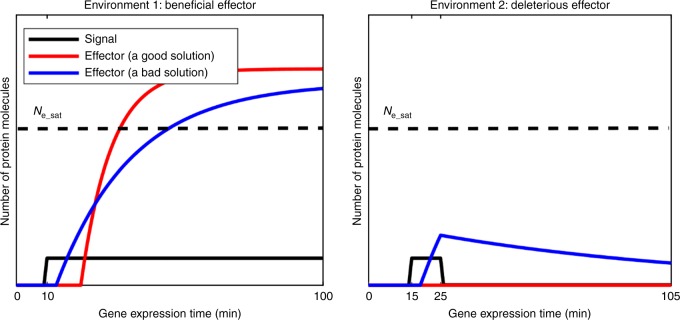
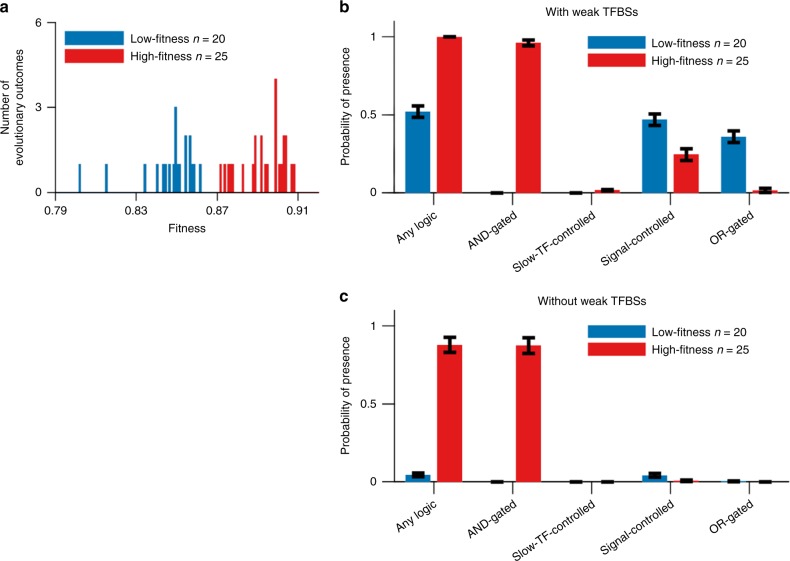
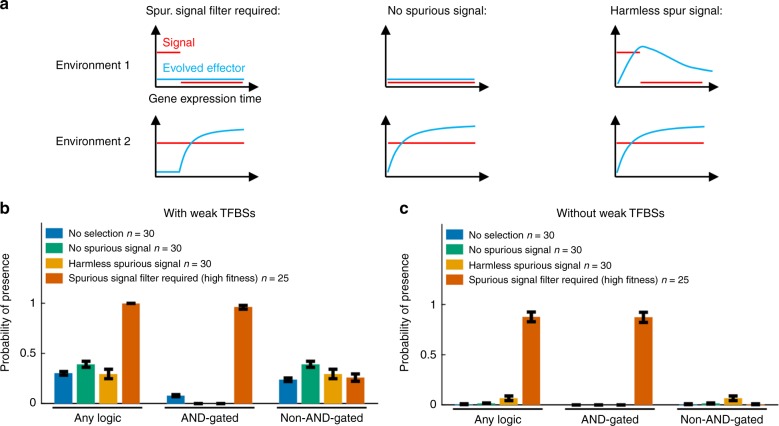
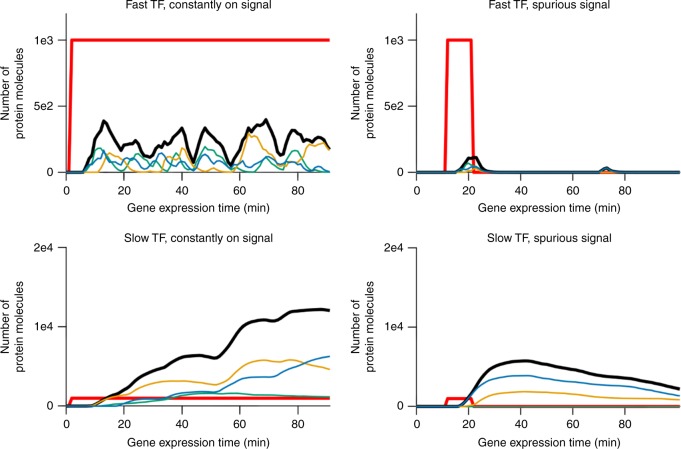
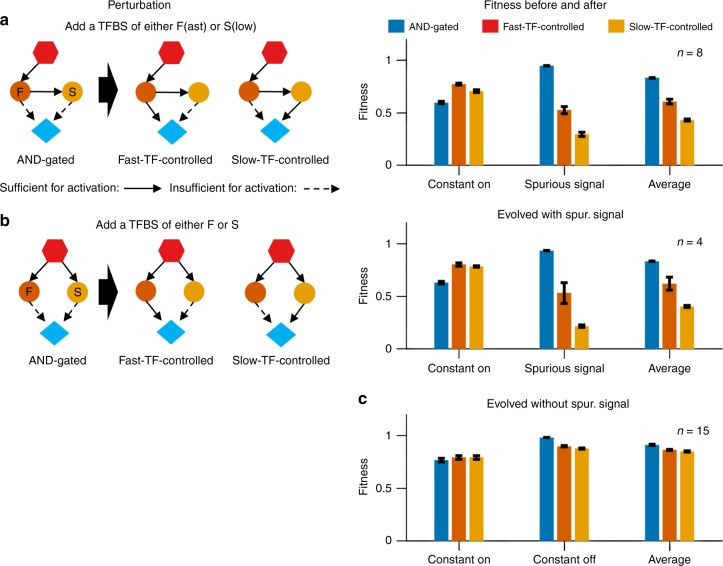
In transcriptional regulatory networks (TRNs), a canonical 3-node feed-forward loop (FFL) is hypothesized to evolve to filter out short spurious signals. We test this adaptive hypothesis against a novel null evolutionary model. Our mutational model captures the intrinsically high prevalence of weak affinity transcription factor binding sites. We also capture stochasticity and delays in gene expression that distort external signals and intrinsically generate noise. Functional FFLs evolve readily under selection for the hypothesized function but not in negative controls. Interestingly, a 4-node "diamond" motif also emerges as a short spurious signal filter. The diamond uses expression dynamics rather than path length to provide fast and slow pathways. When there is no idealized external spurious signal to filter out, but only internally generated noise, only the diamond and not the FFL evolves. While our results support the adaptive hypothesis, we also show that non-adaptive factors, including the intrinsic expression dynamics, matter.
在转录调控网络(TRNs)中,假设一个典型的三节点前馈回路(FFL)进化以过滤掉短暂的虚假信号。我们根据一个新的空进化模型来检验这个适应性假说。我们的突变模型捕获了弱亲和力转录因子结合位点固有的高普遍性。我们还捕获了基因表达中的随机性和延迟,这些因素扭曲了外部信号并内在地产生了噪声。在假设功能的选择下,功能性 FFL 很容易进化,但在负对照中则不会。有趣的是,一个四节点的“钻石”基序也作为一个短暂的虚假信号过滤器出现。钻石利用表达动力学而不是路径长度来提供快速和慢速途径。当没有理想的外部虚假信号可以过滤掉,只有内部产生的噪声时,只有钻石而不是 FFL 进化。虽然我们的结果支持适应性假说,但我们也表明,非适应性因素,包括内在的表达动力学,也很重要。