Ngoennet Siripat, Nishikawa Yasuhiro, Hibino Takashi, Waditee-Sirisattha Rungaroon, Kageyama Hakuto
Department of Microbiology, Faculty of Science, Chulalongkorn University, Payathai Road, Pathumwan, Bangkok 10330, Thailand.
Faculty of Pharmacy, Meijo University, 150 Yagotoyama, Tenpaku-ku, Nagoya, Aichi 468-8503, Japan.
Methods Protoc. 2018 Dec 3;1(4):46. doi: 10.3390/mps1040046.
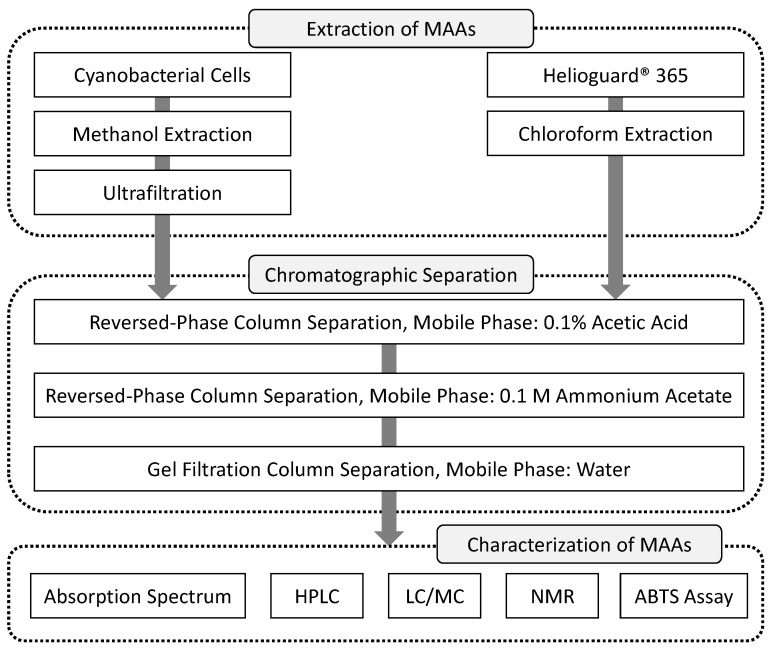
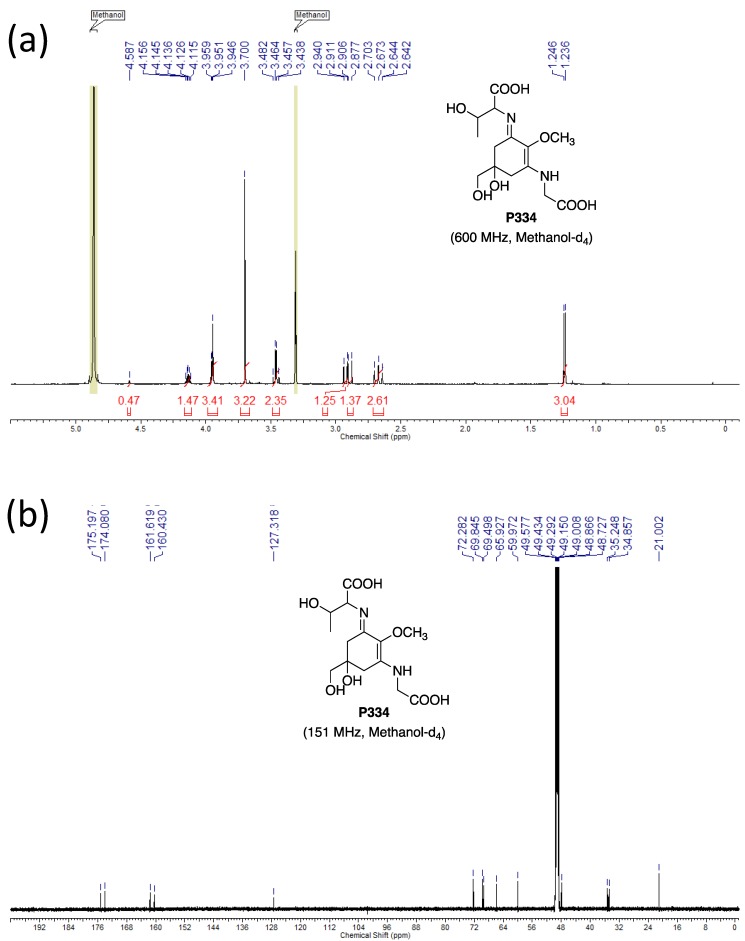
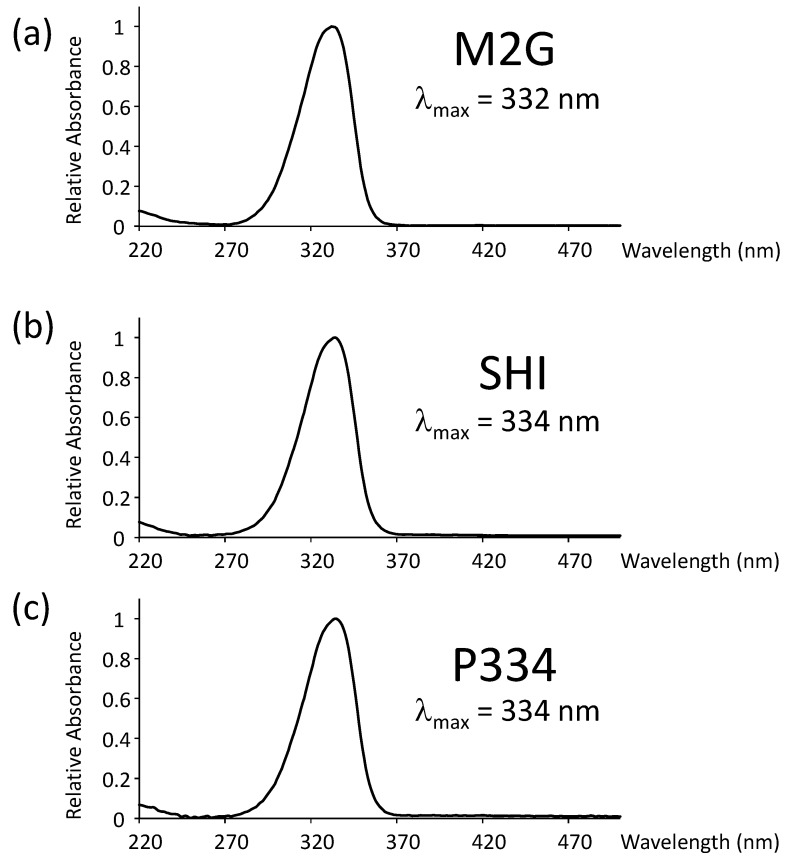
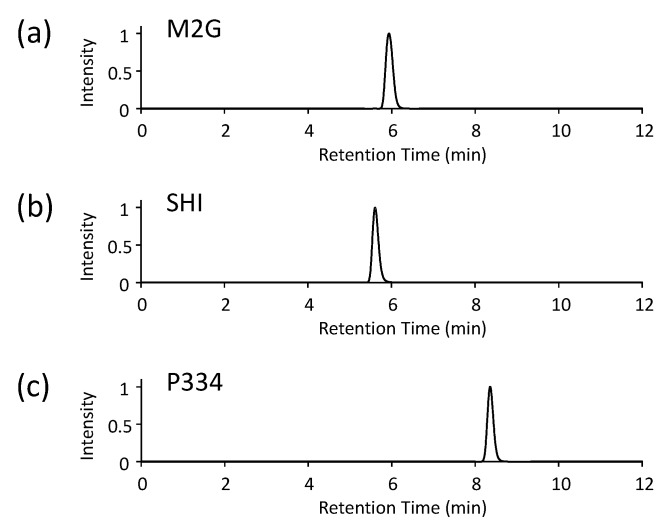
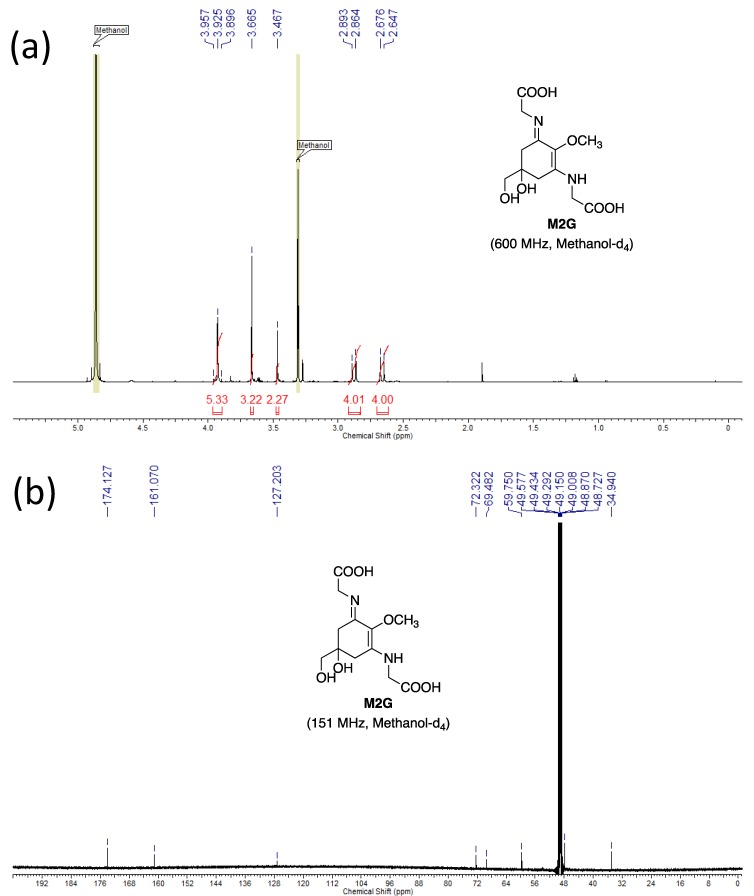
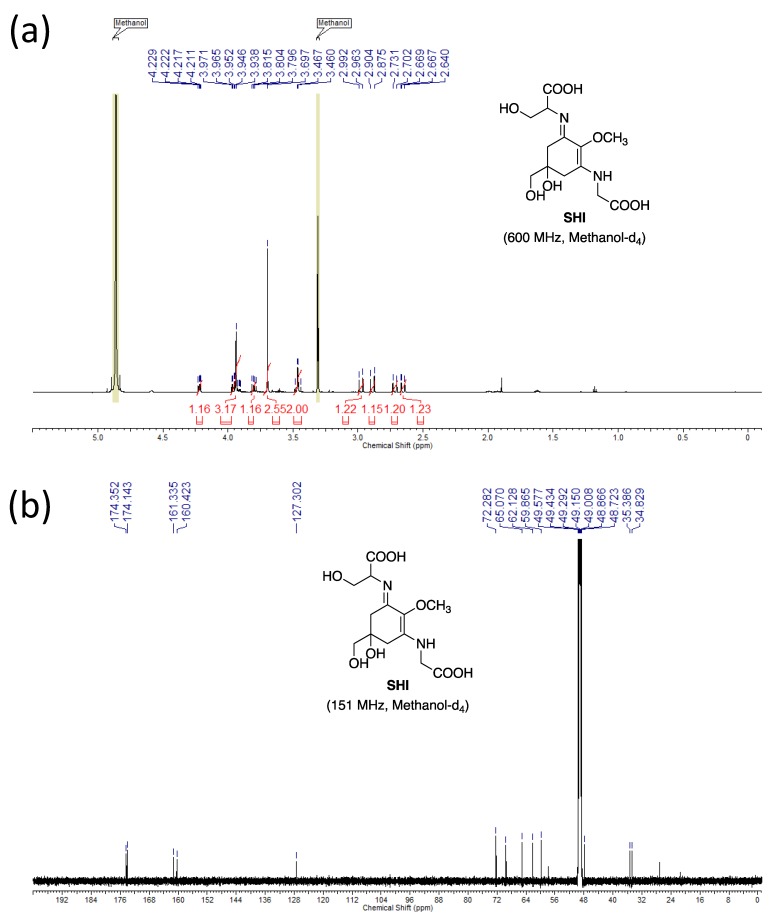
This report provides a broadly applicable and cost-effective method for the purification of mycosporine-like amino acids (MAAs) from cyanobacteria. As MAAs are known to have multiple bioactivities for health and beauty, a universal isolation method of MAAs from biomass is attractive. In particular, the biomass of photosynthetic microorganisms such as cyanobacteria is of interest as a natural source of useful compound production, because of their photoautotrophic property. The method presented here is applicable for the isolation of mycosporine-2-glycine (M2G), which is a rare MAA produced in a halotolerant cyanobacterium. This method also allowed for the isolation of two of the most common MAAs, shinorine (SHI) and porphyra-334 (P334). A three-step separation process using low pressure liquid chromatography yielded purified MAAs, which were characterized by nuclear magnetic resonance (NMR) and liquid chromatography-mass spectrometry (LC/MS) analyses. The purified MAAs exhibited free radical scavenging activity in the 2,2'-azino-(3-ethylbenzothiazoline-6-sulfonic acid) (ABTS) assay. The experimental parameters obtained in this report may allow for a scale-up of the MAA purification process for future industrial applications.
本报告提供了一种广泛适用且经济高效的从蓝细菌中纯化类菌孢素氨基酸(MAAs)的方法。由于已知MAAs具有多种对健康和美容有益的生物活性,因此从生物质中通用的MAAs分离方法颇具吸引力。特别是,光合微生物如蓝细菌的生物质作为有用化合物生产的天然来源备受关注,因为它们具有光合自养特性。这里介绍的方法适用于分离菌孢素-2-甘氨酸(M2G),它是一种在耐盐蓝细菌中产生的稀有MAA。该方法还能分离出两种最常见的MAAs,即新栎素(SHI)和紫菜素-334(P334)。采用低压液相色谱的三步分离过程得到了纯化的MAAs,并通过核磁共振(NMR)和液相色谱-质谱联用(LC/MS)分析对其进行了表征。纯化后的MAAs在2,2'-联氮-双(3-乙基苯并噻唑啉-6-磺酸)(ABTS)测定中表现出自由基清除活性。本报告中获得的实验参数可能有助于扩大MAA纯化过程以用于未来的工业应用。