Røsland Gro V, Dyrstad Sissel E, Tusubira Deusdedit, Helwa Reham, Tan Tuan Zea, Lotsberg Maria L, Pettersen Ina K N, Berg Anna, Kindt Charlotte, Hoel Fredrik, Jacobsen Kirstine, Arason Ari J, Engelsen Agnete S T, Ditzel Henrik J, Lønning Per E, Krakstad Camilla, Thiery Jean P, Lorens James B, Knappskog Stian, Tronstad Karl J
1Department of Biomedicine, University of Bergen, Bergen, Norway.
2Department of Clinical Science, University of Bergen, Bergen, Norway.
Cancer Metab. 2019 Jun 1;7:6. doi: 10.1186/s40170-019-0197-8. eCollection 2019.
Epithelial to mesenchymal transition (EMT) is a well-characterized process of cell plasticity that may involve metabolic rewiring. In cancer, EMT is associated with malignant progression, tumor heterogeneity, and therapy resistance. In this study, we investigated the role of succinate dehydrogenase (SDH) as a potential key regulator of EMT.
Associations between SDH subunits and EMT were explored in gene expression data from breast cancer patient cohorts, followed by in-depth studies of SDH suppression as a potential mediator of EMT in cultured cells.
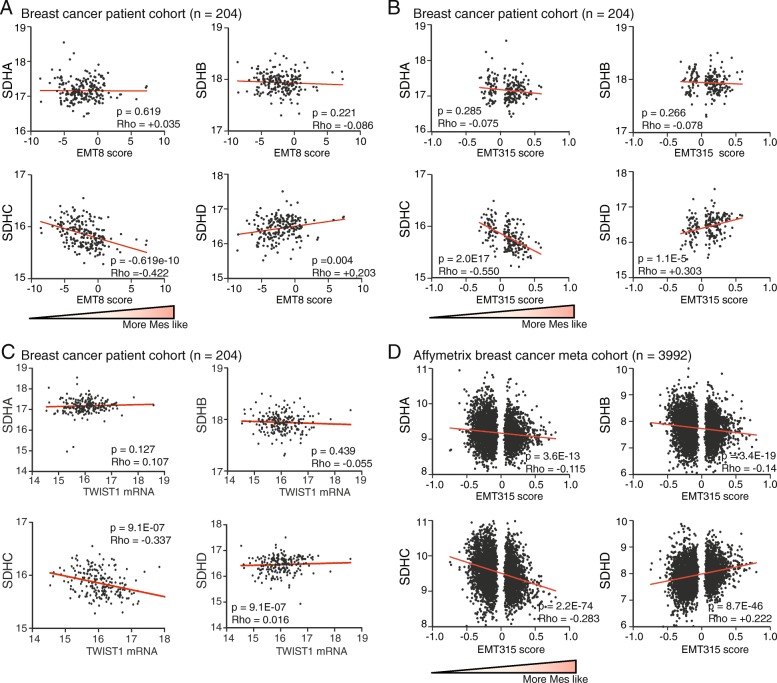
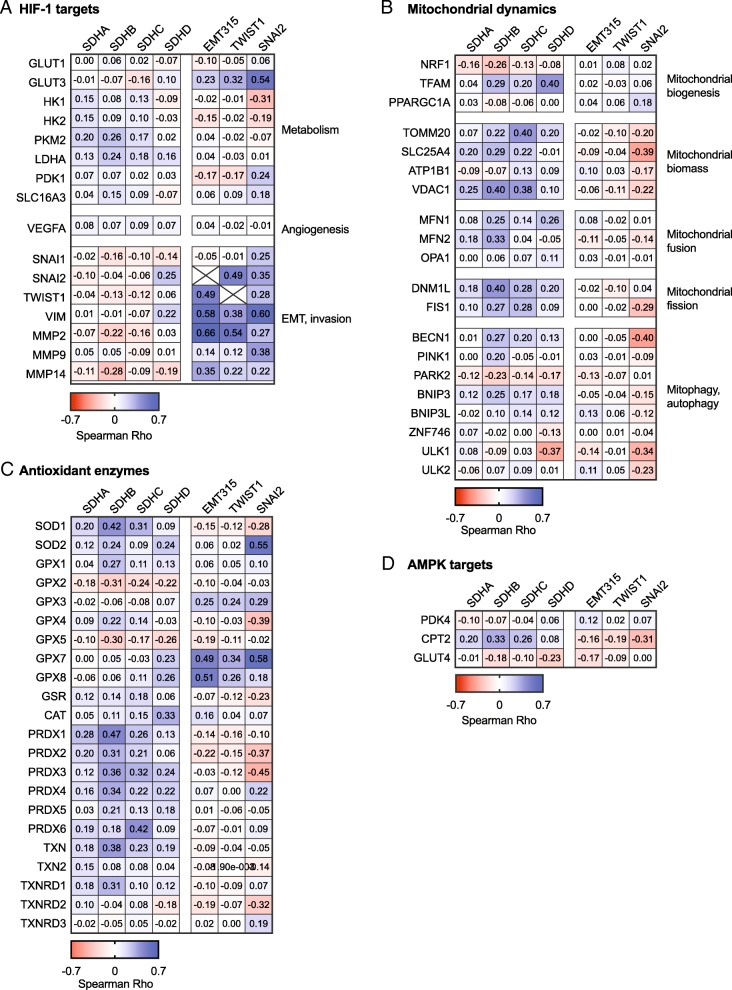
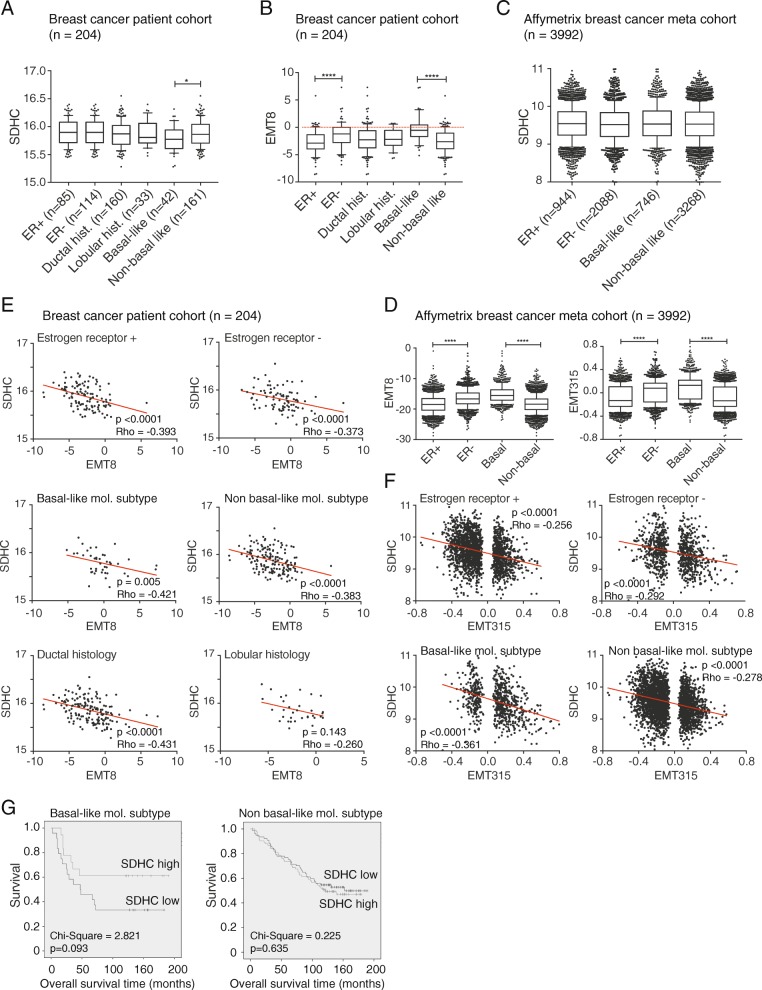
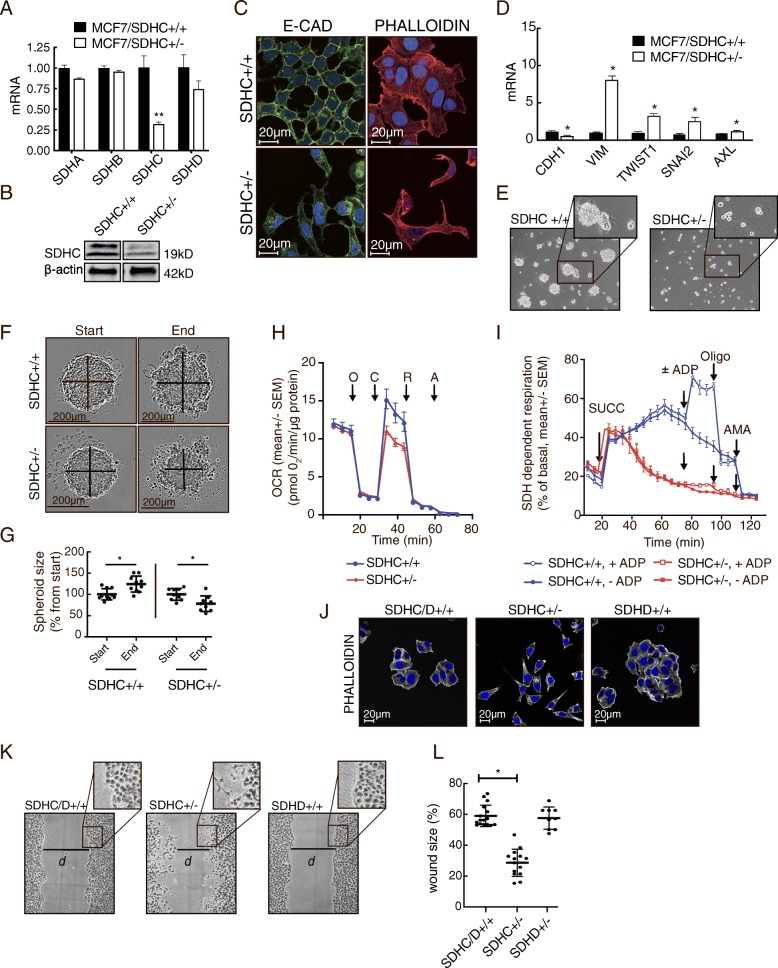
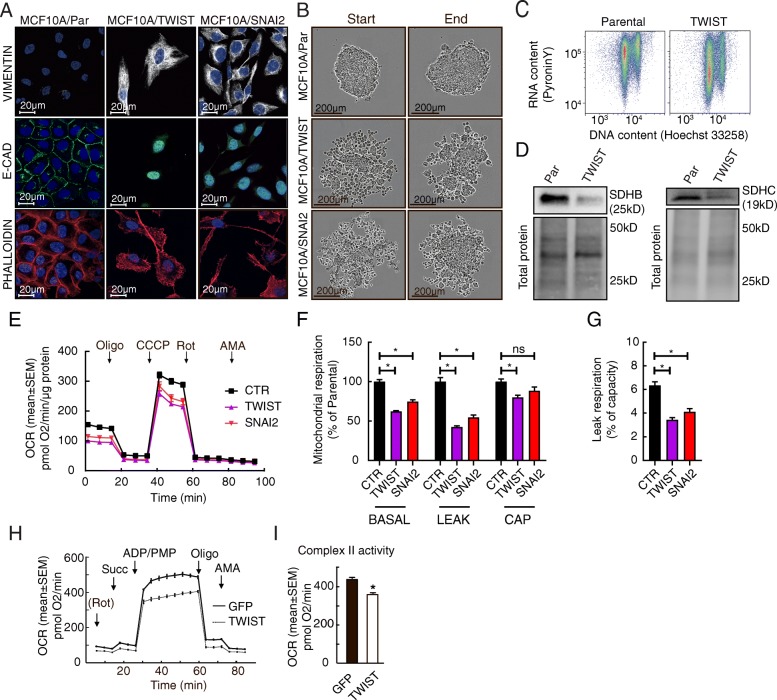
We found an overall inverse association between EMT and the SDH subunit C (SDHC) when analyzing gene expression in breast tumors. This was particularly evident in carcinomas of basal-like molecular subtype compared to non-basal-like tumors, and a low expression level tended to have a prognostic impact in those patients. Studies in cultured cells revealed that EMT was induced by SDH inhibition through SDHC CRISPR/Cas9 knockdown or by the enzymatic inhibitor malonate. Conversely, overexpression of EMT-promoting transcription factors TWIST and SNAI2 caused decreased levels of SDHB and C and reduced rates of SDH-linked mitochondrial respiration. Cells overexpressing TWIST had reduced mitochondrial mass, and the organelles were thinner and more fragmented compared to controls.
Our findings suggest that downregulation of SDHC promotes EMT and that this is accompanied by structural remodeling of the mitochondrial organelles. This may confer survival benefits upon exposure to hostile microenvironment including oxidative stress and hypoxia during cancer progression.
上皮-间质转化(EMT)是一个特征明确的细胞可塑性过程,可能涉及代谢重编程。在癌症中,EMT与恶性进展、肿瘤异质性和治疗抵抗相关。在本研究中,我们调查了琥珀酸脱氢酶(SDH)作为EMT潜在关键调节因子的作用。
在乳腺癌患者队列的基因表达数据中探索SDH亚基与EMT之间的关联,随后深入研究SDH抑制作为培养细胞中EMT潜在介导因子的作用。
在分析乳腺肿瘤中的基因表达时,我们发现EMT与SDH亚基C(SDHC)总体呈负相关。与非基底样肿瘤相比,这种情况在基底样分子亚型的癌中尤为明显,低表达水平往往对这些患者有预后影响。培养细胞研究表明,通过SDHC CRISPR/Cas9敲低或酶抑制剂丙二酸抑制SDH可诱导EMT。相反,促进EMT的转录因子TWIST和SNAI2的过表达导致SDHB和C水平降低以及SDH相关线粒体呼吸速率降低。过表达TWIST的细胞线粒体质量减少,与对照相比,细胞器更薄且更碎片化。
我们的研究结果表明,SDHC的下调促进EMT,并且这伴随着线粒体细胞器的结构重塑。这可能在癌症进展过程中暴露于包括氧化应激和缺氧在内的恶劣微环境时赋予生存优势。