Canadian Centre for Agri-Food Research in Health and Medicine, St. Boniface Albrechtsen Research Centre, Room R2034 - 351 Taché Avenue, Winnipeg, MB, R2H 2A6, Canada.
Alzo Biosciences Inc., San Diego, CA, USA.
Cell Commun Signal. 2021 Sep 25;19(1):98. doi: 10.1186/s12964-021-00778-z.
The calcium (Ca2+)/calmodulin (CAM)-activated kinase kinase 2 (CAMKK2)-signaling regulates several physiological processes, for example, glucose metabolism and energy homeostasis, underlying the pathogenesis of metabolic diseases. CAMKK2 exerts its biological function through several downstream kinases, therefore, it is expected that depending on the cell-type-specific kinome profile, the metabolic effects of CAMKK2 and its underlying mechanism may differ. Identification of the cell-type-specific differences in CAMKK2-mediated glucose metabolism will lead to unravelling the organ/tissue-specific role of CAMKK2 in energy metabolism. Therefore, the objective of this study was to understand the cell-type-specific regulation of glucose metabolism, specifically, respiration under CAMKK2 deleted conditions in transformed human embryonic kidney-derived HEK293 and hepatoma-derived HepG2 cells.
Cellular respiration was measured in terms of oxygen consumption rate (OCR). OCR and succinate dehydrogenase (SDH) enzyme activity were measured following the addition of substrates. In addition, transcription and proteomic and analyses of the electron transport system (ETS)-associated proteins, including mitochondrial SDH protein complex (complex-II: CII) subunits, specifically SDH subunit B (SDHB), were performed using standard molecular biology techniques. The metabolic effect of the altered SDHB protein content in the mitochondria was further evaluated by cell-type-specific knockdown or overexpression of SDHB.
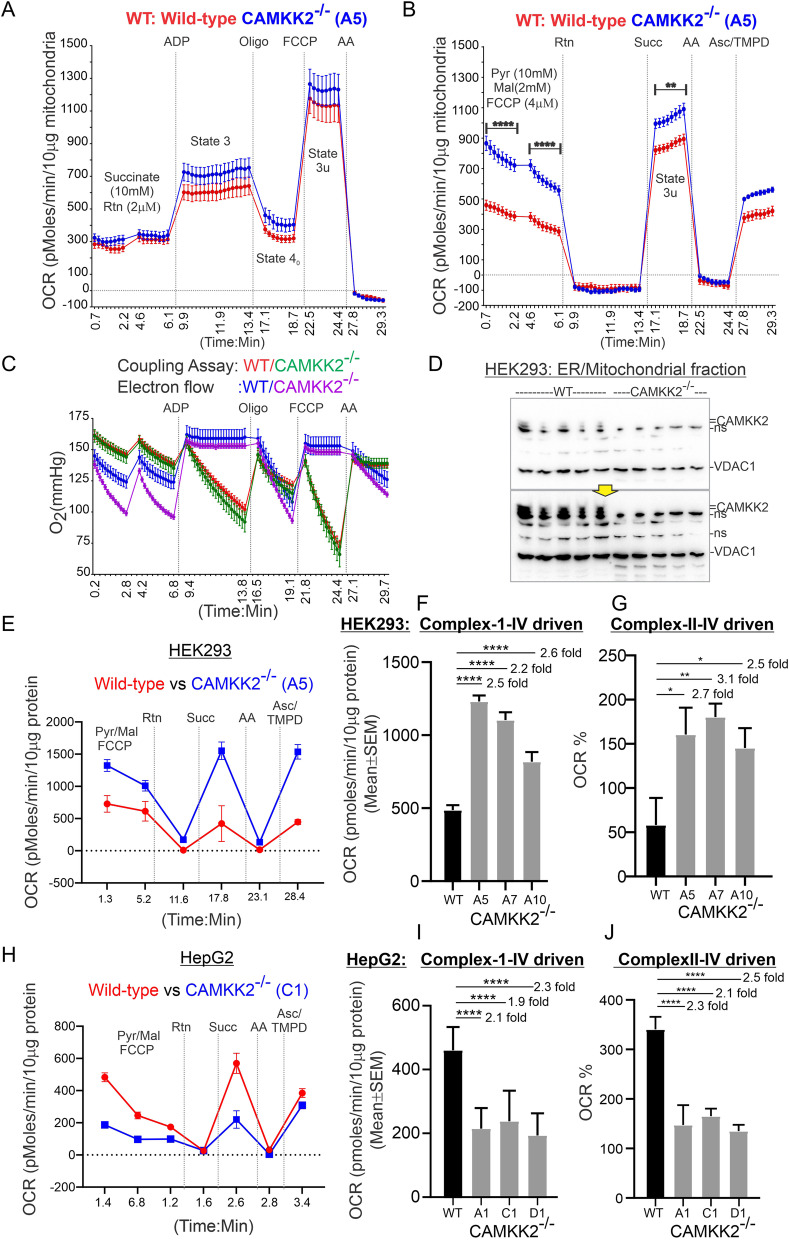
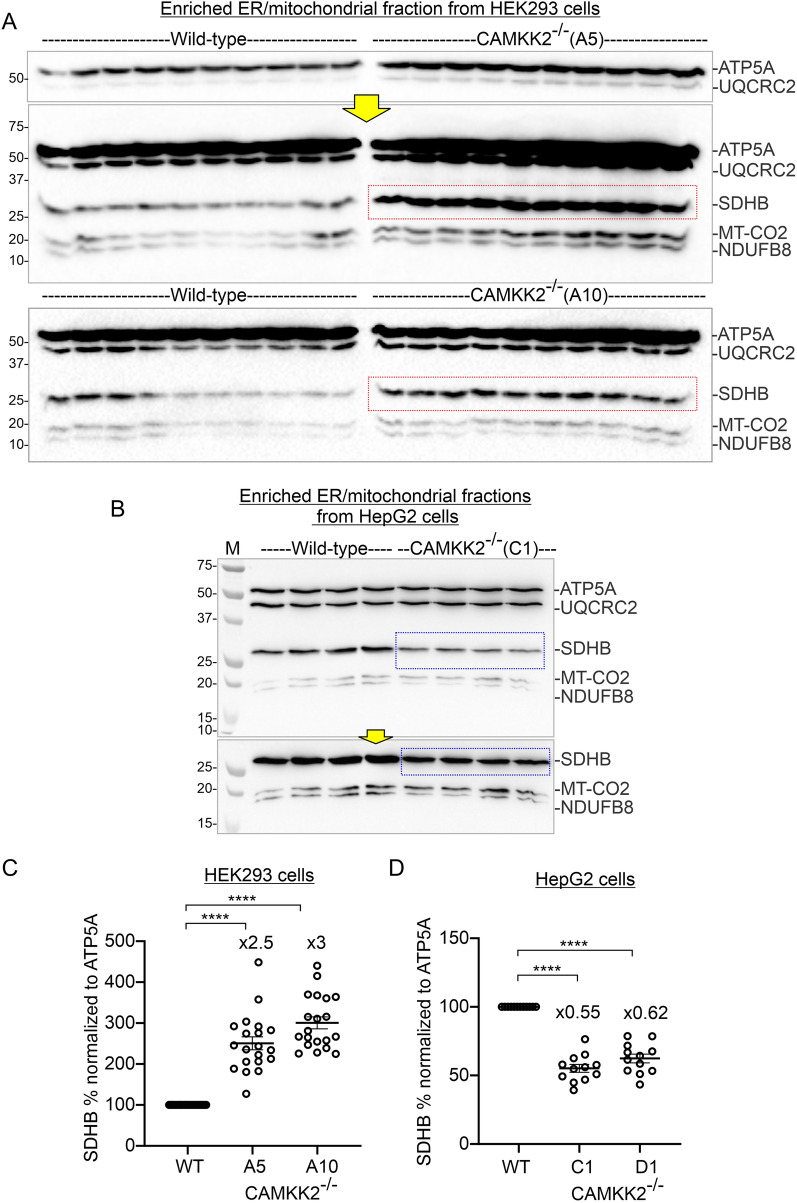
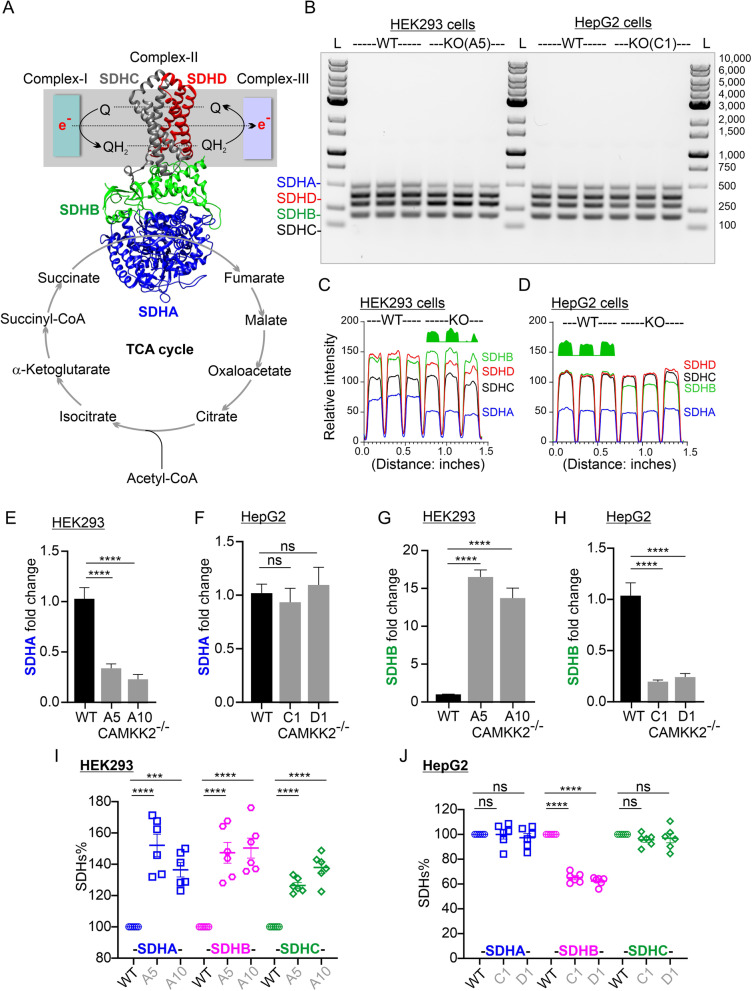
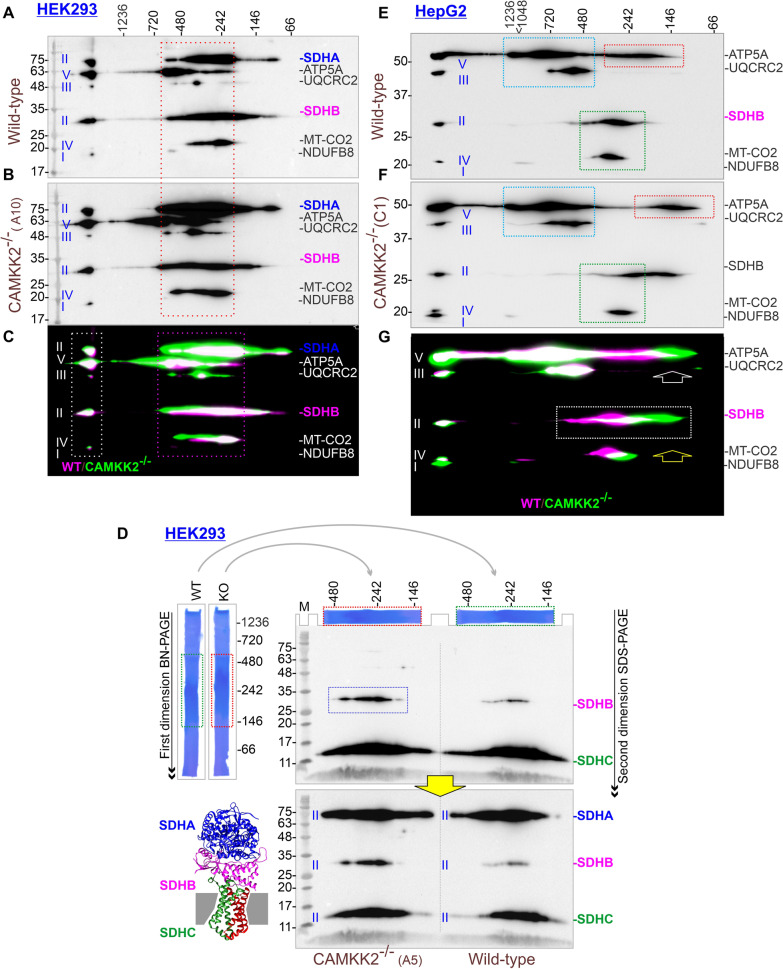
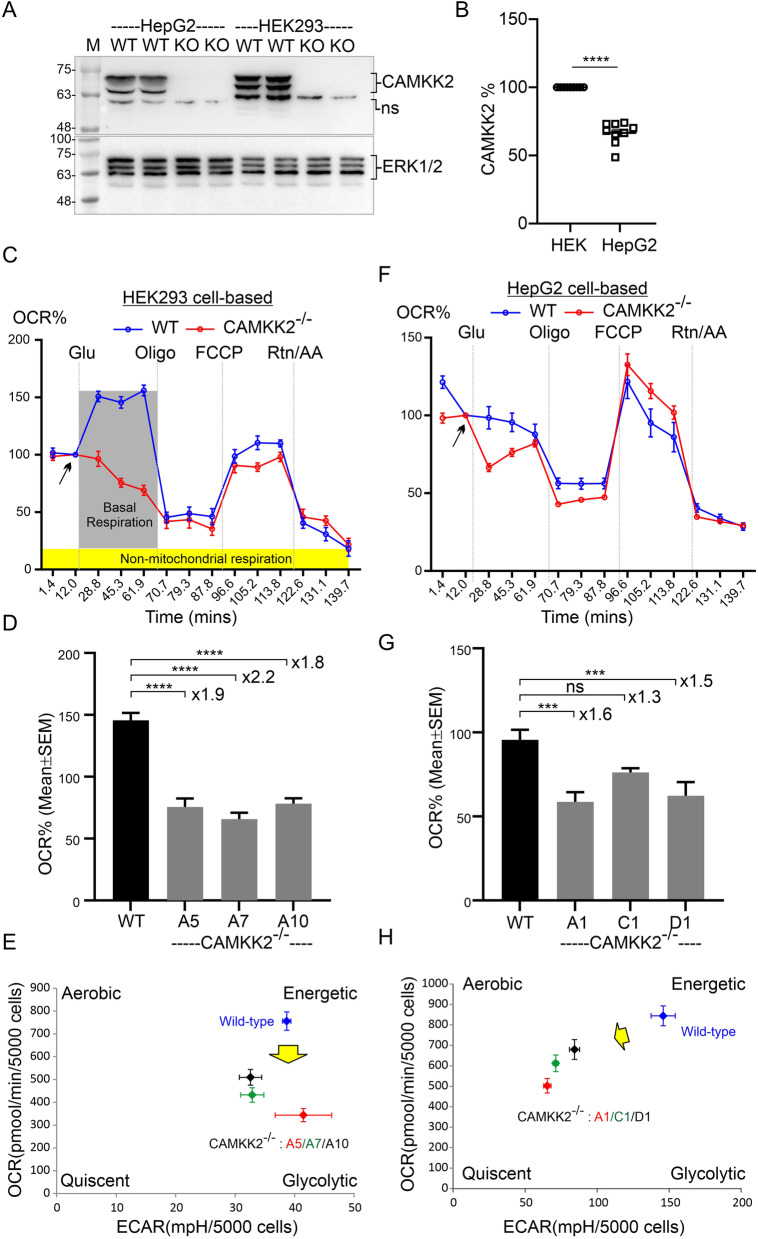
CAMKK2 deletion suppressed cellular respiration in both cell types, shifting metabolic phenotype to aerobic glycolysis causing the Warburg effect. However, isolated mitochondria exhibited a cell-type-specific enhancement or dampening of the respiratory kinetics under CAMKK2 deletion conditions. This was mediated in part by the cell-type-specific effect of CAMKK2 loss-of-function on transcription, translation, post-translational modification (PTM), and megacomplex assembly of nuclear-encoded mitochondrial SDH enzyme complex subunits, specifically SDHB. The cell-type-specific increase or decrease in SDHs protein levels, specifically SDHB, under CAMKK2 deletion condition resulted in an increased or decreased enzymatic activity and CII-mediated respiration. This metabolic phenotype was reversed by cell-type-specific knockdown or overexpression of SDHB in respective CAMKK2 deleted cell types. CAMKK2 loss-of-function also affected the overall assembly of mitochondrial supercomplex involving ETS-associated proteins in a cell-type-specific manner, which correlated with differences in mitochondrial bioenergetics.
This study provided novel insight into CAMKK2-mediated cell-type-specific differential regulation of mitochondrial function, facilitated by the differential expression, PTMs, and assembly of SDHs into megacomplex structures. Video Abstract.
钙(Ca2+)/钙调蛋白(CAM)激活的蛋白激酶激酶 2(CAMKK2)信号转导调节多种生理过程,例如葡萄糖代谢和能量稳态,这是代谢疾病发病机制的基础。CAMKK2 通过几种下游激酶发挥其生物学功能,因此,预计根据细胞类型特异性激酶组谱,CAMKK2 的代谢作用及其潜在机制可能不同。确定 CAMKK2 介导的葡萄糖代谢中的细胞类型特异性差异将导致揭示 CAMKK2 在能量代谢中的器官/组织特异性作用。因此,本研究的目的是了解 CAMKK2 缺失条件下转化的人胚肾衍生的 HEK293 和肝癌衍生的 HepG2 细胞中葡萄糖代谢的细胞类型特异性调节。
以耗氧量(OCR)的形式测量细胞呼吸。在添加底物后测量 OCR 和琥珀酸脱氢酶(SDH)酶活性。此外,使用标准分子生物学技术进行电子传递系统(ETS)相关蛋白,包括线粒体 SDH 蛋白复合物(复合物 II:CII)亚基,特别是 SDH 亚基 B(SDHB)的转录和蛋白质组学分析。通过细胞类型特异性敲低或过表达 SDHB,进一步评估改变的线粒体中 SDHB 蛋白含量的代谢作用。
CAMKK2 缺失抑制了两种细胞类型的细胞呼吸,将代谢表型转变为有氧糖酵解,导致瓦伯格效应。然而,在 CAMKK2 缺失条件下,分离的线粒体表现出细胞类型特异性的呼吸动力学增强或抑制。这部分是由 CAMKK2 功能丧失对转录、翻译、翻译后修饰(PTM)和核编码线粒体 SDH 酶复合物亚基,特别是 SDHB 的巨复合物组装的细胞类型特异性影响介导的。CAMKK2 缺失条件下 SDHs 蛋白水平的细胞类型特异性增加或减少,特别是 SDHB,导致酶活性和 CII 介导的呼吸增加或减少。在相应的 CAMKK2 缺失细胞类型中,通过细胞类型特异性敲低或过表达 SDHB 可以逆转这种代谢表型。CAMKK2 功能丧失也以细胞类型特异性的方式影响涉及 ETS 相关蛋白的线粒体超级复合物的整体组装,这与线粒体生物能学的差异相关。
本研究提供了关于 CAMKK2 介导的线粒体功能的细胞类型特异性差异调节的新见解,这是通过 SDHs 向巨复合物结构的差异表达、PTM 和组装来实现的。