Laboratory of Veterinary Pathophysiology and Animal Health, Graduate School of Agricultural and Life Sciences, The University of Tokyo, 1-1-1Yayoi, Bunkyo-ku, Tokyo 113-8657, Japan.
Exp Anim. 2019 Nov 6;68(4):511-517. doi: 10.1538/expanim.19-0032. Epub 2019 Jun 6.
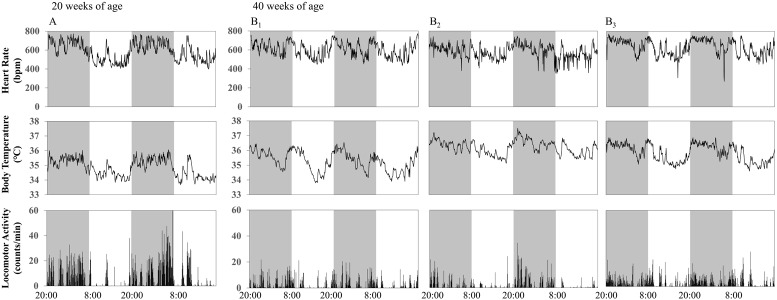
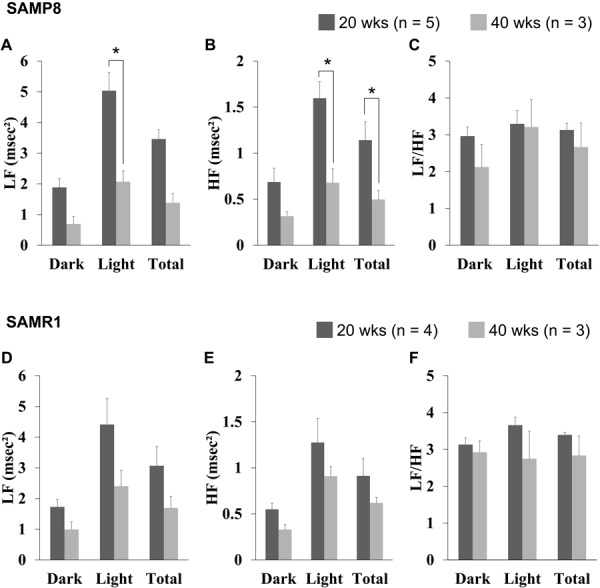
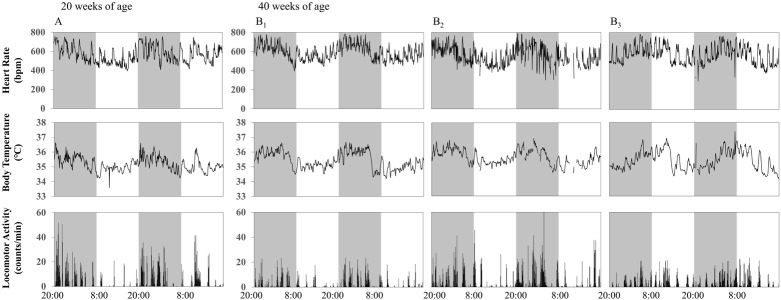
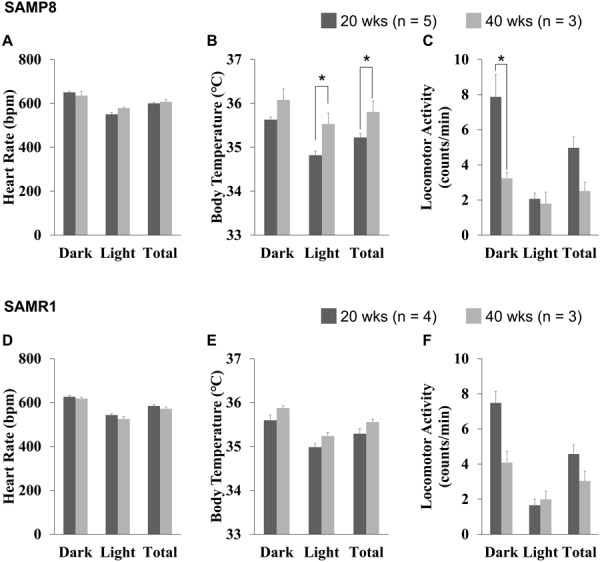
The senescence-accelerated mouse (SAM) strain has been established as an inbred strain with an accelerated aging phenotype. SAM prone-8 (SAMP8), one of the SAM strain, exhibits learning disability, immune deficiency, and circadian rhythm loss at a relatively young age. However, it has not been clarified whether aging affects the autonomic nervous activity in SAMP8. The aim of this study was to clarify the utility of SAMP8 in age-related studies of autonomic nervous function. Electrocardiogram (ECG), body temperature, and locomotor activity were recorded to evaluate bio-behavioral activities. Autonomic nervous activity was evaluated via power spectral analysis of heart rate variability from ECG recordings. SAMP8 significantly decreased both biological and autonomic nervous functions, and the animals exhibited circadian rhythm loss of locomotive activity at as early as 40 weeks of age compared with a control strain at the same age. We concluded that the SAMP8 strain can be used as an animal model for age-related studies of autonomic nervous function.
衰老加速小鼠(SAM)品系已被确立为具有加速衰老表型的近交系。SAM 易发病 8 号(SAMP8)是 SAM 品系之一,其在相对年轻的时候就表现出学习障碍、免疫缺陷和昼夜节律丧失。然而,衰老是否会影响 SAMP8 的自主神经活动尚不清楚。本研究旨在阐明 SAMP8 在自主神经功能与年龄相关研究中的应用。通过记录心电图(ECG)、体温和运动活动来评估生物行为活动。通过对 ECG 记录的心率变异性进行功率谱分析来评估自主神经活动。SAMP8 显著降低了生物和自主神经功能,与同龄对照品系相比,动物在 40 周龄时就出现了运动活动的昼夜节律丧失。我们得出结论,SAMP8 品系可作为自主神经功能与年龄相关研究的动物模型。