Department of Cellular and Molecular Physiology, Yale School of Medicine, New Haven, CT, USA.
PLoS Genet. 2012;8(7):e1002835. doi: 10.1371/journal.pgen.1002835. Epub 2012 Jul 26.
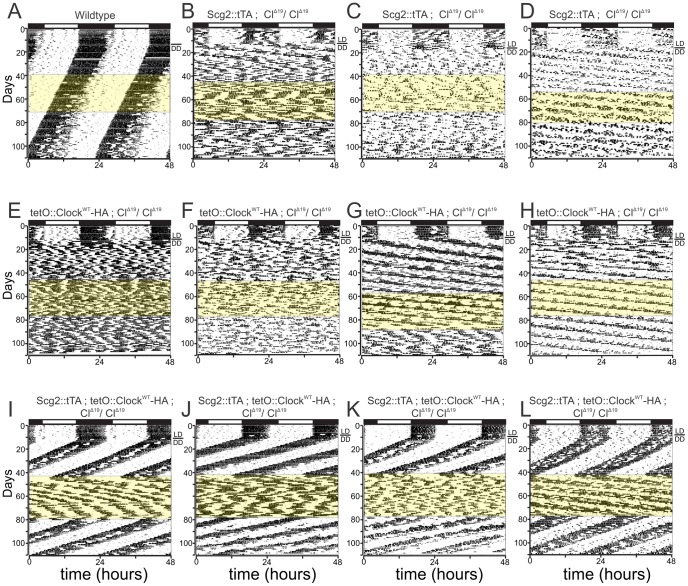
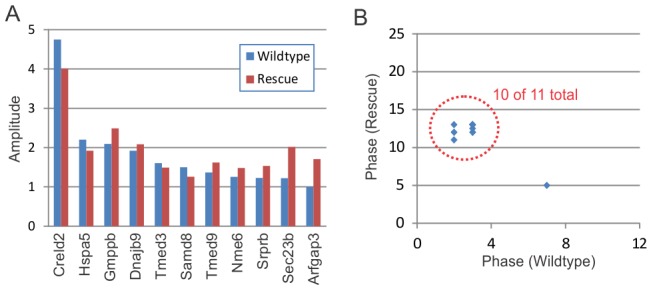
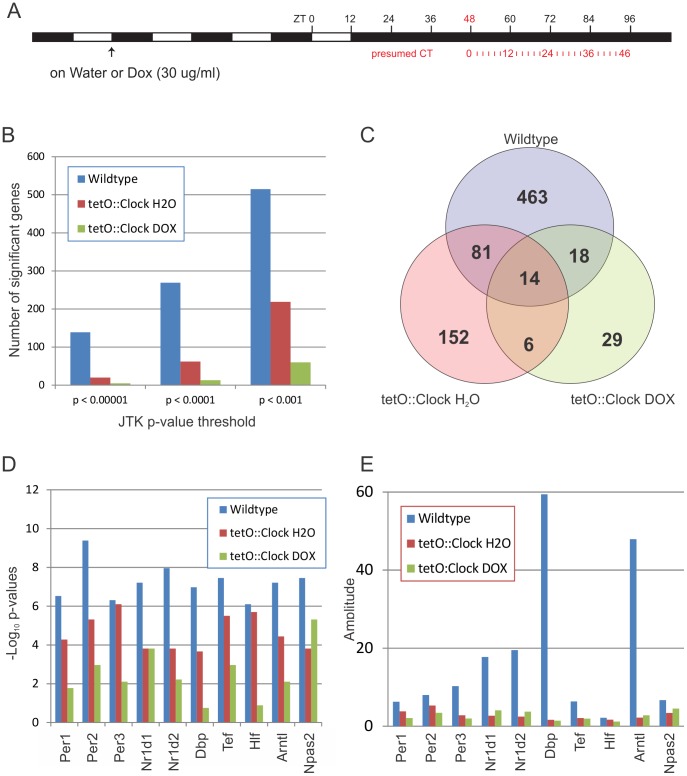
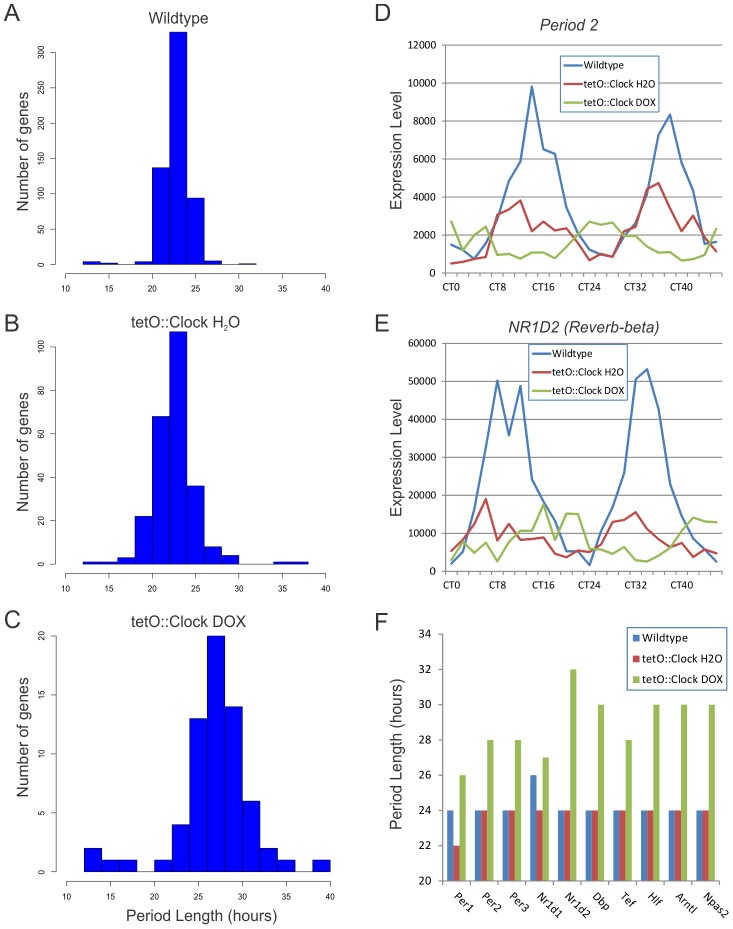
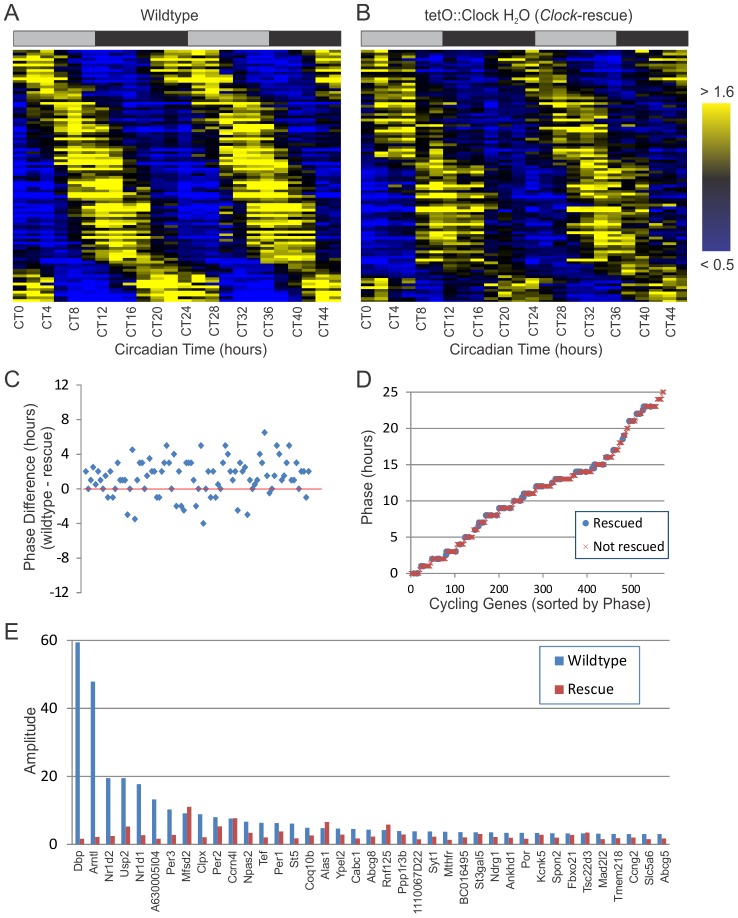
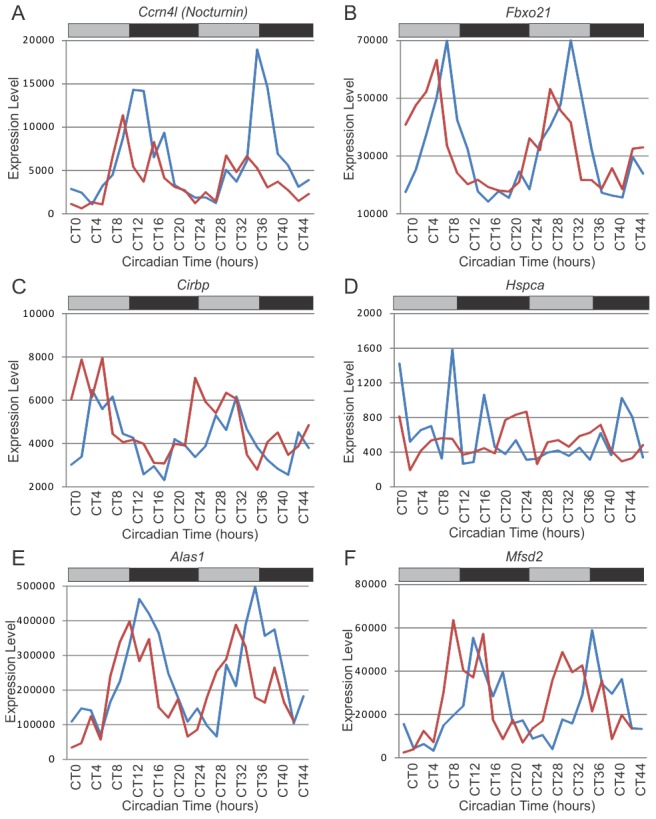
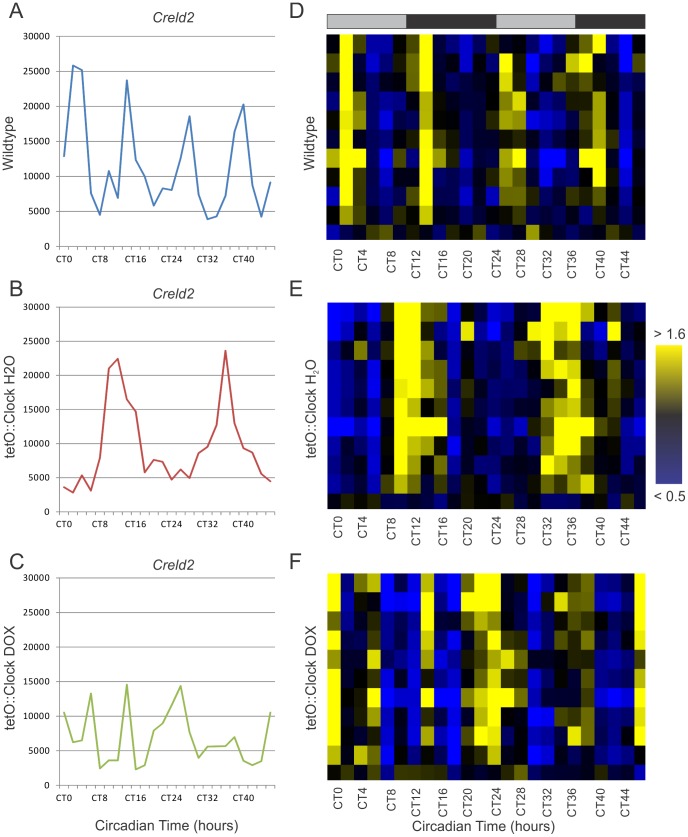
The circadian regulatory network is organized in a hierarchical fashion, with a central oscillator in the suprachiasmatic nuclei (SCN) orchestrating circadian oscillations in peripheral tissues. The nature of the relationship between central and peripheral oscillators, however, is poorly understood. We used the tetOFF expression system to specifically restore Clock function in the brains of Clock(Δ19) mice, which have compromised circadian clocks. Rescued mice showed normal locomotor rhythms in constant darkness, with activity period lengths approximating wildtype controls. We used microarray analysis to assess whether brain-specific rescue of circadian rhythmicity was sufficient to restore circadian transcriptional output in the liver. Compared to Clock mutants, Clock-rescue mice showed significantly larger numbers of cycling transcripts with appropriate phase and period lengths, including many components of the core circadian oscillator. This indicates that the SCN oscillator overcomes local circadian defects and signals directly to the molecular clock. Interestingly, the vast majority of core clock genes in liver were responsive to Clock expression in the SCN, suggesting that core clock genes in peripheral tissues are intrinsically sensitive to SCN cues. Nevertheless, most circadian output in the liver was absent or severely low-amplitude in Clock-rescue animals, demonstrating that the majority of peripheral transcriptional rhythms depend on a fully functional local circadian oscillator. We identified several new system-driven rhythmic genes in the liver, including Alas1 and Mfsd2. Finally, we show that 12-hour transcriptional rhythms (i.e., circadian "harmonics") are disrupted by Clock loss-of-function. Brain-specific rescue of Clock converted 12-hour rhythms into 24-hour rhythms, suggesting that signaling via the central circadian oscillator is required to generate one of the two daily peaks of expression. Based on these data, we conclude that 12-hour rhythms are driven by interactions between central and peripheral circadian oscillators.
昼夜节律调节网络以分层的方式组织,在视交叉上核(SCN)中的中央振荡器协调外周组织中的昼夜节律振荡。然而,中央和外周振荡器之间的关系性质尚不清楚。我们使用 tetOFF 表达系统特异性地恢复 Clock(Δ19) 小鼠大脑中的 Clock 功能,该小鼠的昼夜节律钟受损。挽救的小鼠在持续黑暗中表现出正常的运动节律,活动期长度接近野生型对照。我们使用微阵列分析来评估大脑特异性挽救昼夜节律是否足以恢复肝脏中的昼夜转录输出。与 Clock 突变体相比,Clock 挽救小鼠显示出具有适当相位和周期长度的循环转录物数量显著增加,包括核心昼夜振荡器的许多组成部分。这表明 SCN 振荡器克服了局部昼夜缺陷,并直接向分子钟发出信号。有趣的是,肝脏中绝大多数核心时钟基因对 SCN 中的 Clock 表达有反应,这表明外周组织中的核心时钟基因对 SCN 线索固有敏感。然而,在 Clock 挽救动物中,肝脏中大多数昼夜输出缺失或严重低幅度,这表明大多数外周转录节律依赖于功能齐全的局部昼夜振荡器。我们在肝脏中鉴定了几个新的系统驱动的节律基因,包括 Alas1 和 Mfsd2。最后,我们表明 Clock 功能丧失会破坏 12 小时转录节律(即昼夜“谐波”)。Clock 的大脑特异性挽救将 12 小时的节律转化为 24 小时的节律,这表明通过中央昼夜振荡器进行信号传递是产生两个每日表达高峰之一所必需的。基于这些数据,我们得出结论,12 小时节律是由中央和外周昼夜振荡器之间的相互作用驱动的。