Zhao Lan, Liu Jian-Wei, Kan Bo-Hong, Shi Hui-Yan, Yang Lin-Po, Liu Xin-Yu
First Teaching Hospital of Tianjin University of Traditional Chinese Medicine, Tianjin 300381, China.
Tianjin University of Traditional Chinese Medicine, Tianjin 300193, China.
World J Stem Cells. 2020 Dec 26;12(12):1576-1590. doi: 10.4252/wjsc.v12.i12.1576.
Synaptophysin plays a key role in synaptic development and plasticity of neurons and is closely related to the cognitive process of Alzheimer's disease (AD) patients. Exogenous neural stem cells (NSCs) improve the damaged nerve function. The effects of Sanjiao acupuncture on cognitive impairment may be related to the regulation of the NSC microenvironment.
To explore the anti-dementia mechanism of acupuncture by regulating the NSC microenvironment.
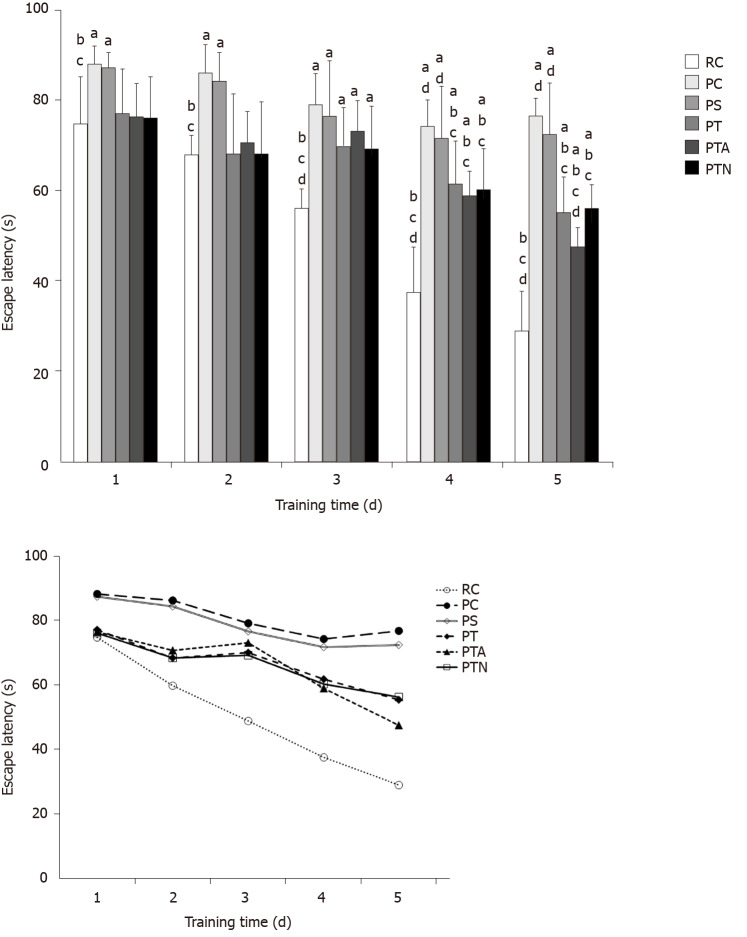
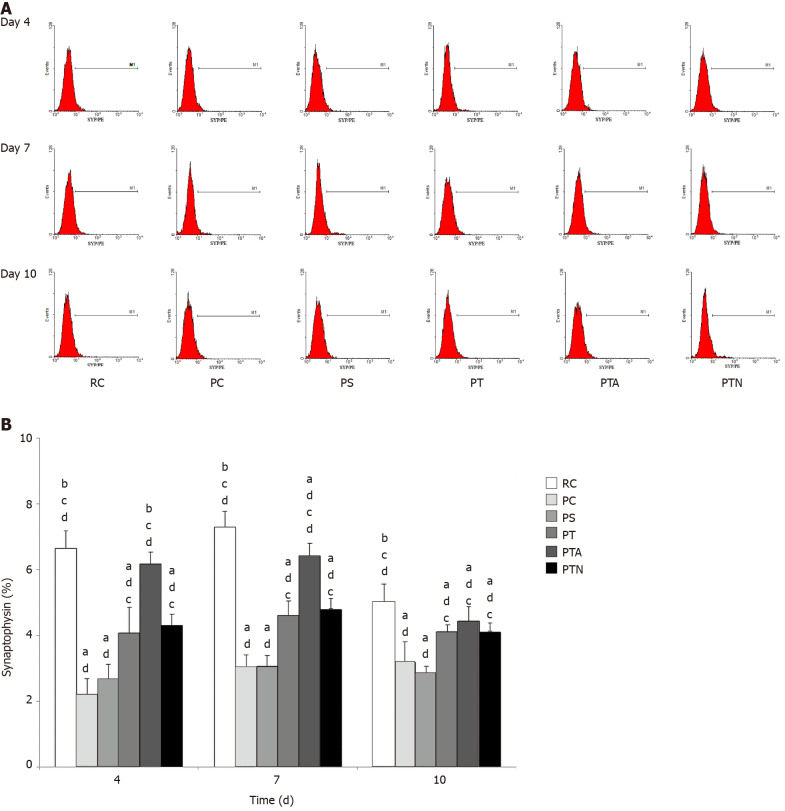
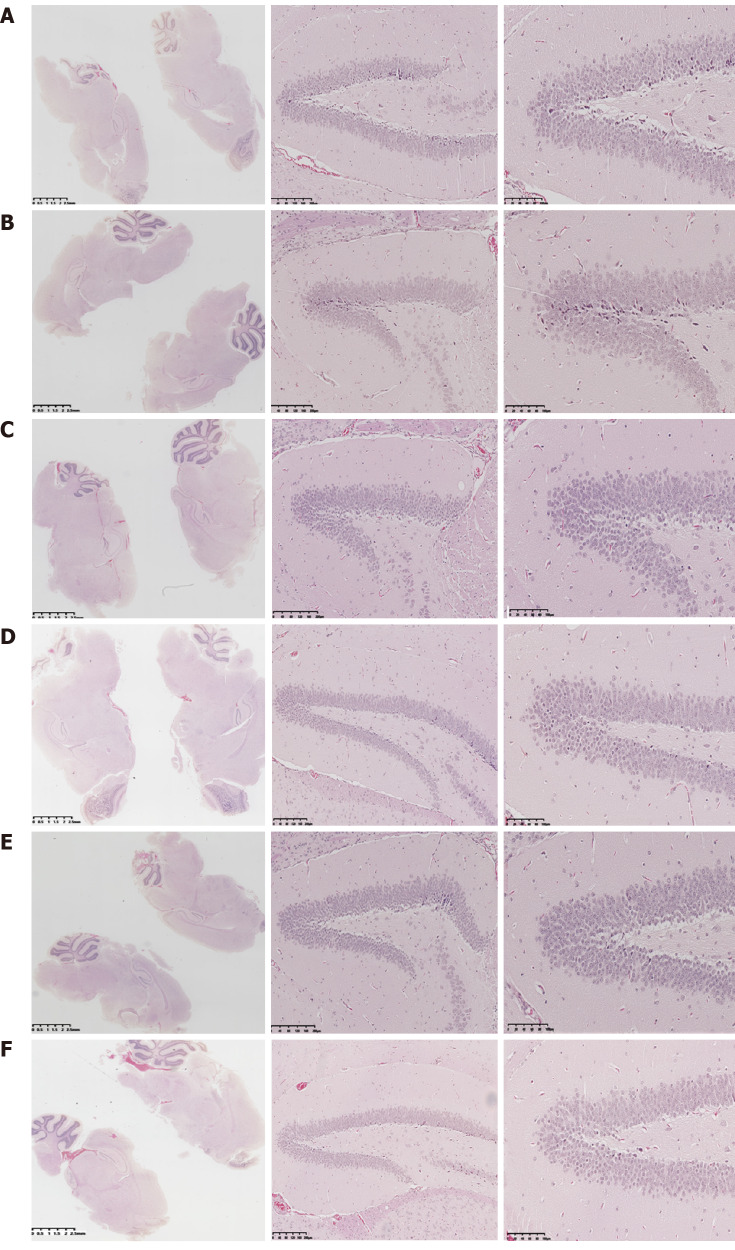
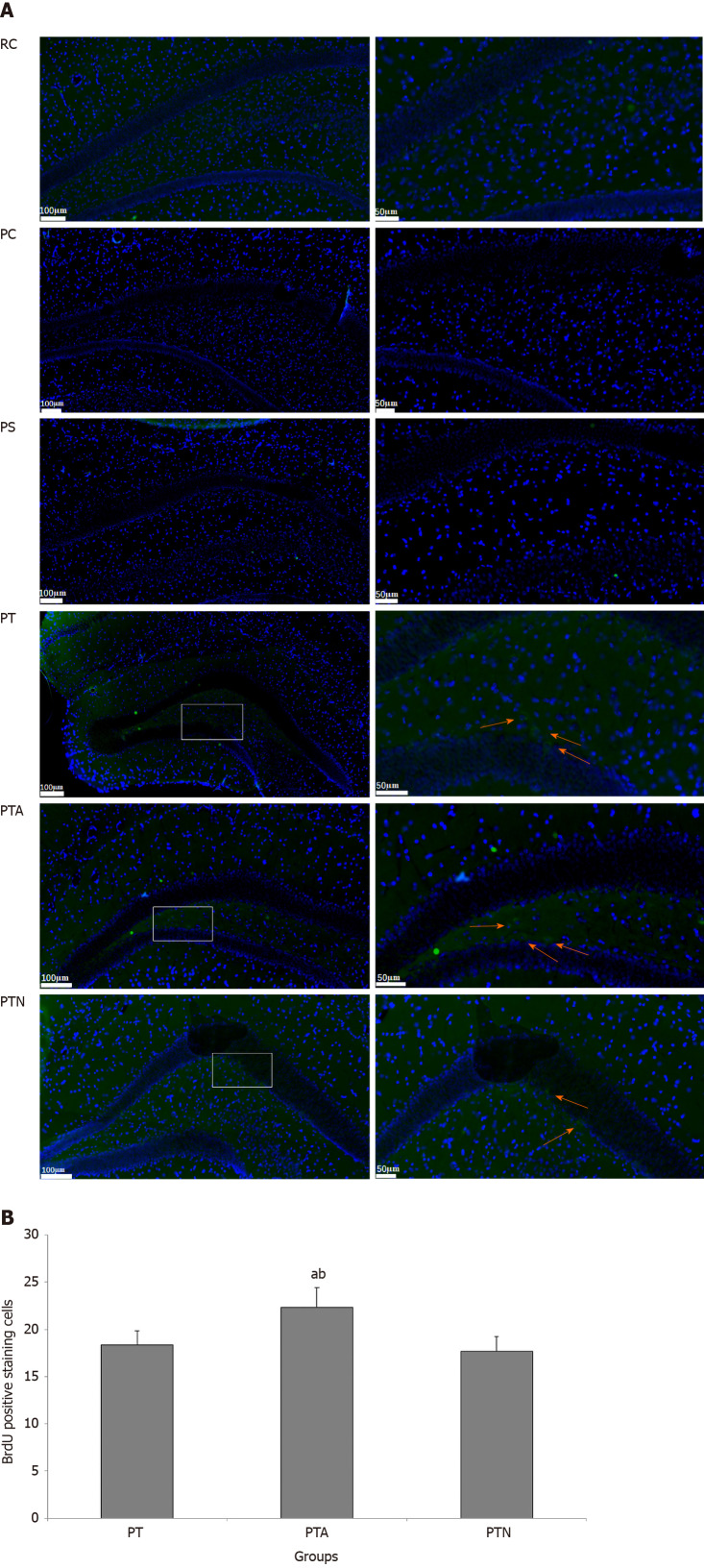
NSCs were isolated from pregnant senescence-accelerated mouse resistant 1 (SAMR1) mice, labeled with BrdU, and injected into the hippocampus of senescence-accelerated mouse prone 8 (SAMP8) mice. Eight-month-old senescence-accelerated mice (SAM) were randomly divided into six groups: SAMR1 (RC), SAMP8 (PC), sham transplantation (PS), NSC transplantation (PT), NSC transplantation with acupuncture (PTA), and NSC transplantation with non-acupoint acupuncture (PTN). Morris water maze test was used to study the learning and memory ability of mice after NSC transplantation. Hematoxylin-eosin staining and immunofluorescence were used to observe the his-topathological changes and NSC proliferation in mice. A co-culture model of hippocampal slices and NSCs was established , and the synaptophysin expression in the hippocampal microenvironment of mice was observed by flow cytometry after acupuncture treatment.
Morris water maze test showed significant cognitive impairment of learning and memory in 8-mo-old SAMP8, which improved in all the NSC transplantation groups. The behavioral change in the PTA group was stronger than those in the other two groups ( < 0.05). Histopathologically, the hippocampal structure was clear, the cell arrangement was dense and orderly, and the necrosis of cells in CA1 and CA3 areas was significantly reduced in the PTA group when compared with the PC group. The BrdU-positive proliferating cells were found in NSC hippocampal transplantation groups, and the number increased significantly in the PTA group than in the PT and PTN groups ( < 0.05). Flow cytometry showed that after co-culture of NSCs with hippocampal slices , the synaptophysin expression in the PC group decreased in comparison to the RC group, that in PT, PTA, and PTN groups increased as compared to the PC group, and that in the PTA group increased significantly as compared to the PTN group with acupoint-related specificity ( < 0.05).
Acupuncture may promote nerve regeneration and synaptogenesis in SAMP8 mice by regulating the microenvironment of NSC transplantation to improve the nerve activity and promote the recovery of AD-damaged cells.
突触素在神经元的突触发育和可塑性中起关键作用,与阿尔茨海默病(AD)患者的认知过程密切相关。外源性神经干细胞(NSCs)可改善受损神经功能。三角针针灸对认知障碍的影响可能与NSC微环境的调节有关。
通过调节NSC微环境探讨针灸抗痴呆的机制。
从孕龄期快速老化抗性1(SAMR1)小鼠中分离NSCs,用BrdU标记后注入快速老化易感性8(SAMP8)小鼠海马。将8月龄快速老化小鼠(SAM)随机分为6组:SAMR1(RC)组、SAMP8(PC)组、假移植(PS)组、NSC移植(PT)组、NSC移植结合针灸(PTA)组和NSC移植结合非穴位针灸(PTN)组。采用Morris水迷宫试验研究NSC移植后小鼠的学习记忆能力。采用苏木精-伊红染色和免疫荧光观察小鼠的组织病理学变化和NSC增殖情况。建立海马脑片与NSCs共培养模型,针刺治疗后通过流式细胞术观察小鼠海马微环境中突触素的表达。
Morris水迷宫试验显示,8月龄SAMP8小鼠存在明显的学习记忆认知障碍,所有NSC移植组的该障碍均有所改善。PTA组的行为改变比其他两组更强(P<0.05)。组织病理学上,与PC组相比,PTA组海马结构清晰,细胞排列致密有序,CA1和CA3区细胞坏死明显减少。在NSC海马移植组中发现了BrdU阳性增殖细胞,PTA组的增殖细胞数量比PT组和PTN组显著增加(P<0.05)。流式细胞术显示,NSCs与海马脑片共培养后,PC组突触素表达低于RC组,PT组、PTA组和PTN组高于PC组,且PTA组与PTN组相比,突触素表达有穴位相关特异性显著增加(P<0.05)。
针灸可能通过调节NSC移植微环境促进SAMP8小鼠神经再生和突触形成,改善神经活性,促进AD损伤细胞的恢复。