Hou Helei, Sun Dantong, Liu Kewei, Jiang Man, Liu Dong, Zhu Jingjuan, Zhou Na, Cong Jing, Zhang Xiaochun
Department of Medical Oncology, The Affiliated Hospital of Qingdao University, Qingdao University, Qingdao, People's Republic of China.
Cancer Manag Res. 2019 May 7;11:4109-4118. doi: 10.2147/CMAR.S190098. eCollection 2019.
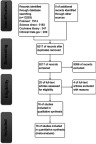
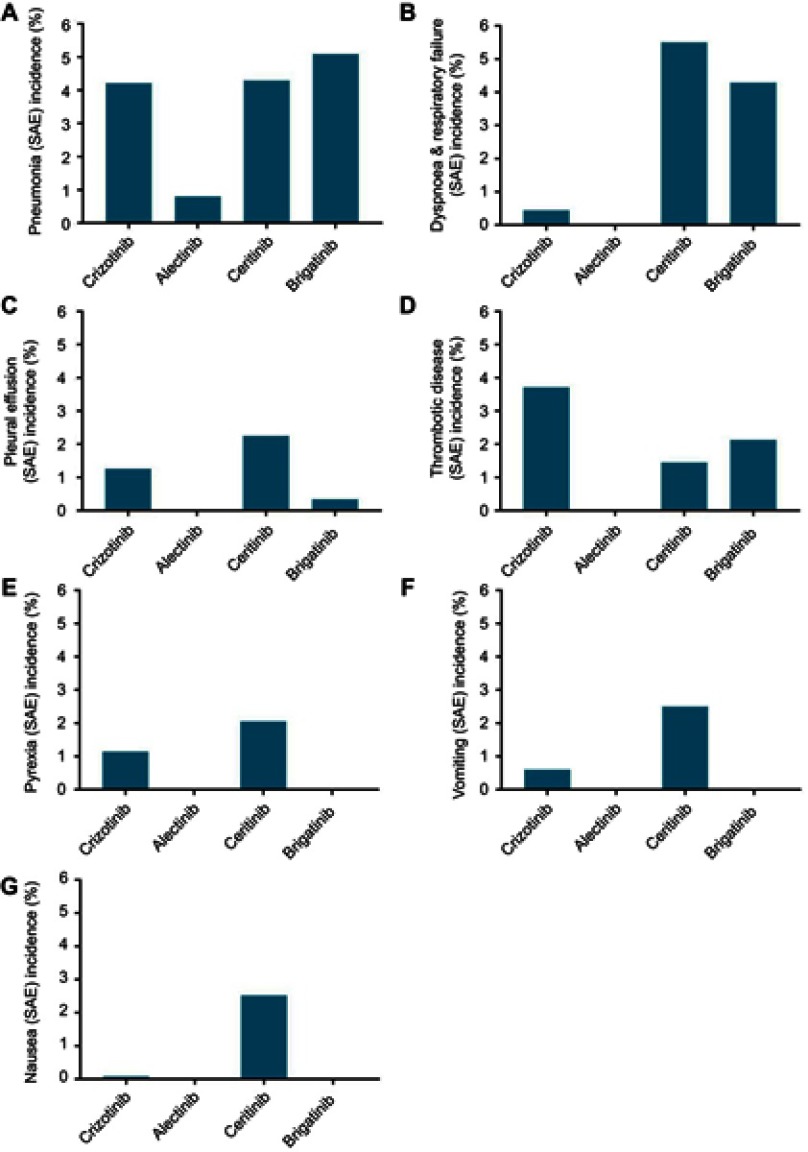
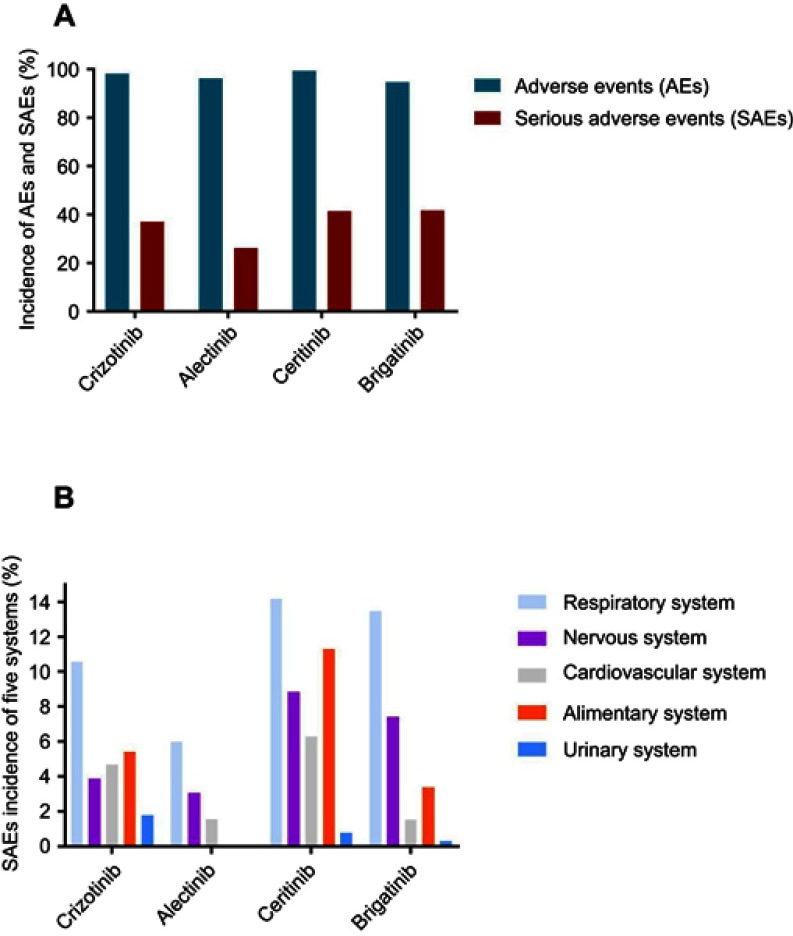
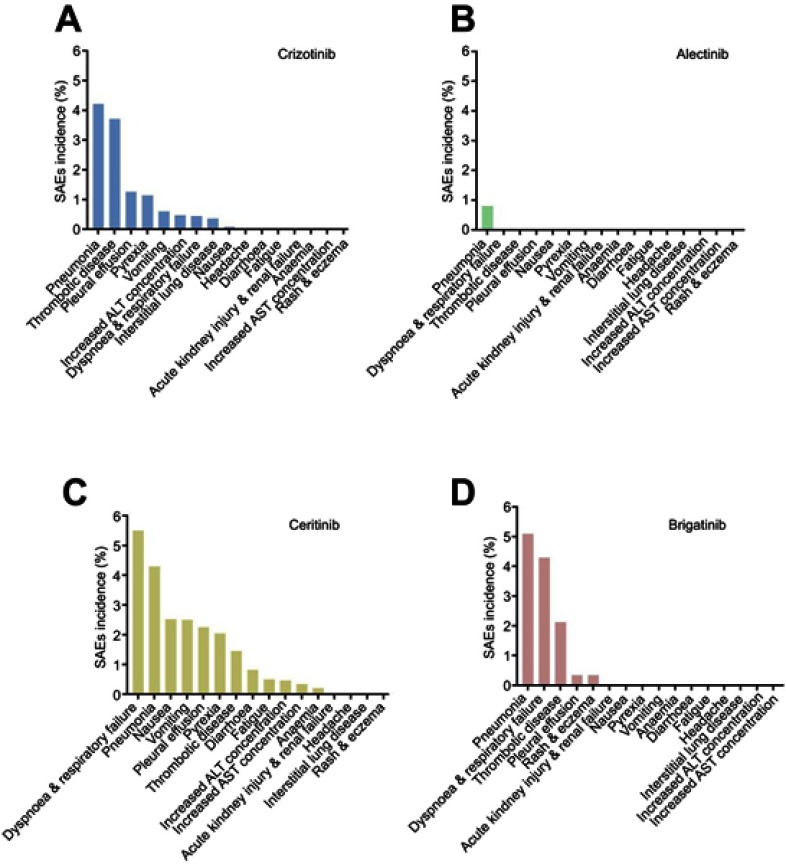
A total of 2%-7% of non-small cell lung cancer (NSCLC) patients have anaplastic lymphoma kinase (ALK) mutations. At present, three or more generations of ALK inhibitors have been used for ALK-positive NSCLC treatment, including crizotinib, alectinib, ceritinib, and brigatinib. Although most adverse events (AEs) of ALK inhibitors are grades 1 to 2 and generally can be well tolerated, serious adverse events (SAEs) of ALK inhibitors lack data analysis, and the lung toxicity of ALK inhibitors needs attention. Thus, we performed this meta-analysis to evaluate the safety of ALK inhibitors, especially in terms of drug-related SAEs. A total of 19 studies from 4 databases (PubMed, Science Direct, ClinicalTrials.gov and Cochrane Library) were included in this meta-analysis. All statistical analyses in this meta-analysis were performed with the STATA 14.0 software. We analyzed the incidences of total AEs, total SAEs and SAEs for different ALK inhibitors. AEs of the ALK inhibitors occurred in almost all participants, and SAEs occurred in more than 20% of the participants. For ceritinib and brigatinib, SAEs occurred in more than 40% of the participants. Alectinib is most likely the safest of the two generations of ALK inhibitors. Generally, the ALK inhibitors showed significant lung toxicity. In conclusion, attention should be focused on ALK inhibitor-related SAEs, especially lung toxicity. According to this meta-analysis, alxectinib seems to be the safest ALK inhibitor. Physicians should focus on the related SAEs when prescribing ALK inhibitors.
2%至7%的非小细胞肺癌(NSCLC)患者存在间变性淋巴瘤激酶(ALK)突变。目前,三代或更多代ALK抑制剂已用于ALK阳性NSCLC的治疗,包括克唑替尼、阿来替尼、色瑞替尼和布加替尼。尽管ALK抑制剂的大多数不良事件(AE)为1至2级,通常耐受性良好,但ALK抑制剂的严重不良事件(SAE)缺乏数据分析,且ALK抑制剂的肺部毒性需要关注。因此,我们进行了这项荟萃分析,以评估ALK抑制剂的安全性,尤其是与药物相关的SAE方面。本荟萃分析共纳入了来自4个数据库(PubMed、Science Direct、ClinicalTrials.gov和Cochrane图书馆)的19项研究。本荟萃分析中的所有统计分析均使用STATA 14.0软件进行。我们分析了不同ALK抑制剂的总AE、总SAE和SAE的发生率。ALK抑制剂的AE几乎在所有参与者中发生,SAE在超过20%的参与者中发生。对于色瑞替尼和布加替尼,超过40%的参与者发生了SAE。阿来替尼很可能是两代ALK抑制剂中最安全的。总体而言,ALK抑制剂显示出显著的肺部毒性。总之,应关注ALK抑制剂相关的SAE,尤其是肺部毒性。根据这项荟萃分析,阿来替尼似乎是最安全的ALK抑制剂。医生在开具ALK抑制剂处方时应关注相关的SAE。