Lotta Ingrid A, Valkiūnas Gediminas, Pacheco M Andreína, Escalante Ananías A, Hernández Sandra Rocío, Matta Nubia E
Universidad Nacional de Colombia - Sede Bogotá- Facultad de Ciencias - Departamento de Biología - Grupo de Investigación Caracterización Genética e Inmunología, Carrera 30 No. 45-03, Bogotá, 111321, Colombia.
Institute of Ecology, Nature Research Centre, Akademijos 2, Vilnius-21, LT, 08412, Lithuania.
Int J Parasitol Parasites Wildl. 2019 May 13;9:159-173. doi: 10.1016/j.ijppaw.2019.05.002. eCollection 2019 Aug.
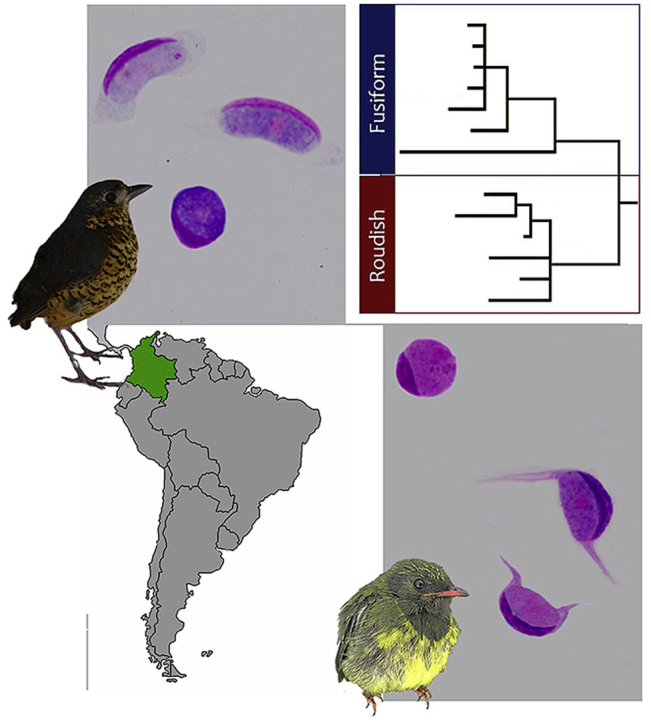
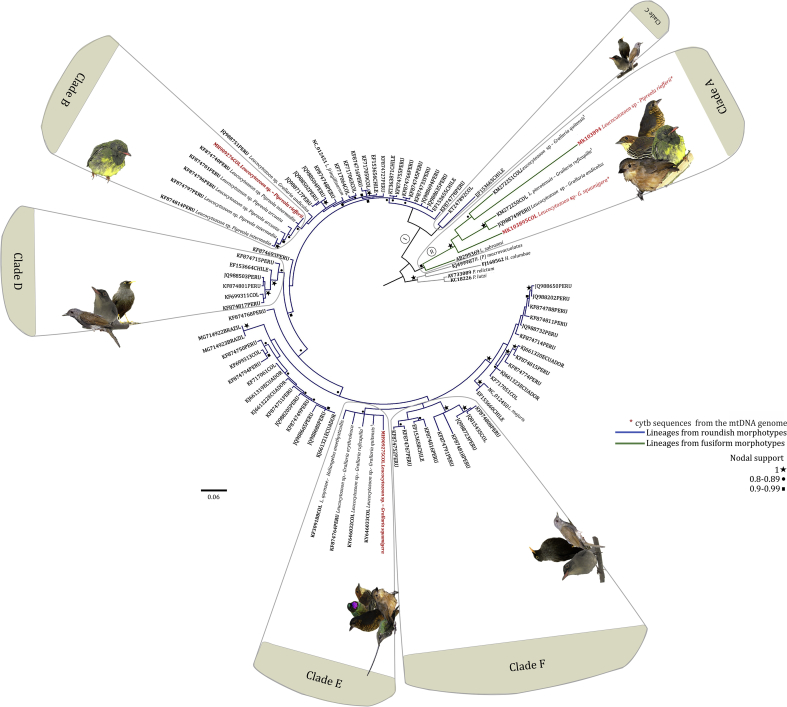
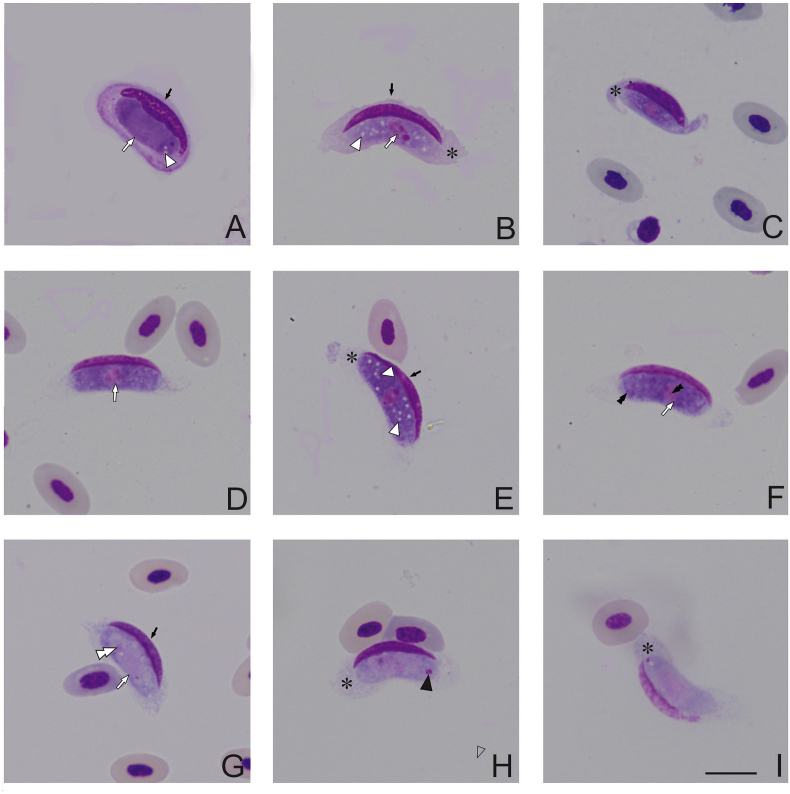
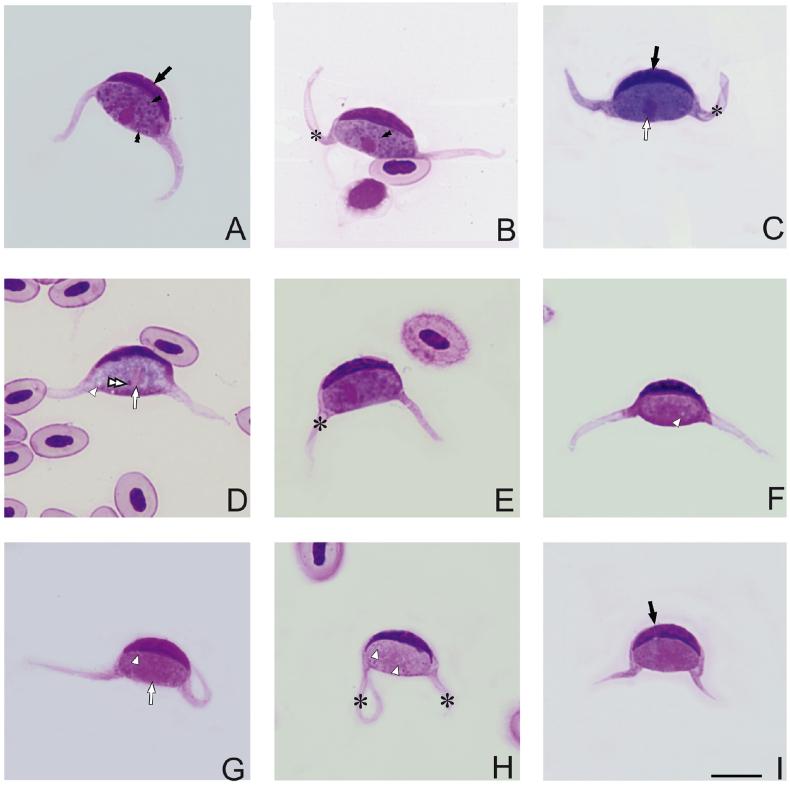
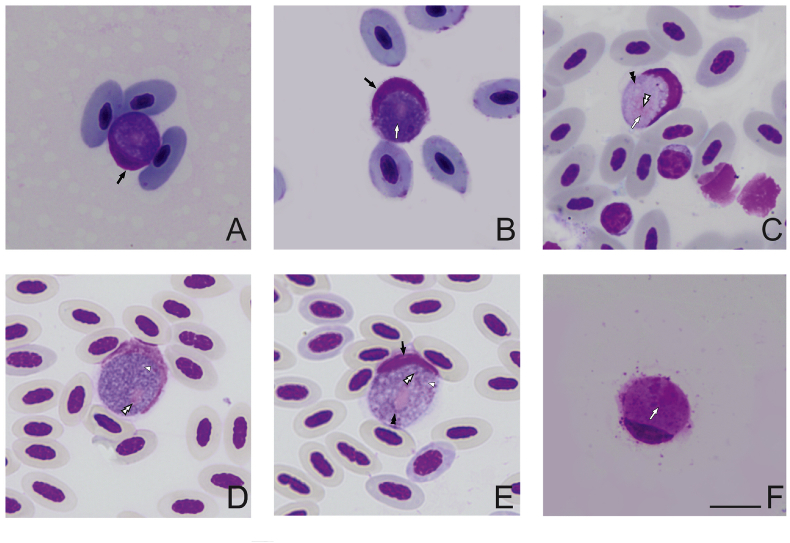
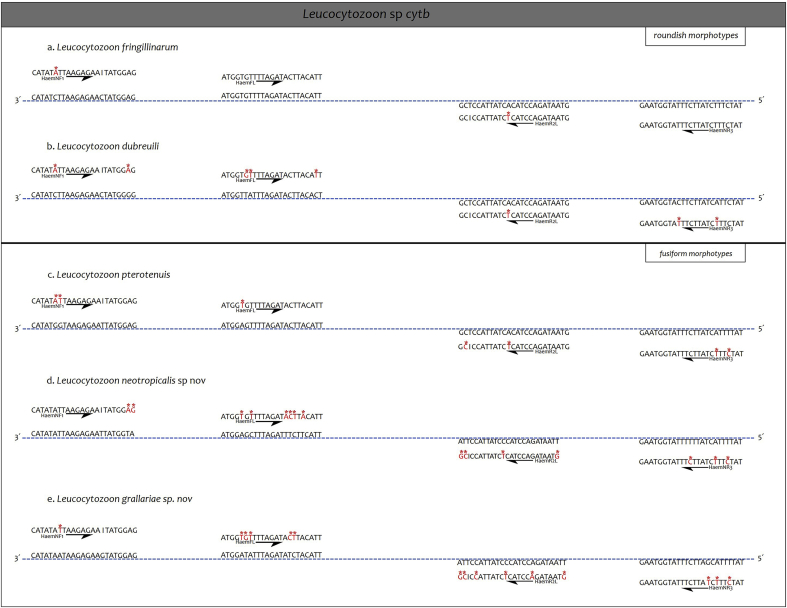
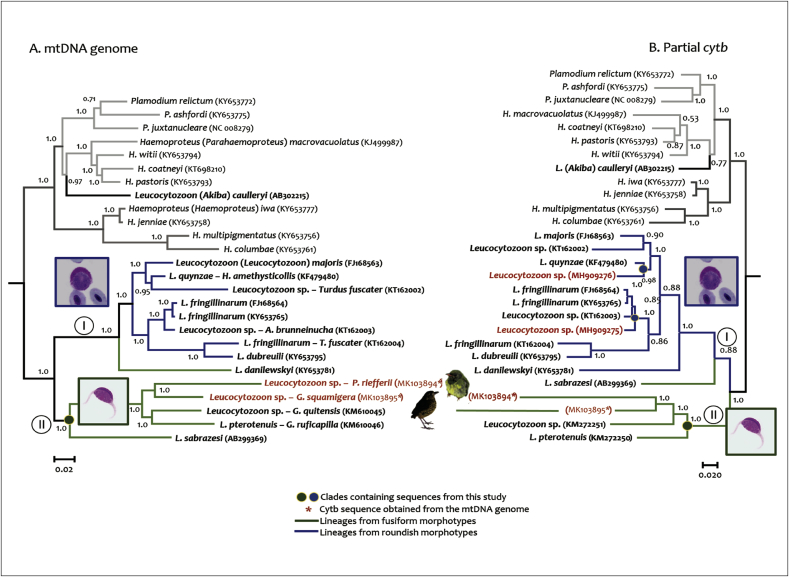
Avian communities from South America harbor an extraordinary diversity of species (Haemosporida, Leucocytozoidae). Here, of 890 birds sampled, 10 (1.2%) were infected with parasites. Among them, two new species were discovered and described. sp. nov. and sp. nov. were found in non-migratory highland passeriforms belonging to the Grallaridae and Cotingidae, respectively. They both possess gametocytes in fusiform host cells. However, due to combining microscopic examination and molecular detection, it was revealed that these parasites were present in co-infections with other species, which gametocytes develop in roundish host cells, therefore exhibiting two highly distant parasite lineages isolated from the same samples. Remarkably, the lineages obtained by cloning the mtDNA genomes were not captured by the classic nested PCR, which amplifies a short fragment of cytochrome gene. Phylogenetic analyses revealed that the lineages obtained by the classic nested PCR clustered with parasites possessing gametocytes in roundish host cells, while the lineages obtained by the mtDNA genome PCR protocol were closely related to parasites possessing gametocytes in fusiform host cells. These findings suggest problems with the sensitivity of the molecular protocols commonly used to detect species. A detailed analysis of the primers used in the classic nested PCR revealed a match with DNA sequences from those parasites that possess gametocytes in roundish host cells (i.e., ), while they differ with the orthologous regions in the mtDNA genomes isolated from the samples containing the two new species. Since these are mixed infections, none of the lineages detected in this study can be assigned accurately to the new morphospecies that develops in fusiform host cells. However, phylogenetic analyses allowed us to hypothesize their most probable associations. This study highlights the need for developing detection methods to assess the diversity of parasites accurately.
南美洲的鸟类群落中寄生着种类异常多样的血孢子虫(疟原虫科、白细胞虫科)。在此,对890只鸟类进行采样,其中10只(1.2%)感染了寄生虫。其中,发现并描述了两个新物种。新物种1和新物种2分别在属于蚁鸫科和伞鸟科的非迁徙性高地雀形目鸟类中被发现。它们在梭形宿主细胞中均具有配子体。然而,通过显微镜检查和分子检测相结合发现,这些寄生虫与其他物种共同感染,其他物种的配子体在圆形宿主细胞中发育,因此在同一样本中呈现出两个高度不同的寄生虫谱系。值得注意的是,通过克隆线粒体DNA基因组获得的谱系未被经典巢式PCR捕获,经典巢式PCR扩增的是细胞色素b基因的一个短片段。系统发育分析表明,经典巢式PCR获得的谱系与在圆形宿主细胞中具有配子体的寄生虫聚类,而线粒体DNA基因组PCR方案获得的谱系与在梭形宿主细胞中具有配子体的寄生虫密切相关。这些发现表明,常用的检测疟原虫物种的分子方法存在灵敏度问题。对经典巢式PCR中使用的引物进行详细分析发现,它们与在圆形宿主细胞中具有配子体的寄生虫的DNA序列匹配(即与某些已知寄生虫匹配),而与从含有这两个新物种的样本中分离出的线粒体DNA基因组中的同源区域不同。由于这些是混合感染,本研究中检测到的任何谱系都不能准确地归属于在梭形宿主细胞中发育的新形态物种。然而,系统发育分析使我们能够推测它们最可能的关联。这项研究强调了开发检测方法以准确评估疟原虫寄生虫多样性的必要性。