
中国多个地区健康人群中NDM-5和MCR-1的新出现携带情况:一项横断面观察性研究
Emerging Carriage of NDM-5 and MCR-1 in From Healthy People in Multiple Regions in China: A Cross Sectional Observational Study.
作者信息
Shen Zhangqi, Hu Yanyan, Sun Qiaoling, Hu Fupin, Zhou Hongwei, Shu Lingbin, Ma Tengfei, Shen Yingbo, Wang Yang, Li Juan, Walsh Timothy R, Zhang Rong, Wang Shaolin
机构信息
Beijing Advanced Innovation Center for Food Nutrition and Human Health, College of Veterinary Medicine, China Agricultural University, Beijing, 100193, China.
Department of Clinical Laboratory, Second Affiliated Hospital of Zhejiang University, School of Medicine, Hangzhou 310009, China.
出版信息
EClinicalMedicine. 2018 Dec 4;6:11-20. doi: 10.1016/j.eclinm.2018.11.003. eCollection 2018 Dec.
BACKGROUND
Carriage of carbapenem-resistant Enterobacteriaceae (CRE) in humans may contribute to the dissemination of CRE and impact on communities and healthcare facilities. Carbapenem-resistant (CREC) is one of the major type of CRE in the human gut. Here, we describe a cross-sectional study to investigate the prevalence of CREC, and in particular the carrying CREC, in health volunteers in China.
METHODS
During September to December 2016, 3859 non-duplicated stool specimens were collected from healthy volunteers who received regular physical examinees in healthcare centers located in 19 provinces across China. Enrichment culture supplemented meropenem was used to isolate CREC. Carbapenemase producing determinants and the gene were determined by PCR amplification and sequencing. Isolates were further analyzed by antibiotic susceptibility test, genotyping, and whole genome analysis.
FINDINGS
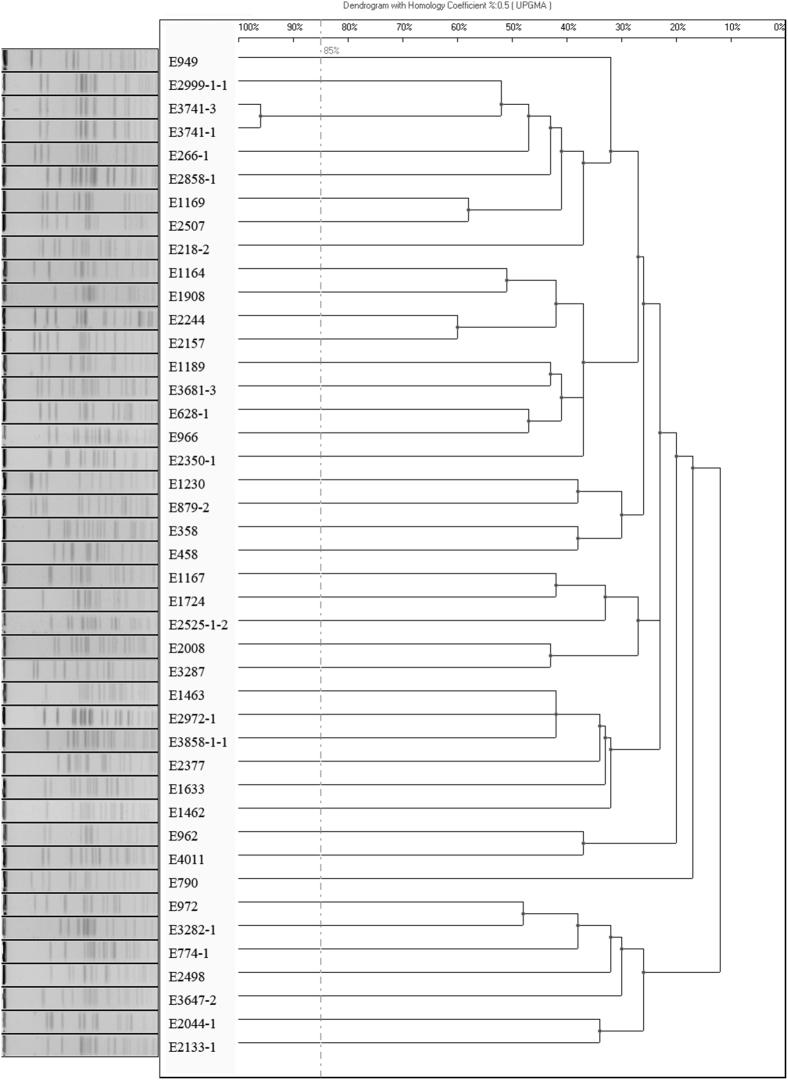
A total of 92 non-duplicated CREC were isolated from 3859 stool specimens, among which 43 CREC are carbapenemase positive. In addition, the co-existence of and was found in 14 CREC, which also showed resistance to the majority of all antimicrobial agents analyzed. The genetic background of these CREC isolates are highly diversified based on molecular typing. Furthermore, whole genome sequence indicated that NDM-5 is the predominant determinant conferring carbapenem resistance in CREC, and that NDM-5 carrying plasmids (IncX3) are very similar.
INTERPRETATION
The incidence of CREC carriage in healthy people in China was small; however, the co-existence of CREC with is disconcerting. Therefore, pre-screening prior to admission and monitoring of patients on high-dependency wards is highly recommended to control and prevent the dissemination of CRE in hospitals.
OUTSTANDING QUESTION
The high prevalence of CREC in the healthy people should not be underestimated, as it may increase the risk of infection. This knowledge could have impact on the pre-screening and monitoring of CRE before patient administration.
背景
人类携带耐碳青霉烯类肠杆菌科细菌(CRE)可能会促使CRE传播,并对社区和医疗机构产生影响。耐碳青霉烯类肠杆菌(CREC)是人类肠道中CRE的主要类型之一。在此,我们描述一项横断面研究,以调查中国健康志愿者中CREC的流行情况,尤其是携带CREC的情况。
方法
2016年9月至12月期间,从中国19个省份医疗中心接受定期体检的健康志愿者中收集了3859份非重复粪便标本。采用添加美罗培南的富集培养法分离CREC。通过PCR扩增和测序确定产碳青霉烯酶决定簇和基因。分离株进一步通过药敏试验、基因分型和全基因组分析进行分析。
结果
从3859份粪便标本中总共分离出92株非重复CREC,其中43株CREC碳青霉烯酶呈阳性。此外,在14株CREC中发现了和的共存,这些CREC对所分析的大多数抗菌药物也表现出耐药性。基于分子分型,这些CREC分离株的遗传背景高度多样化。此外,全基因组序列表明NDM-5是CREC中赋予碳青霉烯耐药性的主要决定簇,并且携带NDM-5的质粒(IncX3)非常相似。
解读
中国健康人群中携带CREC的发生率较低;然而,CREC与的共存令人不安。因此,强烈建议在入院前进行预筛查,并对高依赖病房的患者进行监测,以控制和预防医院内CRE的传播。
突出问题
健康人群中CREC的高流行率不应被低估,因为这可能会增加感染风险。这一认识可能会对患者给药前CRE的预筛查和监测产生影响。




 Zotero 插件