Department of Microbiology, Southern Illinois University, Carbondale, Illinois.
Department of Molecular and Cell Biology, University of Connecticut, Storrs, Connecticut.
Microbiologyopen. 2019 Oct;8(10):e858. doi: 10.1002/mbo3.858. Epub 2019 Jun 13.
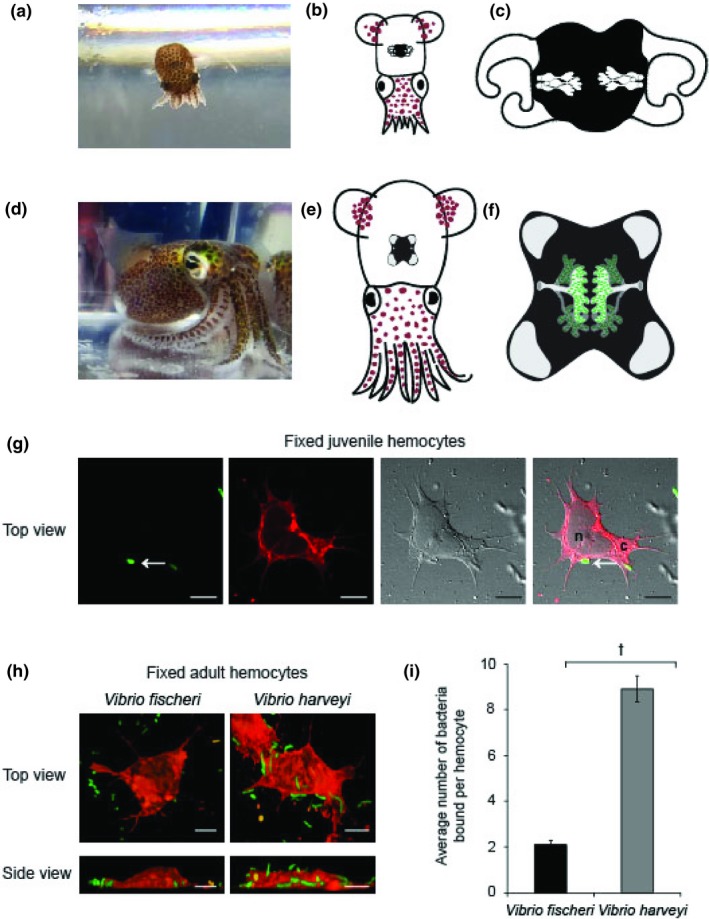
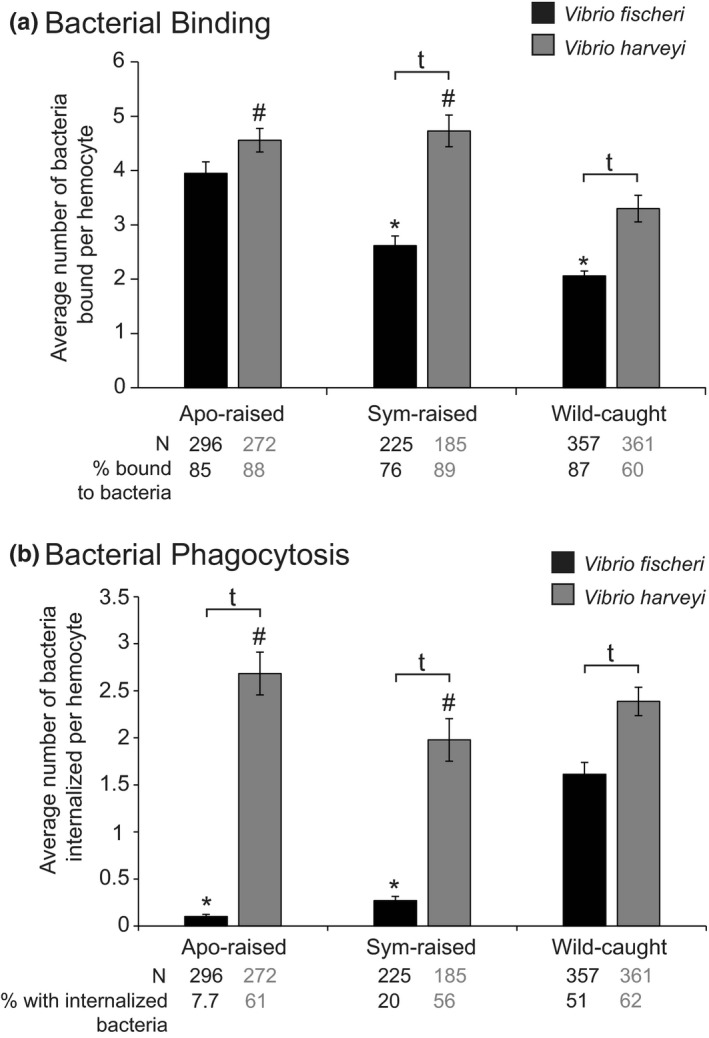
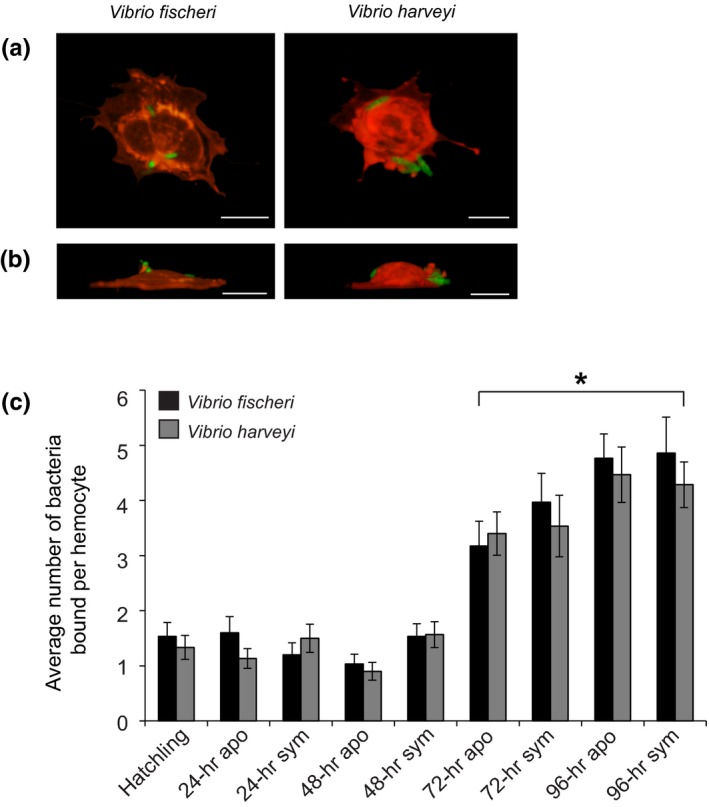
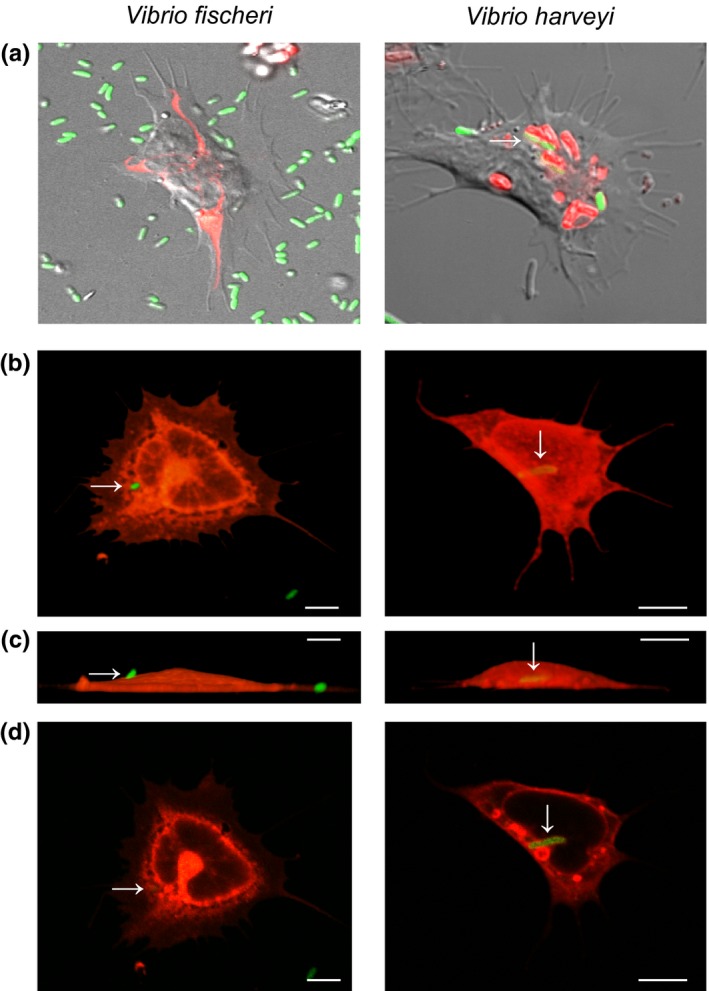
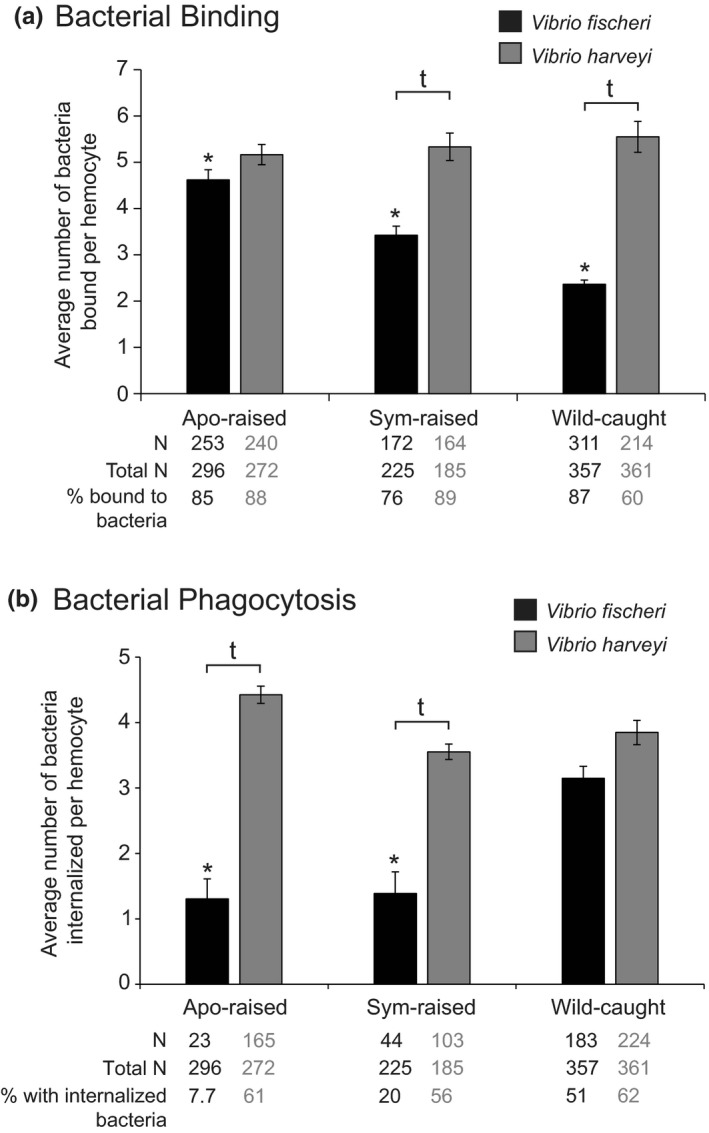
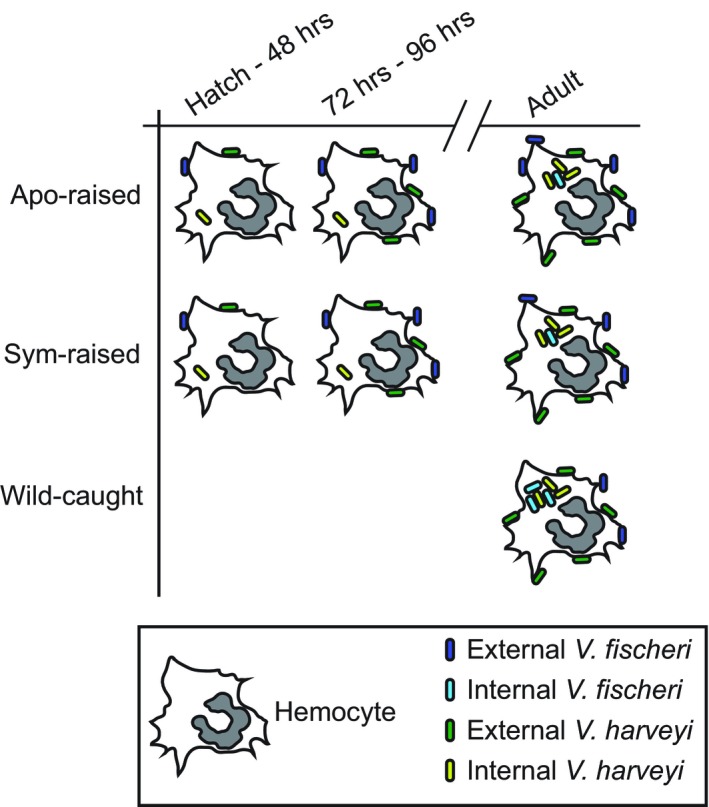
The binary association between the squid, Euprymna scolopes, and its symbiont, Vibrio fischeri, serves as a model system to study interactions between beneficial bacteria and the innate immune system. Previous research demonstrated that binding of the squid's immune cells, hemocytes, to V. fischeri is altered if the symbiont is removed from the light organ, suggesting that host colonization alters hemocyte recognition of V. fischeri. To investigate the influence of symbiosis on immune maturation during development, we characterized hemocyte binding and phagocytosis of V. fischeri and nonsymbiotic Vibrio harveyi from symbiotic (sym) and aposymbiotic (apo) juveniles, and wild-caught and laboratory-raised sym and apo adults. Our results demonstrate that while light organ colonization by V. fischeri did not alter juvenile hemocyte response, these cells bound a similar number of V. fischeri and V. harveyi yet phagocytosed only V. harveyi. Our results also indicate that long-term colonization altered the adult hemocyte response to V. fischeri but not V. harveyi. All hemocytes from adult squid, regardless of apo or sym state, both bound and phagocytosed a similar number of V. harveyi while hemocytes from both wild-caught and sym-raised adults bound significantly fewer V. fischeri, although more V. fischeri were phagocytosed by hemocytes from wild-caught animals. In contrast, hemocytes from apo-raised squid bound similar numbers of both V. fischeri and V. harveyi, although more V. harveyi cells were engulfed, suggesting that blood cells from apo-raised adults behaved similarly to juvenile hosts. Taken together, these data suggest that persistent colonization by the light organ symbiont is required for hemocytes to differentially bind and phagocytose V. fischeri. The cellular immune system of E. scolopes likely possesses multiple mechanisms at different developmental stages to promote a specific and life-long interaction with the symbiont.
鱿鱼(Euprymna scolopes)与其共生菌费氏弧菌(Vibrio fischeri)之间的二元共生关系是研究有益细菌与先天免疫系统相互作用的模型系统。先前的研究表明,如果将共生菌从发光器官中去除,鱿鱼的免疫细胞——血淋巴细胞与 V. fischeri 的结合会发生改变,这表明宿主定植会改变血淋巴细胞对 V. fischeri 的识别。为了研究共生对发育过程中免疫成熟的影响,我们从共生(sym)和非共生(apo)幼体、野生和实验室饲养的 sym 和 apo 成体中,对 V. fischeri 和非共生 Vibrio harveyi 的血淋巴细胞结合和吞噬作用进行了特征描述。我们的结果表明,尽管 V. fischeri 对发光器官的定植并没有改变幼体血淋巴细胞的反应,但这些细胞结合了相似数量的 V. fischeri 和 V. harveyi,但只吞噬了 V. harveyi。我们的结果还表明,长期定植改变了成体血淋巴细胞对 V. fischeri 的反应,但对 V. harveyi 没有影响。无论 apo 还是 sym 状态,所有成体鱿鱼的血淋巴细胞都结合并吞噬了相似数量的 V. harveyi,而来自野生和 sym 饲养的成体的血淋巴细胞结合的 V. fischeri 数量显著减少,尽管来自野生动物的血淋巴细胞吞噬了更多的 V. fischeri。相比之下,apo 饲养的鱿鱼的血淋巴细胞结合了相似数量的 V. fischeri 和 V. harveyi,尽管吞噬了更多的 V. harveyi 细胞,这表明来自 apo 饲养的成年动物的血细胞行为与幼年宿主相似。总之,这些数据表明,发光器官共生菌的持续定植是血淋巴细胞对 V. fischeri 进行差异结合和吞噬所必需的。E. scolopes 的细胞免疫系统可能在不同的发育阶段具有多种机制,以促进与共生体的特定和终生相互作用。