Department of Molecular and Cell Biology, University of Connecticut, Storrs, Connecticut, United States of America.
PLoS One. 2011;6(10):e25649. doi: 10.1371/journal.pone.0025649. Epub 2011 Oct 5.
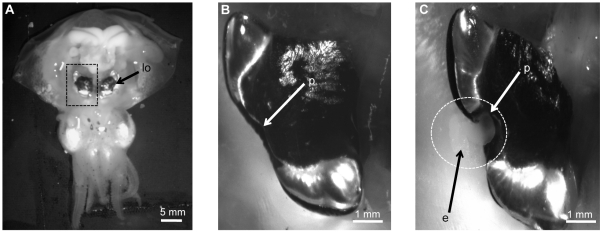
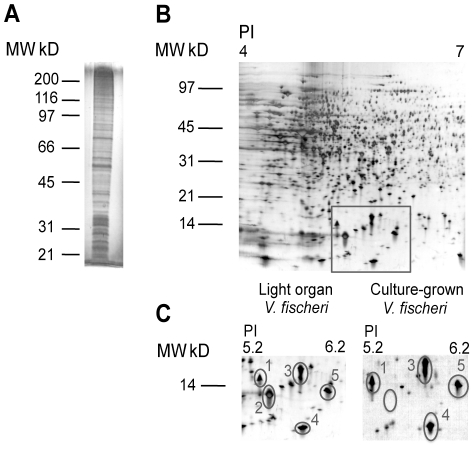
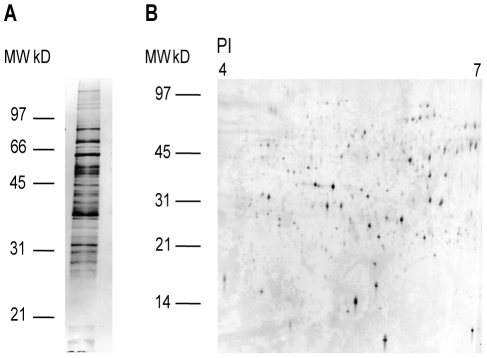
The beneficial symbiosis between the Hawaiian bobtail squid, Euprymna scolopes, and the bioluminescent bacterium, Vibrio fischeri, provides a unique opportunity to study host/microbe interactions within a natural microenvironment. Colonization of the squid light organ by V. fischeri begins a lifelong association with a regulated daily rhythm. Each morning the host expels an exudate from the light organ consisting of 95% of the symbiont population in addition to host hemocytes and shed epithelial cells. We analyzed the host and symbiont proteomes of adult squid exudate and surrounding light organ epithelial tissue using 1D- and 2D-polyacrylamide gel electrophoresis and multidimensional protein identification technology (MudPIT) in an effort to understand the contribution of both partners to the maintenance of this association. These proteomic analyses putatively identified 1581 unique proteins, 870 proteins originating from the symbiont and 711 from the host. Identified host proteins indicate a role of the innate immune system and reactive oxygen species (ROS) in regulating the symbiosis. Symbiont proteins detected enhance our understanding of the role of quorum sensing, two-component signaling, motility, and detoxification of ROS and reactive nitrogen species (RNS) inside the light organ. This study offers the first proteomic analysis of the symbiotic microenvironment of the adult light organ and provides the identification of proteins important to the regulation of this beneficial association.
夏威夷短尾乌贼(Euprymna scolopes)与发光细菌(Vibrio fischeri)之间的有益共生关系为研究宿主/微生物在自然微环境中的相互作用提供了独特的机会。发光细菌定植于乌贼的发光器官,开始了与宿主之间受调控的每日节律的终生共生关系。每天早晨,宿主从发光器官中排出一种渗出物,其中包含 95%的共生体种群,以及宿主的血球和脱落的上皮细胞。我们使用 1D-和 2D-聚丙烯酰胺凝胶电泳和多维蛋白质鉴定技术(MudPIT)分析成年乌贼渗出物和周围发光器官上皮组织的宿主和共生体蛋白质组,以了解两个伙伴对维持这种共生关系的贡献。这些蛋白质组学分析推测鉴定了 1581 种独特的蛋白质,其中 870 种来自共生体,711 种来自宿主。鉴定出的宿主蛋白表明先天免疫系统和活性氧(ROS)在调节共生关系中发挥作用。检测到的共生体蛋白增强了我们对群体感应、双组分信号转导、运动以及发光器官内 ROS 和活性氮物种(RNS)解毒作用的理解。这项研究首次对成年发光器官共生微环境进行了蛋白质组学分析,并鉴定了对这种有益共生关系调节具有重要意义的蛋白质。