Sorbonne Université, CNRS, IBPS, Laboratoire de Biologie Computationnelle et Quantitative (LCQB), Paris, France.
Institut Universitaire de France (IUF), Paris, France.
Proteins. 2019 Nov;87(11):952-965. doi: 10.1002/prot.25757. Epub 2019 Jun 26.
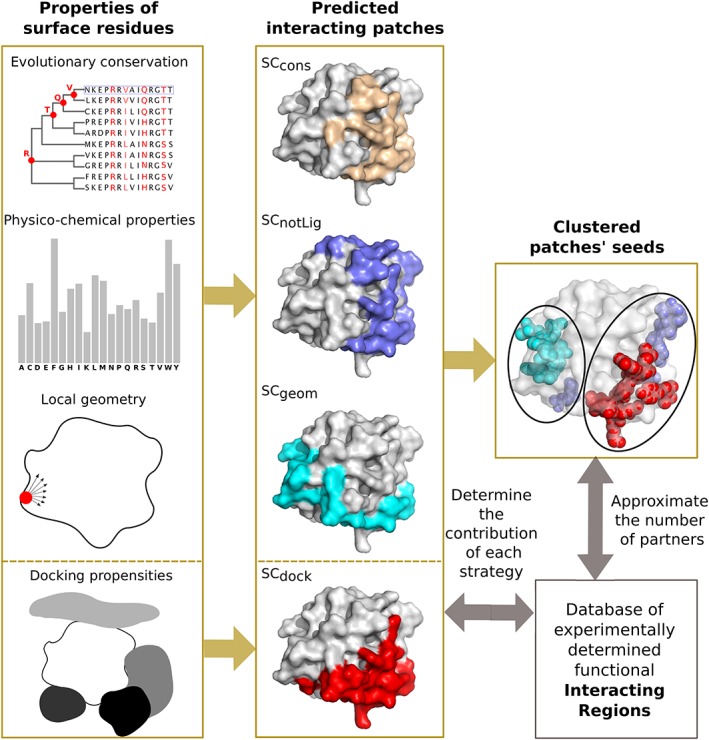
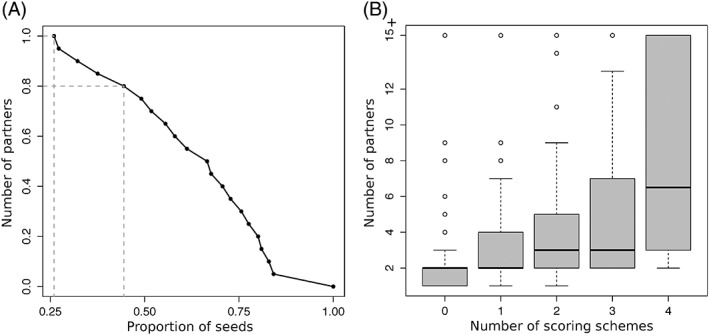
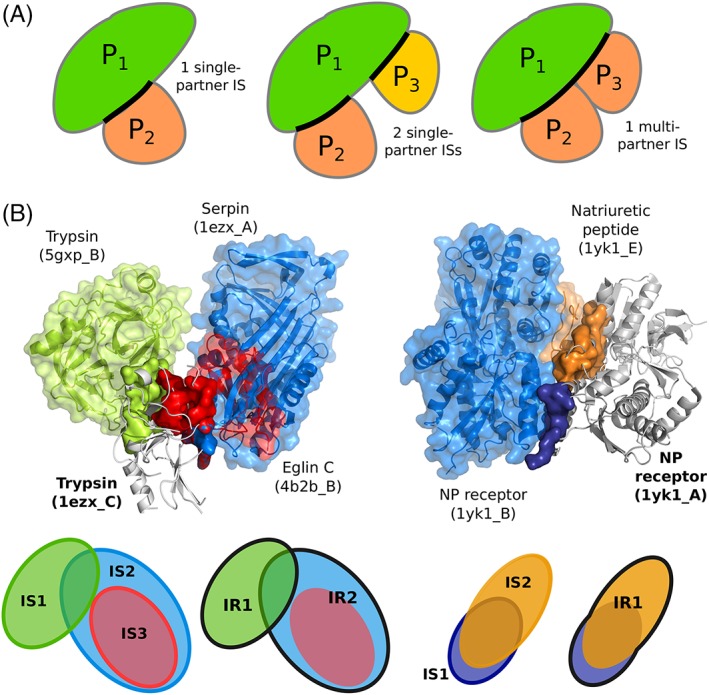
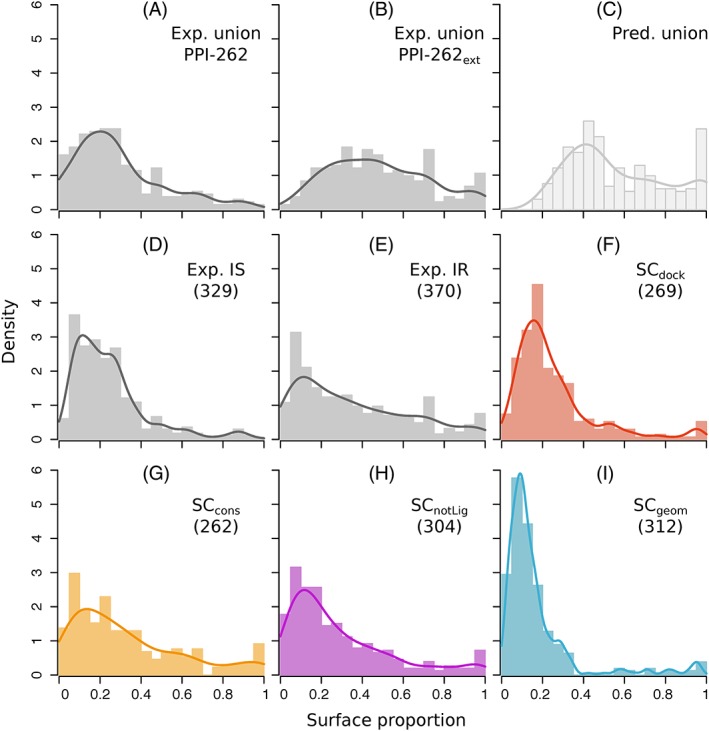
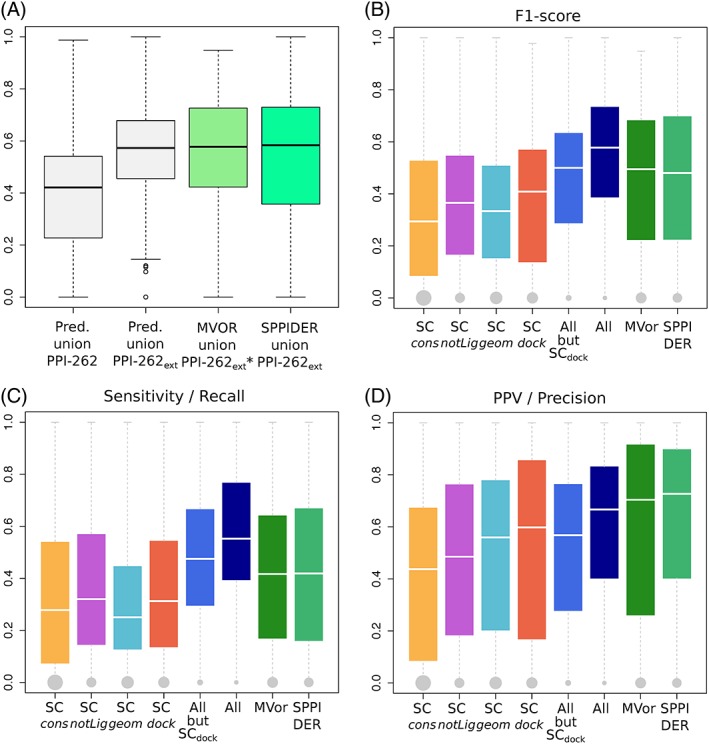
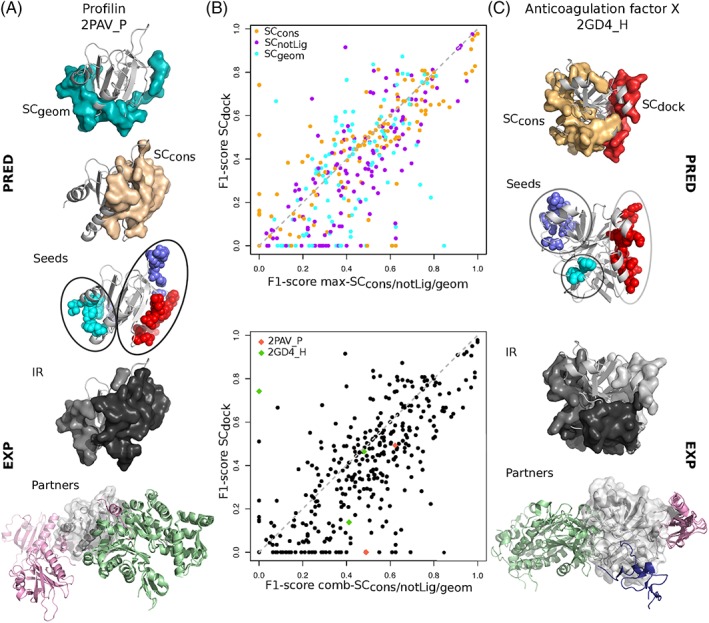
The growing body of experimental and computational data describing how proteins interact with each other has emphasized the multiplicity of protein interactions and the complexity underlying protein surface usage and deformability. In this work, we propose new concepts and methods toward deciphering such complexity. We introduce the notion of interacting region to account for the multiple usage of a protein's surface residues by several partners and for the variability of protein interfaces coming from molecular flexibility. We predict interacting patches by crossing evolutionary, physicochemical and geometrical properties of the protein surface with information coming from complete cross-docking (CC-D) simulations. We show that our predictions match well interacting regions and that the different sources of information are complementary. We further propose an indicator of whether a protein has a few or many partners. Our prediction strategies are implemented in the dynJET algorithm and assessed on a new dataset of 262 protein on which we performed CC-D. The code and the data are available at: http://www.lcqb.upmc.fr/dynJET2/.
越来越多的实验和计算数据描述了蛋白质之间如何相互作用,这强调了蛋白质相互作用的多样性以及蛋白质表面使用和可变形性的复杂性。在这项工作中,我们提出了新的概念和方法来破译这种复杂性。我们引入了相互作用区域的概念,以解释一个蛋白质表面残基被几个伴侣多次使用的情况,以及分子灵活性导致的蛋白质界面的可变性。我们通过将蛋白质表面的进化、物理化学和几何特性与来自完整对接(CC-D)模拟的信息进行交叉,来预测相互作用的斑块。我们表明,我们的预测与相互作用区域吻合较好,并且不同的信息来源是互补的。我们进一步提出了一种蛋白质具有少数或多数伴侣的指标。我们的预测策略在 dynJET 算法中实现,并在一个新的 262 个蛋白质数据集上进行了 CC-D 评估。代码和数据可在以下网址获得:http://www.lcqb.upmc.fr/dynJET2/。