Laine Elodie, Carbone Alessandra
Sorbonne Universités, UPMC-Univ P6, CNRS, Laboratoire de Biologie Computationnelle et Quantitative - UMR 7238, Paris, 75005, France.
Institut Universitaire de France, Paris, 75005, France.
Proteins. 2017 Jan;85(1):137-154. doi: 10.1002/prot.25206. Epub 2016 Nov 20.
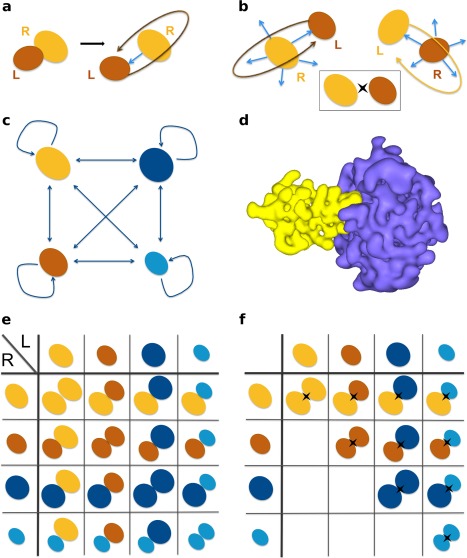
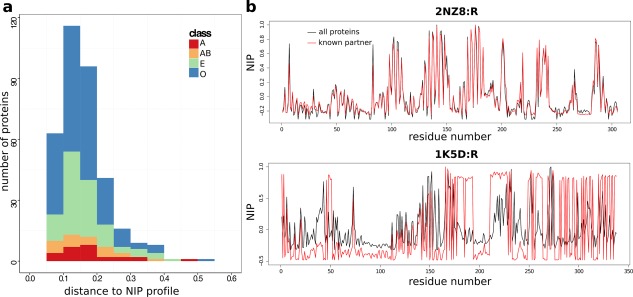
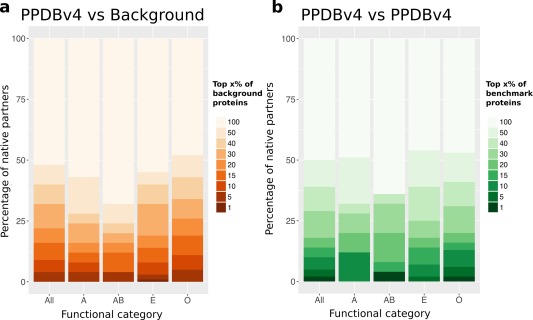
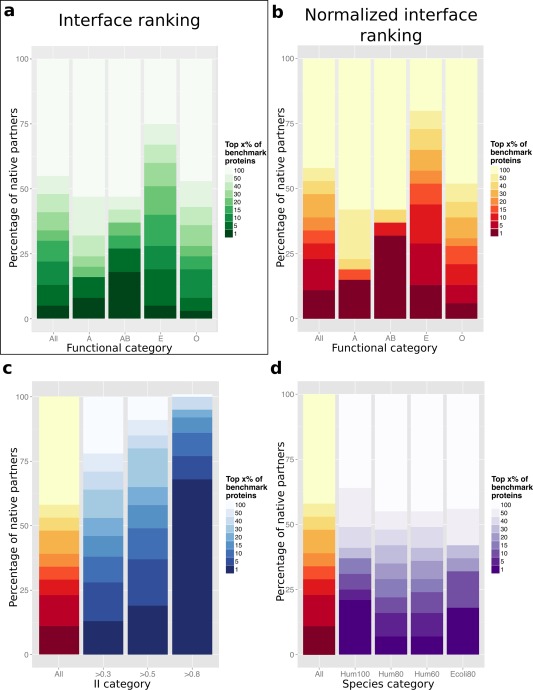
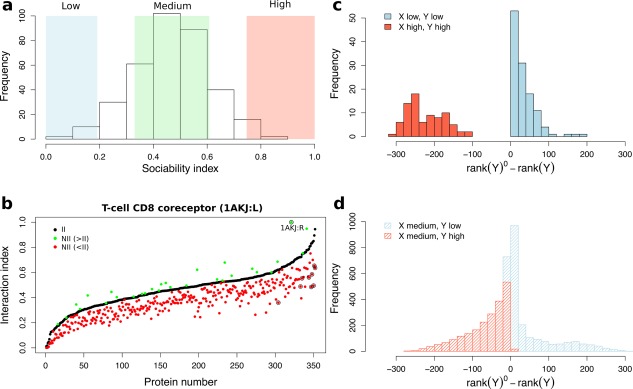
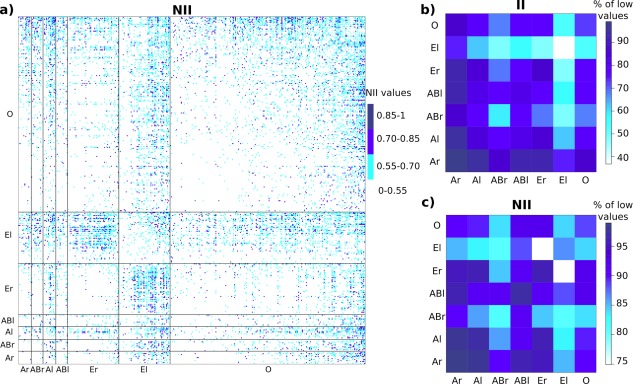
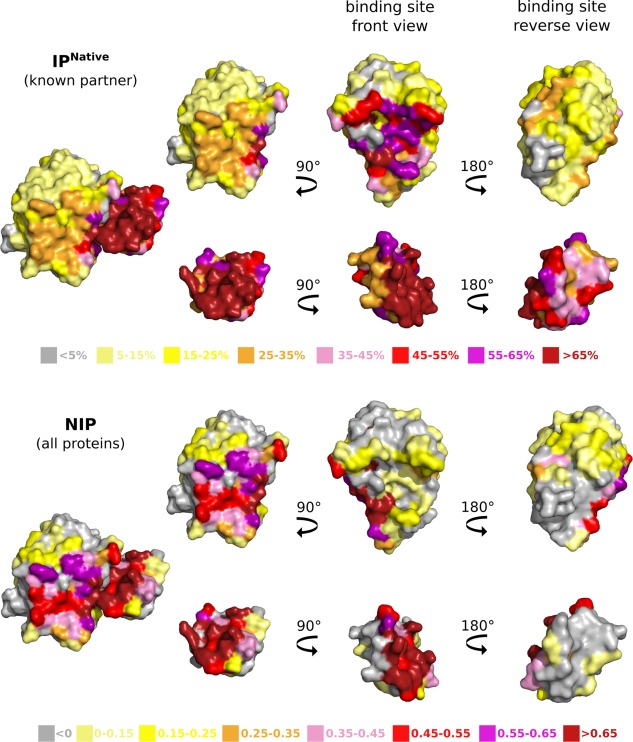
Cells are interactive living systems where proteins movements, interactions and regulation are substantially free from centralized management. How protein physico-chemical and geometrical properties determine who interact with whom remains far from fully understood. We show that characterizing how a protein behaves with many potential interactors in a complete cross-docking study leads to a sharp identification of its cellular/true/native partner(s). We define a sociability index, or S-index, reflecting whether a protein likes or not to pair with other proteins. Formally, we propose a suitable normalization function that accounts for protein sociability and we combine it with a simple interface-based (ranking) score to discriminate partners from non-interactors. We show that sociability is an important factor and that the normalization permits to reach a much higher discriminative power than shape complementarity docking scores. The social effect is also observed with more sophisticated docking algorithms. Docking conformations are evaluated using experimental binding sites. These latter approximate in the best possible way binding sites predictions, which have reached high accuracy in recent years. This makes our analysis helpful for a global understanding of partner identification and for suggesting discriminating strategies. These results contradict previous findings claiming the partner identification problem being solvable solely with geometrical docking. Proteins 2016; 85:137-154. © 2016 Wiley Periodicals, Inc.
细胞是相互作用的生命系统,其中蛋白质的运动、相互作用和调控基本上不受集中管理。蛋白质的物理化学和几何特性如何决定其与谁相互作用,目前仍远未完全清楚。我们表明,在完整的交叉对接研究中,表征一种蛋白质与许多潜在相互作用分子的行为方式,能够明确识别其细胞内/真实/天然的伙伴。我们定义了一个社交指数,即S指数,以反映一种蛋白质是否倾向于与其他蛋白质配对。形式上,我们提出了一个合适的归一化函数来衡量蛋白质的社交性,并将其与基于简单界面的(排序)分数相结合,以区分相互作用的伙伴和非相互作用分子。我们表明,社交性是一个重要因素,并且这种归一化方法比基于形状互补的对接分数具有更高的区分能力。在更复杂的对接算法中也观察到了这种社交效应。对接构象使用实验性结合位点进行评估。后者尽可能最佳地近似结合位点预测,近年来结合位点预测已达到高精度。这使得我们的分析有助于全面理解伙伴识别,并有助于提出区分策略。这些结果与之前声称仅通过几何对接就能解决伙伴识别问题的研究结果相矛盾。《蛋白质》2016年;85:137 - 154。© 2016威利期刊公司。