Department of Medicine and Surgery, University of Milano-Bicocca, Monza, Italy.
Division of Pathology, Fondazione IRCCS Ca' Granda Ospedale Maggiore Policlinico, Milan, Italy.
J Exp Clin Cancer Res. 2019 Jun 14;38(1):260. doi: 10.1186/s13046-019-1199-7.
Lung cancer is still the main cause of cancer death worldwide despite the availability of targeted therapies and immune-checkpoint inhibitors combined with chemotherapy. Cancer cell heterogeneity and primary or acquired resistance mechanisms cause the elusive behaviour of this cancer and new biomarkers and active drugs are urgently needed to overcome these limitations. p65BTK, a novel isoform of the Bruton Tyrosine Kinase may represent a new actionable target in non-small cell lung cancer (NSCLC).
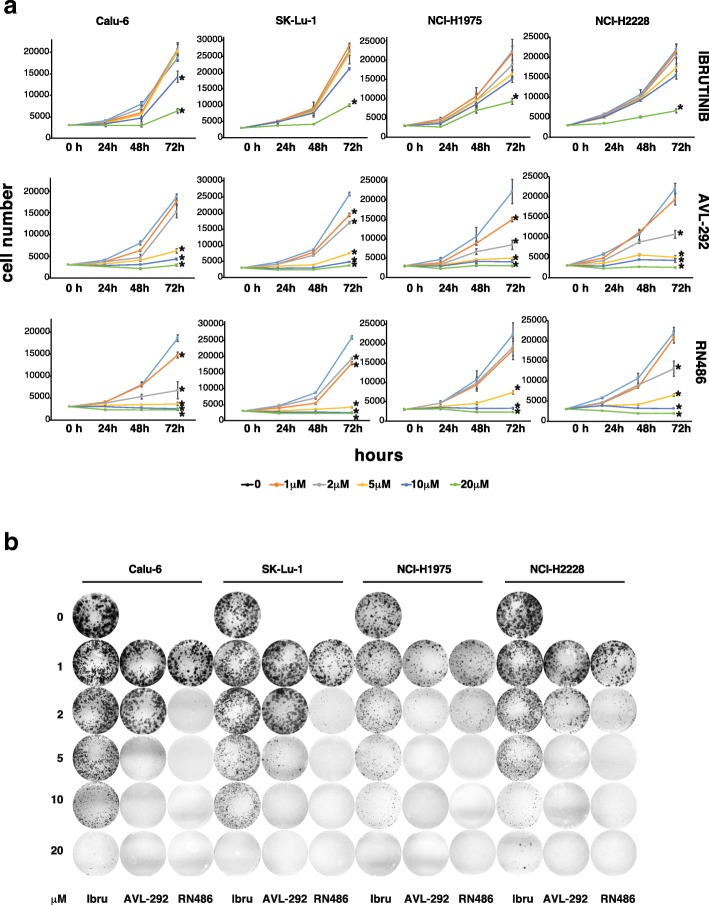
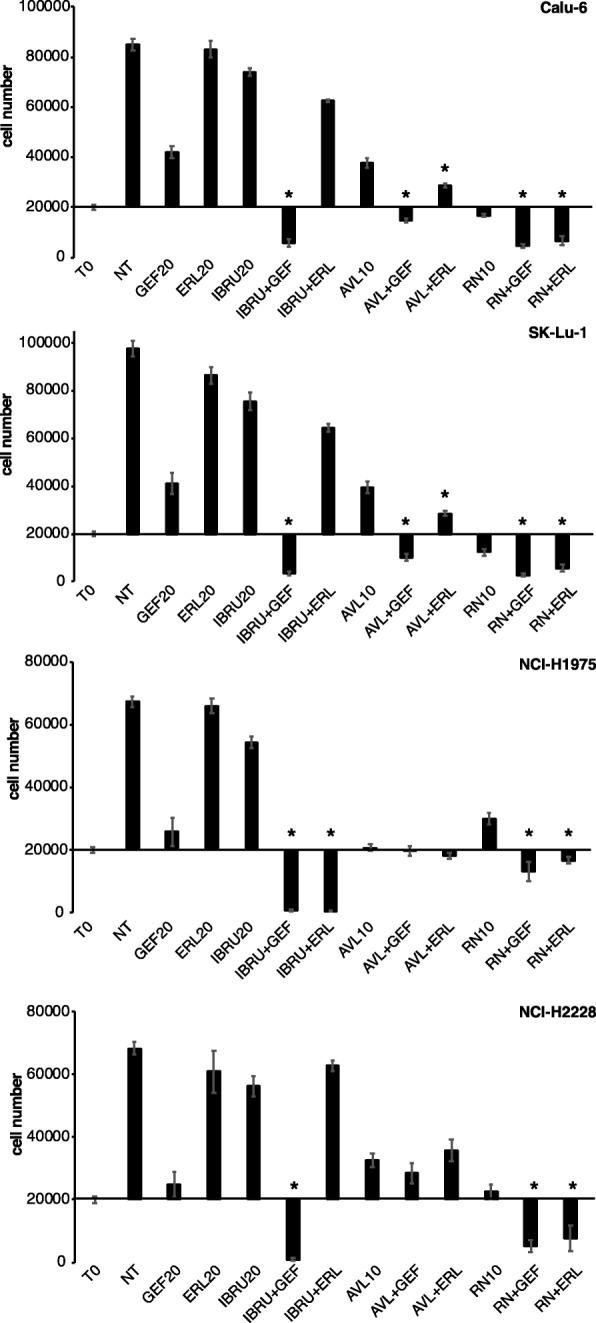
p65BTK expression was evaluated by immunohistochemistry in 382 NSCLC patients with complete clinico-pathological records including smoking habit, ALK and EGFR status, and in metastatic lymph nodes of 30 NSCLC patients. NSCLC cell lines mutated for p53 and/or a component of the RAS/MAPK pathway and primary lung cancer-derived cells from Kras/Trp53 null mice were used as a preclinical model. The effects of p65BTK inhibition by BTK Tyrosine Kinase Inhibitors (TKIs) (Ibrutinib, AVL-292, RN486) and first-generation EGFR-TKIs (Gefitinib, Erlotinib) on cell viability were evaluated by MTT. The effects of BTK-TKIs on cell growth and clonogenicity were assessed by crystal violet and colony assays, respectively. Cell toxicity assays were performed to study the effect of the combination of non-toxic concentrations of BTK-TKIs with EGFR-TKIs and standard-of-care (SOC) chemotherapy (Cisplatin, Gemcitabine, Pemetrexed).
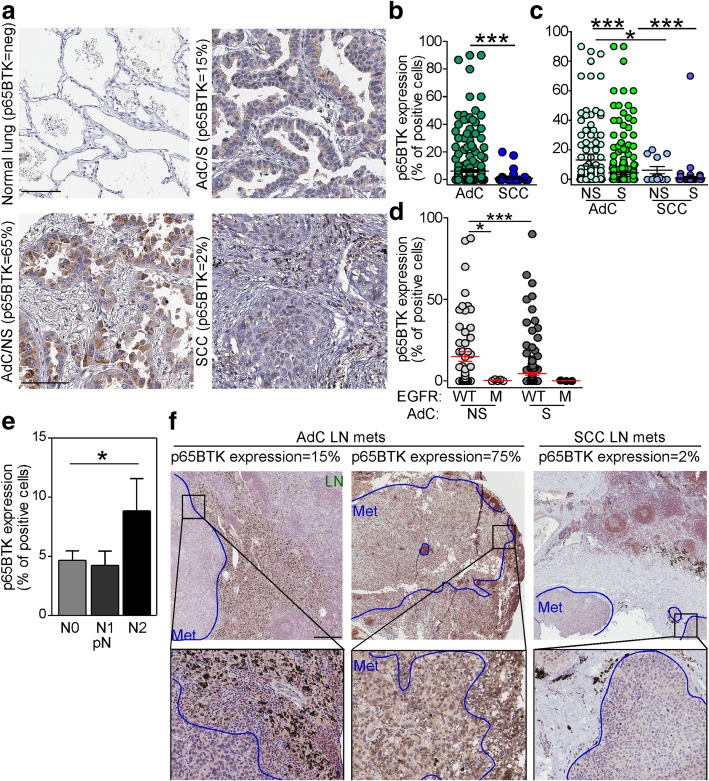
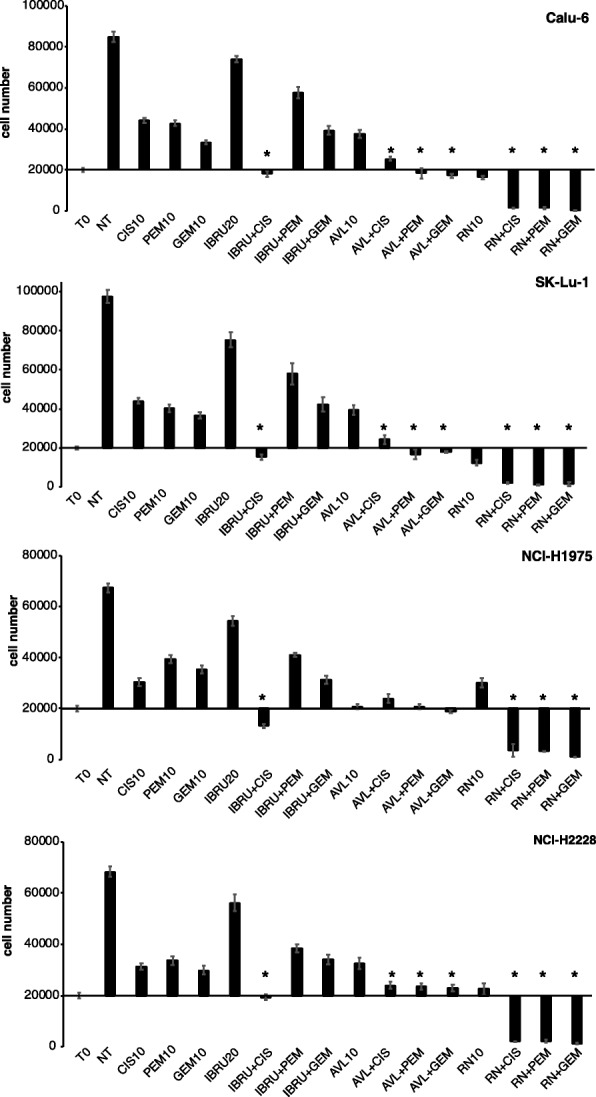
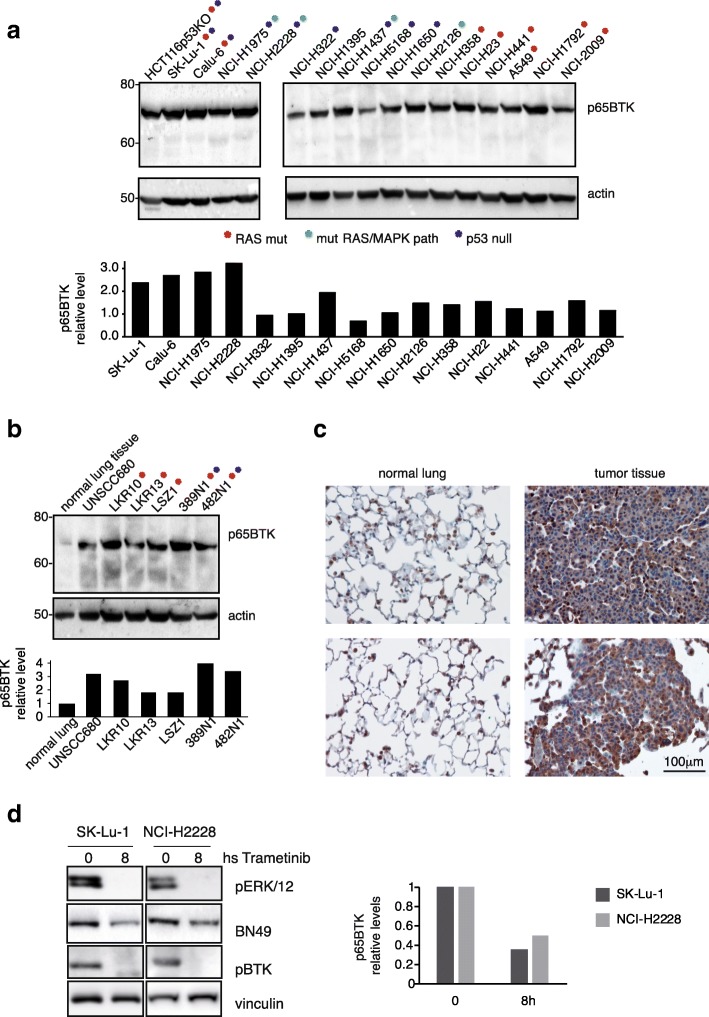
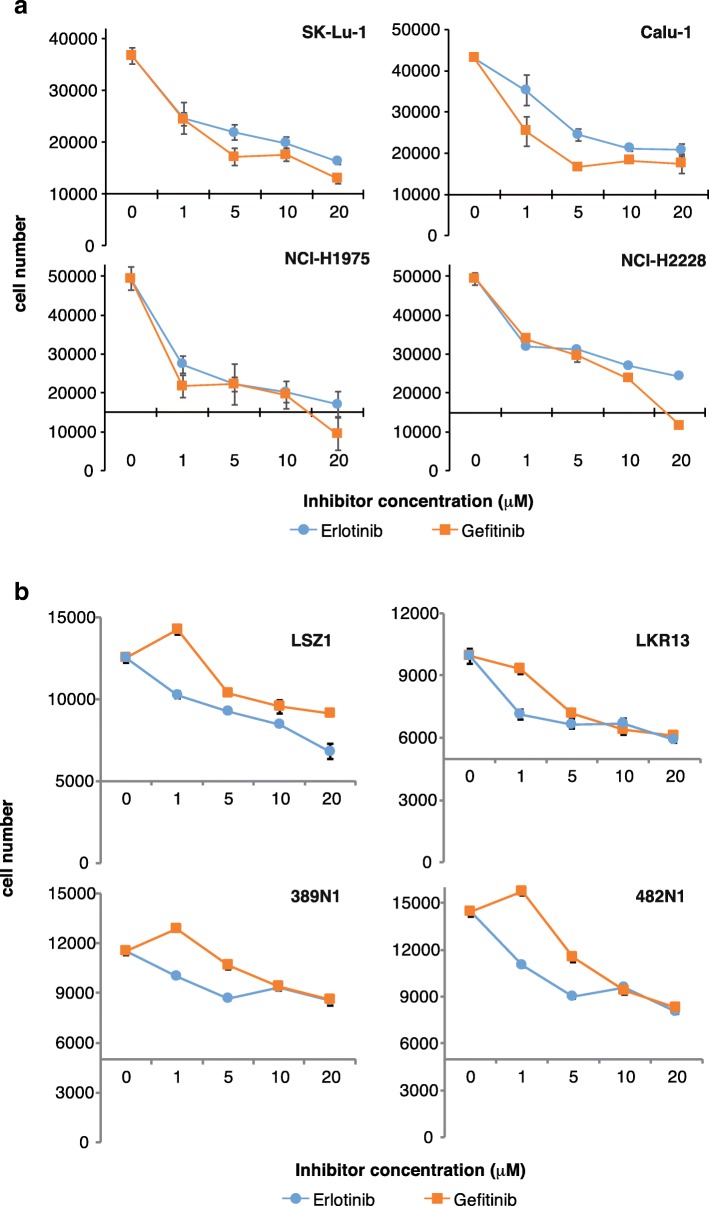
p65BTK was significantly over-expressed in EGFR-wild type (wt) adenocarcinomas (AdC) from non-smoker patients and its expression was also preserved at the metastatic site. p65BTK was also over-expressed in cell lines mutated for KRAS or for a component of the RAS/MAPK pathway and in tumors from Kras/Trp53 null mice. BTK-TKIs were more effective than EGFR-TKIs in decreasing cancer cell viability and significantly impaired cell proliferation and clonogenicity. Moreover, non-toxic doses of BTK-TKIs re-sensitized drug-resistant NSCLC cell lines to both target- and SOC therapy, independently from EGFR/KRAS status.
p65BTK results as an emerging actionable target in non-smoking EGFR-wt AdC, also at advanced stages of disease. Notably, these patients are not eligible for EGFR-TKIs-based therapy due to a lack of EGFR mutation. The combination of BTK-TKIs with EGFR-TKIs is cytotoxic for EGFR-wt/KRAS-mutant/p53-null tumors and BTK-TKIs re-sensitizes drug-resistant NSCLC to SOC chemotherapy. Therefore, our data suggest that adding BTK-TKIs to SOC chemotherapy and EGFR-targeted therapy may open new avenues for clinical trials in currently untreatable NSCLC.
尽管有靶向治疗和免疫检查点抑制剂联合化疗,肺癌仍然是全球癌症死亡的主要原因。癌细胞异质性和原发性或获得性耐药机制导致这种癌症的难以捉摸的行为,迫切需要新的生物标志物和活性药物来克服这些限制。p65BTK 是 Bruton 酪氨酸激酶的一种新型同工酶,可能成为非小细胞肺癌(NSCLC)的一个新的治疗靶点。
通过免疫组织化学法检测 382 例具有完整临床病理记录(包括吸烟习惯、ALK 和 EGFR 状态)的 NSCLC 患者和 30 例 NSCLC 患者转移性淋巴结中的 p65BTK 表达。使用突变型 p53 和/或 RAS/MAPK 通路成分的 NSCLC 细胞系和 Kras/Trp53 缺失小鼠的原代肺癌衍生细胞作为临床前模型。通过 MTT 评估 BTK 酪氨酸激酶抑制剂(BTK-TKIs)(Ibrutinib、AVL-292、RN486)和第一代 EGFR-TKIs(Gefitinib、Erlotinib)对细胞活力的抑制作用。通过结晶紫和集落测定分别评估 BTK-TKIs 对细胞生长和集落形成的影响。进行细胞毒性测定以研究非毒性浓度的 BTK-TKIs 与 EGFR-TKIs 和标准治疗(SOC)化疗(顺铂、吉西他滨、培美曲塞)联合的效果。
p65BTK 在非吸烟者 EGFR 野生型(wt)腺癌(AdC)中显著过表达,其表达在转移部位也得到保留。p65BTK 在突变型 KRAS 或 RAS/MAPK 通路成分的细胞系以及 Kras/Trp53 缺失小鼠的肿瘤中也过表达。BTK-TKIs 比 EGFR-TKIs 更有效地降低癌细胞活力,并显著抑制细胞增殖和集落形成。此外,非毒性剂量的 BTK-TKIs 使耐药性 NSCLC 细胞系对靶向和 SOC 治疗重新敏感,与 EGFR/KRAS 状态无关。
p65BTK 是一种新出现的非吸烟 EGFR-wt AdC 治疗靶点,在疾病的晚期也有同样的效果。值得注意的是,由于缺乏 EGFR 突变,这些患者不符合 EGFR-TKIs 治疗的条件。BTK-TKIs 与 EGFR-TKIs 联合应用对 EGFR-wt/KRAS 突变/p53 缺失肿瘤具有细胞毒性,并且 BTK-TKIs 使耐药性 NSCLC 对 SOC 化疗重新敏感。因此,我们的数据表明,在 SOC 化疗和 EGFR 靶向治疗中加入 BTK-TKIs 可能为目前无法治疗的 NSCLC 临床试验开辟新途径。