Kim Eun Young, Lee Jin Gu, Lee Jung Mo, Kim Arum, Yoo Hee Chan, Kim Kibum, Lee Minji, Lee Chulho, Han Gyoonhee, Han Jung Min, Chang Yoon Soo
Department of Internal Medicine, Yonsei University College of Medicine, Yonsei University, Seoul, South Korea.
Department of Thoracic and Cardiovascular Surgery, Yonsei University College of Medicine, Yonsei University, Seoul, South Korea.
Ther Adv Med Oncol. 2019 May 19;11:1758835919846798. doi: 10.1177/1758835919846798. eCollection 2019.
Leucyl-tRNA synthetase (LRS) is an aminoacyl-tRNA synthetase catalyzing ligation of leucine to its cognate tRNA and is involved in the activation of mTORC1 by sensing cytoplasmic leucine. In this study, the usefulness of LRS as a therapeutic target of non-small cell lung cancer (NSCLC) and the anticancer effect of the LRS inhibitor, BC-LI-0186, was evaluated.
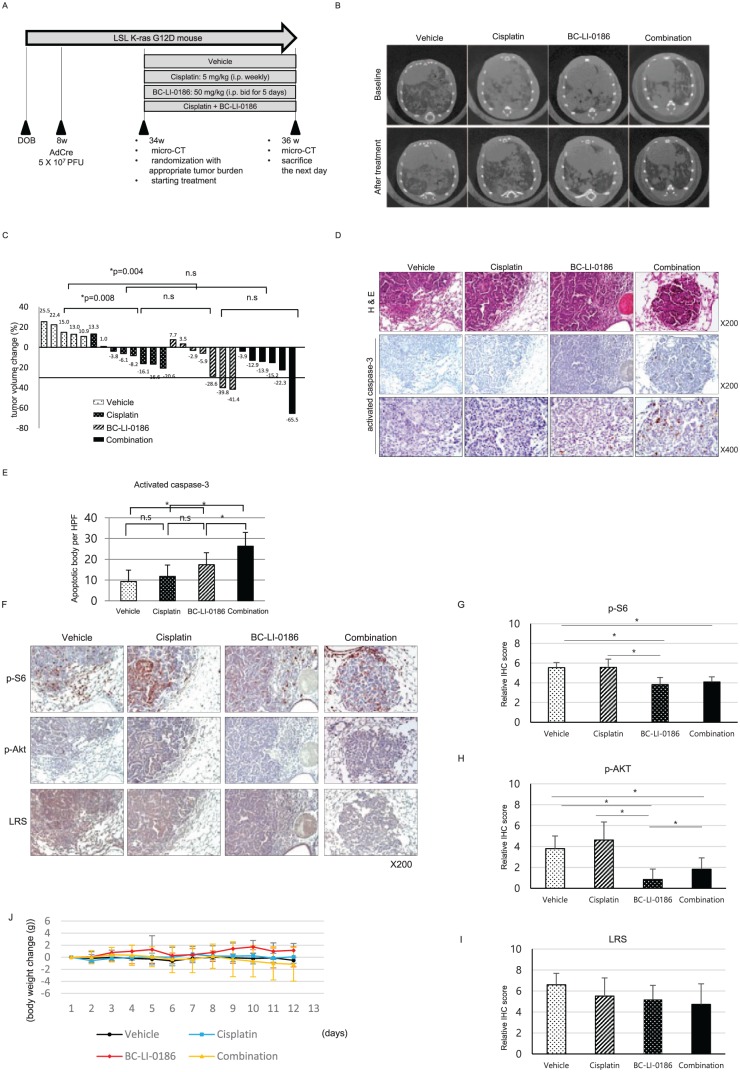
LRS expression and the antitumor effect of BC-LI-0186 were evaluated by immunohistochemical staining, immunoblotting, and live cell imaging. The antitumor effect of BC-LI-0186 was evaluated using Lox-Stop-Lox (LSL) K-ras G12D mice.
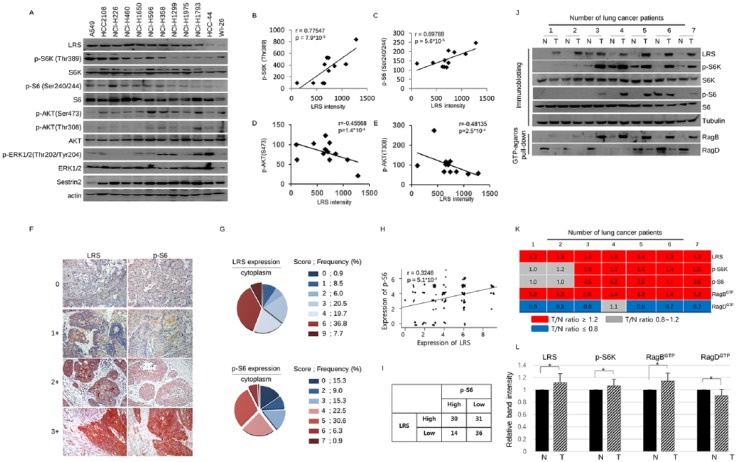
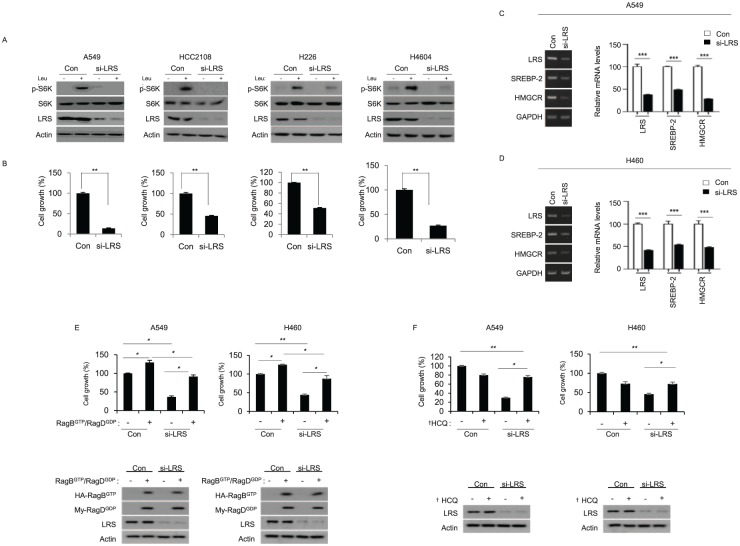
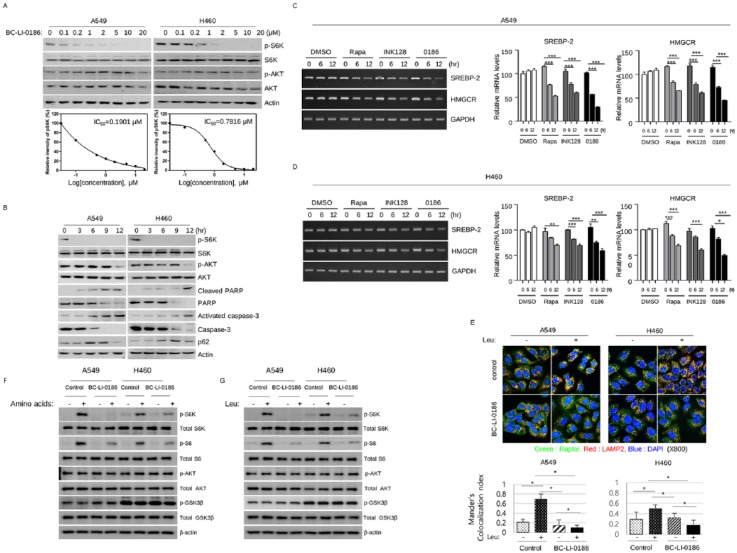
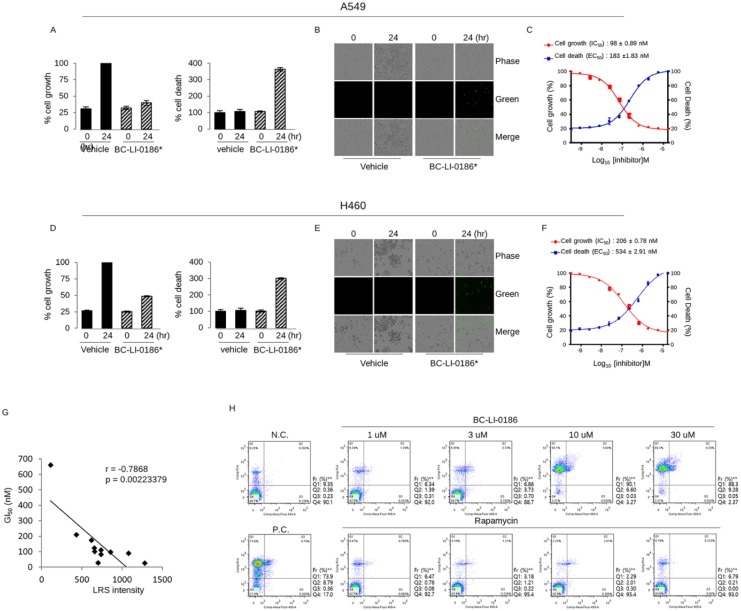
LRS was frequently overexpressed in NSCLC tissues, and its expression was positively correlated with mTORC1 activity. The guanosine-5'-triphosphate (GTP) binding status of RagB was related to the expression of LRS and the S6K phosphorylation. RNA against LRS inhibited leucine-mediated mTORC1 activation and cell growth. BC-LI-0186 selectively inhibited phosphorylation of S6K without affecting phosphorylation of AKT and leucine-mediated co-localization of Raptor and LAMP2 in the lysosome. BC-LI-0186 induced cleaved poly (ADP-ribose) polymerase (PARP) and caspase-3 and increase of p62 expression, showing that it has the autophagy-inducing property. BC-LI-0186 has the cytotoxic effect at nanomolar concentration and its GI value was negatively correlated with the degree of LRS expression. BC-LI-0186 showed the antitumor effect, which was comparable with that of cisplatin, and mTORC1 inhibitory effect in a lung cancer model.
BC-LI-0186 inhibits the noncanonical mTORC1-activating function of LRS. These results provide a new therapeutic strategy for NSCLC and warrant future clinical development by targeting LRS.
亮氨酰 - tRNA合成酶(LRS)是一种氨酰 - tRNA合成酶,催化亮氨酸与其同源tRNA的连接,并通过感知细胞质中的亮氨酸参与mTORC1的激活。在本研究中,评估了LRS作为非小细胞肺癌(NSCLC)治疗靶点的有效性以及LRS抑制剂BC - LI - 0186的抗癌作用。
通过免疫组织化学染色、免疫印迹和活细胞成像评估LRS表达及BC - LI - 0186的抗肿瘤作用。使用Lox - Stop - Lox(LSL)K - ras G12D小鼠评估BC - LI - 0186的抗肿瘤作用。
LRS在NSCLC组织中经常过度表达,其表达与mTORC1活性呈正相关。RagB的鸟苷 - 5'-三磷酸(GTP)结合状态与LRS表达和S6K磷酸化有关。针对LRS的RNA抑制亮氨酸介导的mTORC1激活和细胞生长。BC - LI - 0186选择性抑制S6K的磷酸化,而不影响AKT的磷酸化以及亮氨酸介导的Raptor和LAMP2在溶酶体中的共定位。BC - LI - 0186诱导裂解的聚(ADP - 核糖)聚合酶(PARP)和半胱天冬酶 - 3,并增加p62表达,表明其具有自噬诱导特性。BC - LI - 0186在纳摩尔浓度下具有细胞毒性作用,其GI值与LRS表达程度呈负相关。BC - LI - 0186在肺癌模型中显示出与顺铂相当的抗肿瘤作用以及mTORC1抑制作用。
BC - LI - 0186抑制LRS的非经典mTORC1激活功能。这些结果为NSCLC提供了一种新的治疗策略,并值得通过靶向LRS进行未来的临床开发。