Université de Lyon, Laboratoire de Recherche en Cardiovasculaire Métabolisme Diabétologie et Nutrition, Institut National de la Santé et de la Recherche Médicale, Institut National de la Recherche Agronomique, Institut National des Sciences Appliquées de Lyon, Université Claude Bernard Lyon 1, Unite Mixte de Recherche 1060, 69310 Pierre Bénite, France.
Université de Lyon, Institut de Génomique Fonctionnelle de Lyon, Ecole Normale Superieure de Lyon, Centre National de la Recherche Scientifique, Université Claude Bernard Lyon 1, Unite Mixte de Recherche 5242, 69007 Lyon, France.
Nutrients. 2019 Jun 16;11(6):1356. doi: 10.3390/nu11061356.
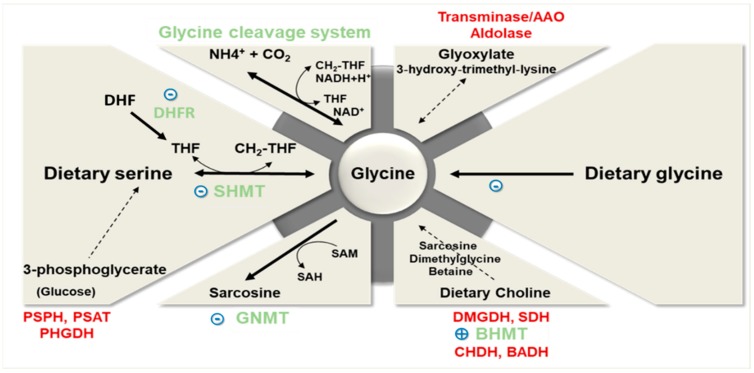
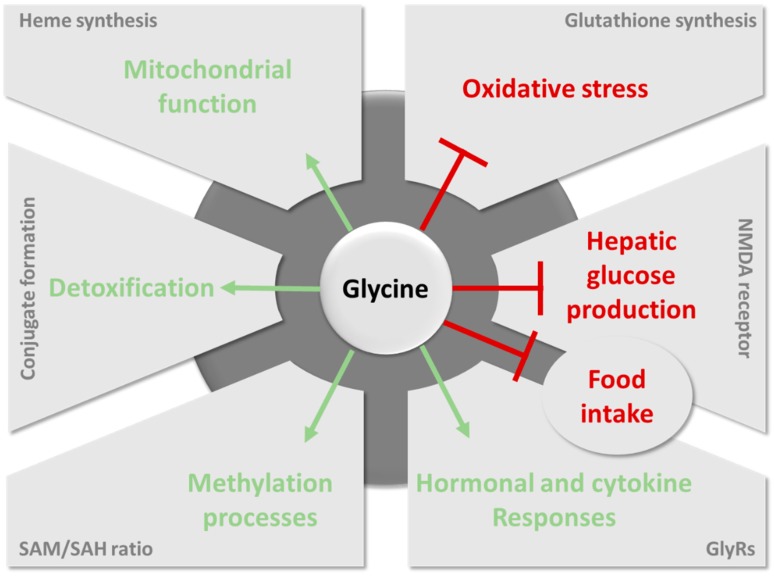
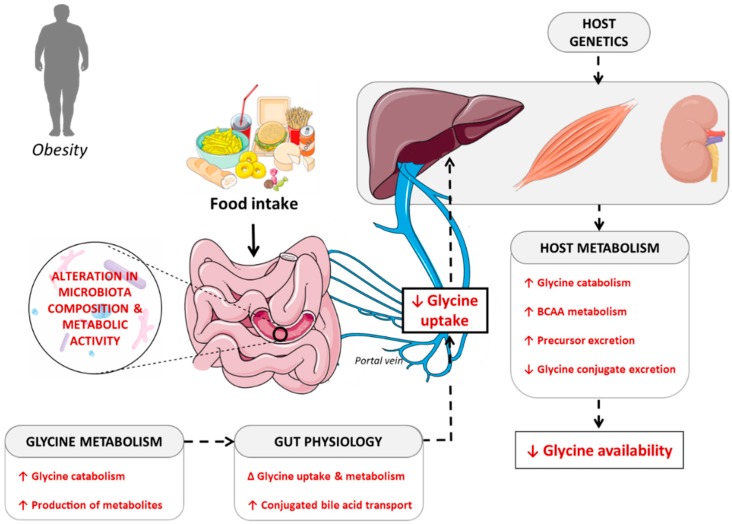
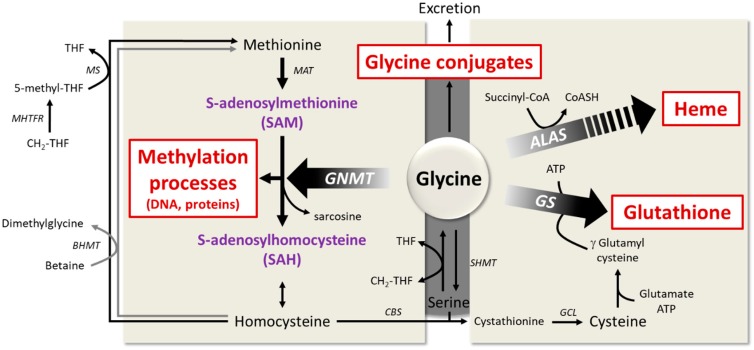
Glycine is the proteinogenic amino-acid of lowest molecular weight, harboring a hydrogen atom as a side-chain. In addition to being a building-block for proteins, glycine is also required for multiple metabolic pathways, such as glutathione synthesis and regulation of one-carbon metabolism. Although generally viewed as a non-essential amino-acid, because it can be endogenously synthesized to a certain extent, glycine has also been suggested as a conditionally essential amino acid. In metabolic disorders associated with obesity, type 2 diabetes (T2DM), and non-alcoholic fatty liver disease (NAFLDs), lower circulating glycine levels have been consistently observed, and clinical studies suggest the existence of beneficial effects induced by glycine supplementation. The present review aims at synthesizing the recent advances in glycine metabolism, pinpointing its main metabolic pathways, identifying the causes leading to glycine deficiency-especially in obesity and associated metabolic disorders-and evaluating the potential benefits of increasing glycine availability to curb the progression of obesity and obesity-related metabolic disturbances. This study focuses on the importance of diet, gut microbiota, and liver metabolism in determining glycine availability in obesity and associated metabolic disorders.
甘氨酸是分子量最小的蛋白质氨基酸,其侧链含有一个氢原子。甘氨酸不仅是蛋白质的组成部分,也是多种代谢途径所必需的,如谷胱甘肽合成和一碳代谢的调节。尽管通常被认为是非必需氨基酸,因为它可以在一定程度上内源性合成,但甘氨酸也被认为是条件必需氨基酸。在与肥胖、2 型糖尿病(T2DM)和非酒精性脂肪性肝病(NAFLD)相关的代谢紊乱中,一直观察到循环甘氨酸水平降低,临床研究表明甘氨酸补充具有有益的作用。本综述旨在综合甘氨酸代谢的最新进展,指出其主要代谢途径,确定导致甘氨酸缺乏的原因,特别是在肥胖和相关代谢紊乱中,并评估增加甘氨酸可用性以抑制肥胖和肥胖相关代谢紊乱进展的潜在益处。本研究重点关注饮食、肠道微生物群和肝脏代谢在决定肥胖和相关代谢紊乱中甘氨酸可用性方面的重要性。