Department of Molecular Biology, Massachusetts General Hospital, Boston, MA 02114.
Diabetes Unit of the Medical Services, Massachusetts General Hospital, Boston, MA 02114.
J Biol Chem. 2019 Aug 2;294(31):11944-11951. doi: 10.1074/jbc.RA119.008778. Epub 2019 Jun 17.
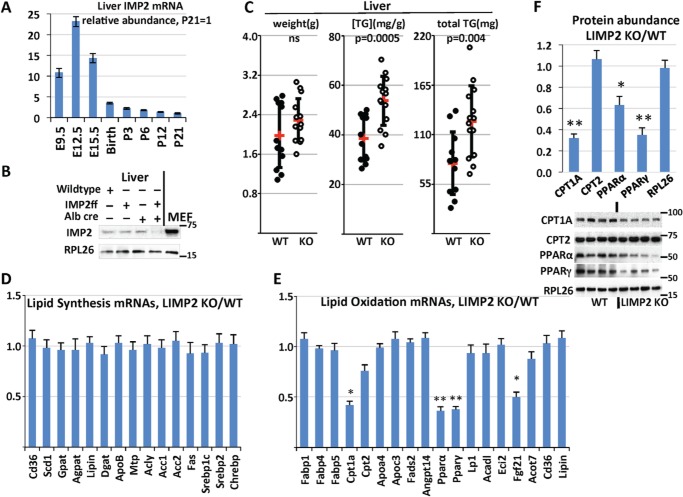
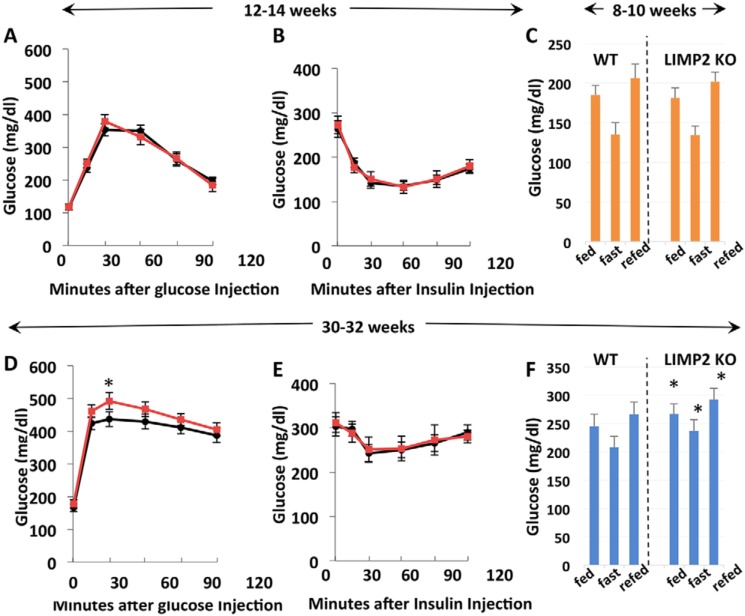
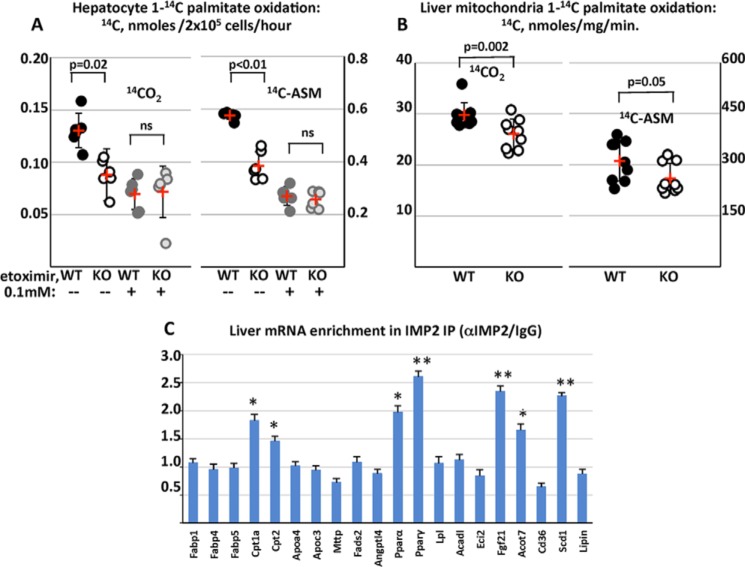
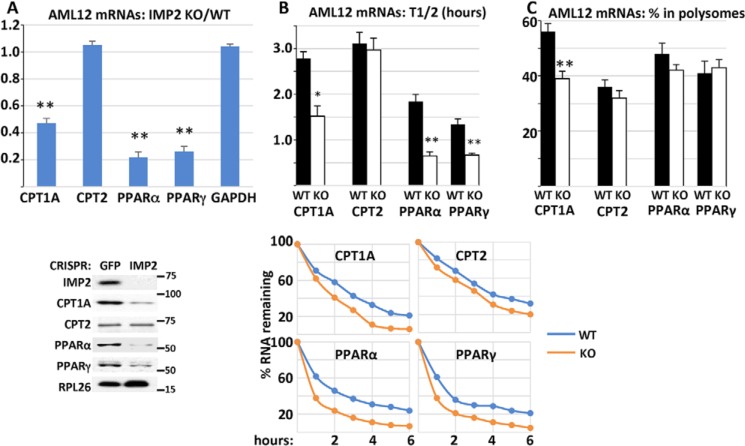
Insulin-like growth factor 2 mRNA-binding proteins 1-3 (IGF2BP1-3, also known as IMP1-3) contribute to the regulation of RNAs in a transcriptome-specific context. Global deletion of the mRNA-binding protein insulin-like growth factor 2 mRNA-binding protein 2 (IGF2BP2 or IMP2) in mice causes resistance to obesity and fatty liver induced by a high-fat diet (HFD), whereas liver-specific IMP2 overexpression results in steatosis. To better understand the role of IMP2 in hepatic triglyceride metabolism, here we crossed mice expressing albumin-Cre with mice bearing a floxed gene to generate hepatocyte-specific IMP2 knockout (LIMP2 KO) mice. Unexpectedly, the livers of LIMP2 KO mice fed an HFD accumulated more triglyceride. Although hepatocyte-specific IMP2 deletion did not alter lipogenic gene expression, it substantially decreased the levels of the IMP2 client mRNAs encoding carnitine palmitoyltransferase 1A (CPT1A) and peroxisome proliferator-activated receptor α (PPARα). This decrease was associated with their more rapid turnover and accompanied by significantly diminished rates of palmitate oxidation by isolated hepatocytes and liver mitochondria. HFD-fed control and LIMP2 KO mice maintained a similar glucose tolerance and insulin sensitivity up to 6 months; however, by 6 months, blood glucose and serum triglycerides in LIMP2 KO mice were modestly elevated but without evidence of liver damage. In conclusion, hepatocyte-specific IMP2 deficiency promotes modest diet-induced fatty liver by impairing fatty acid oxidation through increased degradation of the IMP2 client mRNAs α and This finding indicates that the previously observed marked protection against fatty liver conferred by global IMP2 deficiency in mice is entirely due to their reduced adiposity.
胰岛素样生长因子 2mRNA 结合蛋白 1-3(IGF2BP1-3,也称为 IMP1-3)在转录组特异性背景下有助于调节 RNA。在小鼠中,mRNA 结合蛋白胰岛素样生长因子 2mRNA 结合蛋白 2(IGF2BP2 或 IMP2)的全局缺失导致对高脂肪饮食(HFD)诱导的肥胖和脂肪肝的抵抗,而肝特异性 IMP2 过表达导致脂肪变性。为了更好地了解 IMP2 在肝甘油三酯代谢中的作用,我们在这里将表达白蛋白-Cre 的小鼠与携带基因 floxed 的小鼠进行杂交,以产生肝细胞特异性 IMP2 敲除(LIMP2 KO)小鼠。出乎意料的是,喂食 HFD 的 LIMP2 KO 小鼠的肝脏积累了更多的甘油三酯。尽管肝细胞特异性 IMP2 缺失并未改变脂肪生成基因的表达,但它大大降低了编码肉碱棕榈酰转移酶 1A(CPT1A)和过氧化物酶体增殖物激活受体 α(PPARα)的 IMP2 客户 mRNA 的水平。这种减少与它们更快的周转有关,并伴随着分离的肝细胞和肝线粒体中棕榈酸氧化的显著降低率。在 6 个月内,喂食 HFD 的对照和 LIMP2 KO 小鼠保持相似的葡萄糖耐量和胰岛素敏感性;然而,到 6 个月时,LIMP2 KO 小鼠的血糖和血清甘油三酯略有升高,但没有肝损伤的证据。总之,肝细胞特异性 IMP2 缺乏通过增加 IMP2 客户 mRNA α 和 的降解来损害脂肪酸氧化,从而促进适度的饮食诱导的脂肪肝。这一发现表明,先前在小鼠中观察到的 IMP2 全局缺失对脂肪肝的显著保护作用完全归因于它们的脂肪减少。