Neurosciences Program, School of Medicine, Stanford University, Stanford, CA, 94305, USA.
Department of Neuroscience, Columbia University Medical Center, New York, NY, 10032, USA.
Nat Commun. 2019 Jun 20;10(1):2718. doi: 10.1038/s41467-019-10772-2.
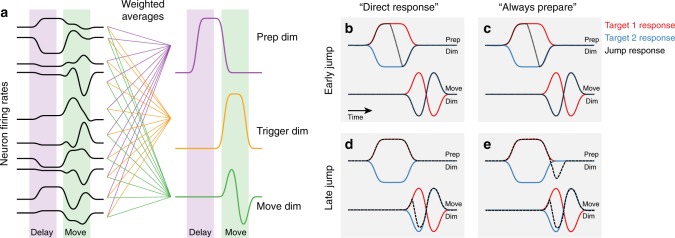
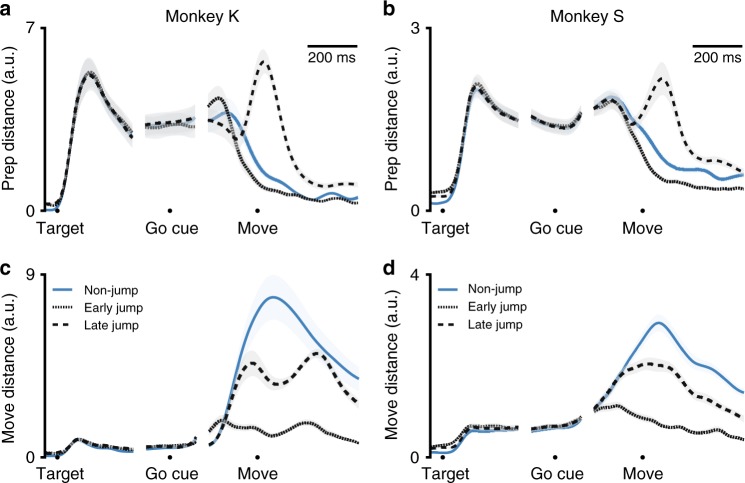
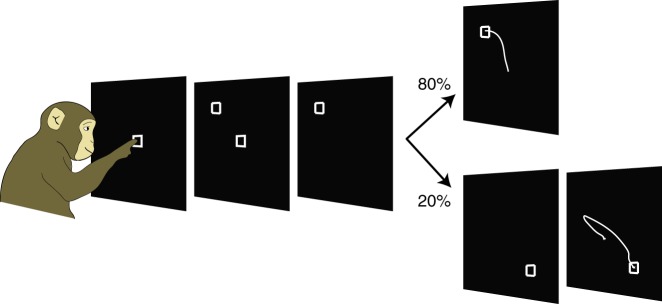
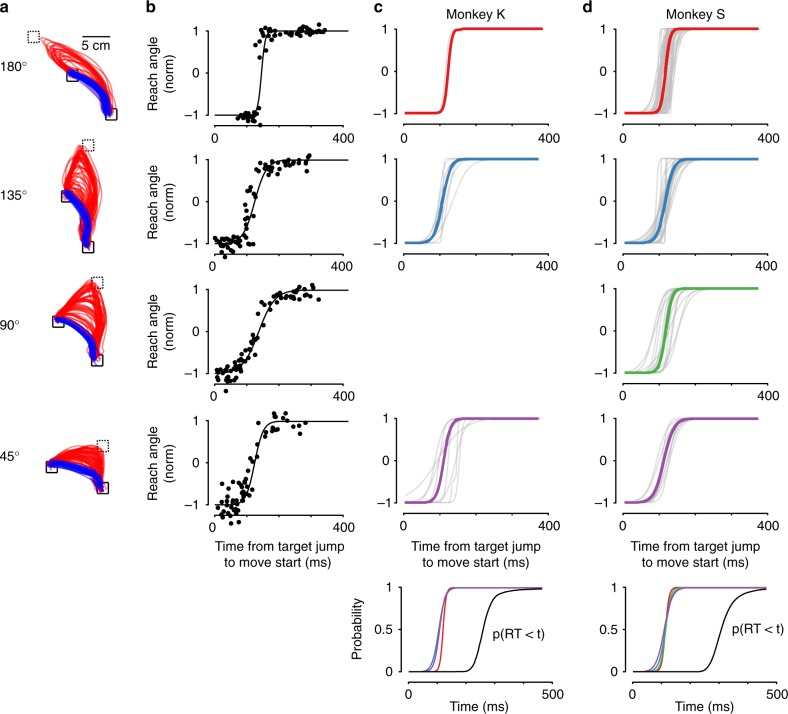
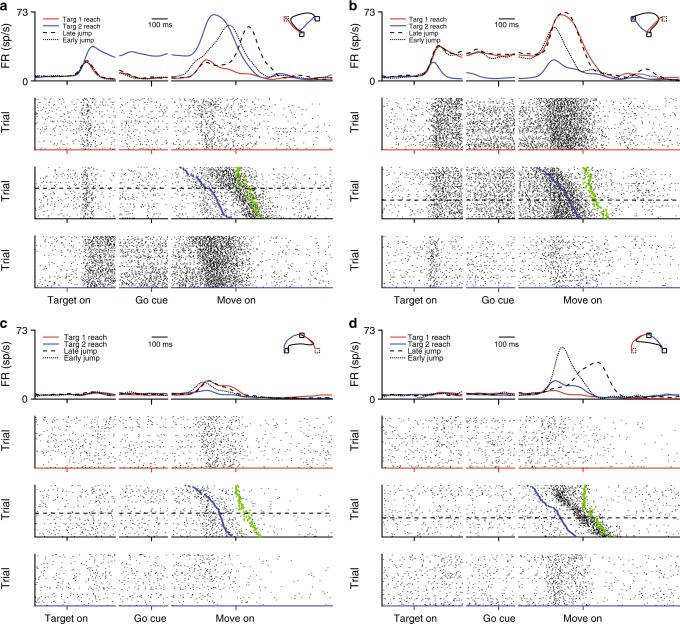
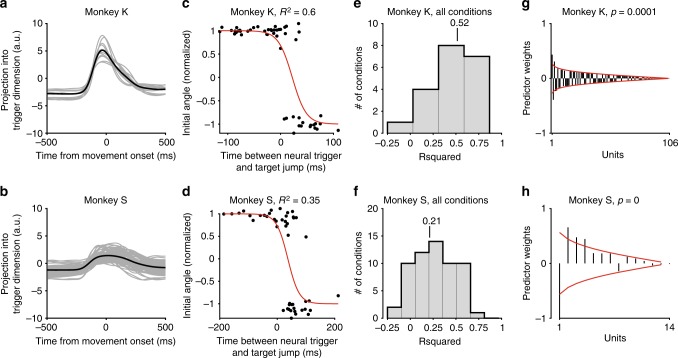
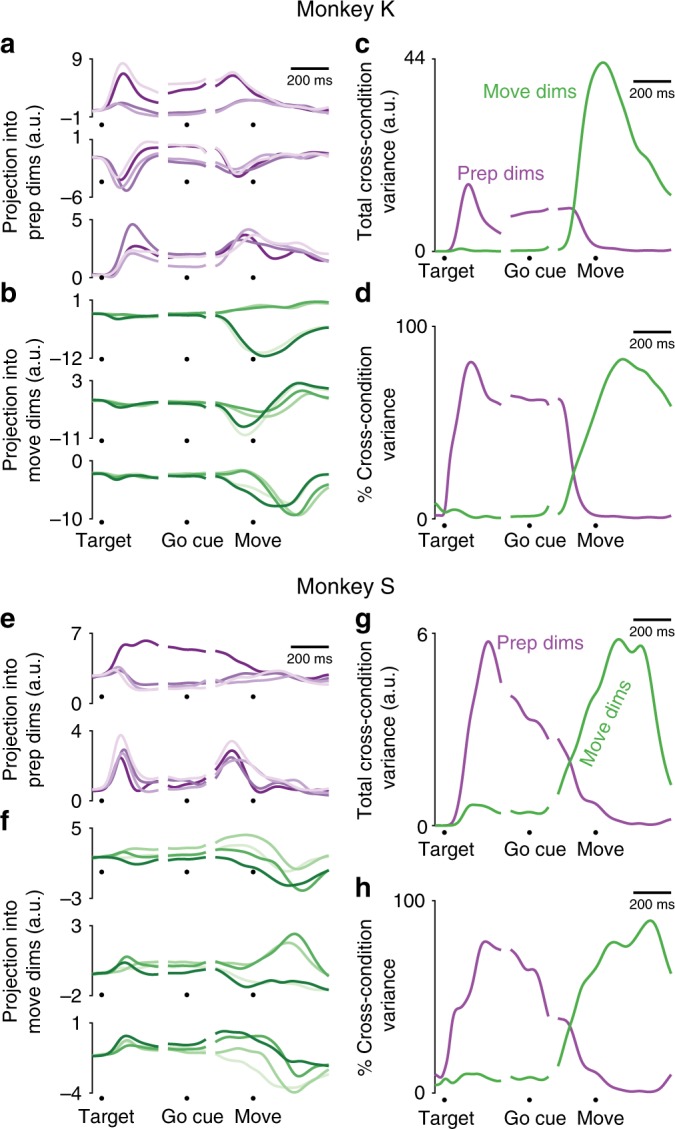
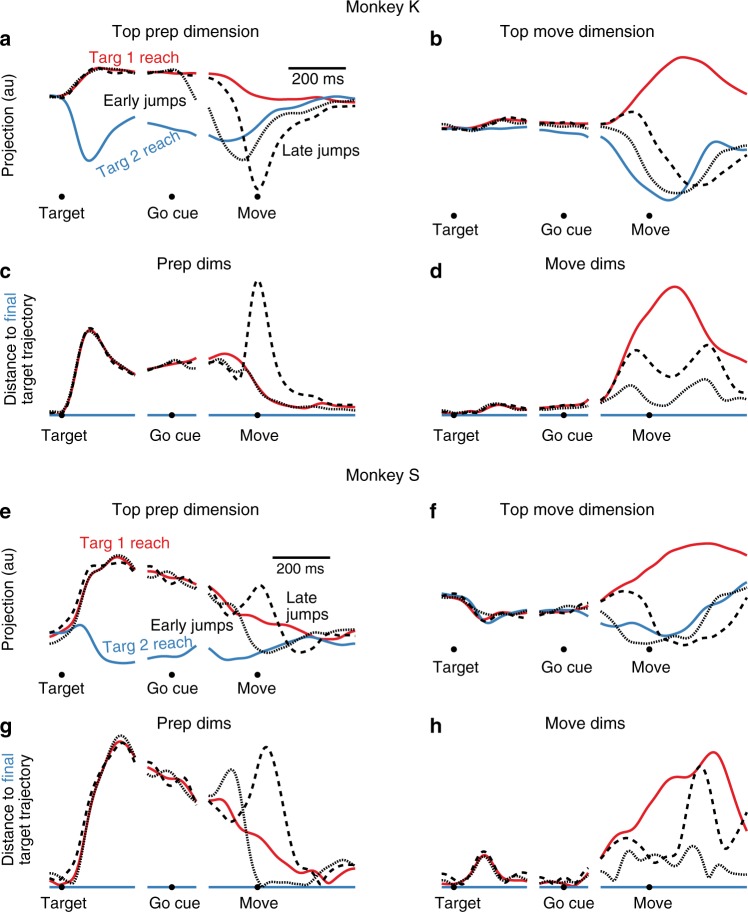
Motor preparation typically precedes movement and is thought to determine properties of upcoming movements. However, preparation has mostly been studied in point-to-point delayed reaching tasks. Here, we ask whether preparation is engaged during mid-reach modifications. Monkeys reach to targets that occasionally jump locations prior to movement onset, requiring a mid-reach correction. In motor cortex and dorsal premotor cortex, we find that the neural activity that signals when to reach predicts monkeys' jump responses on a trial-by-trial basis. We further identify neural patterns that signal where to reach, either during motor preparation or during motor execution. After a target jump, neural activity responds in both preparatory and movement-related dimensions, even though error in preparatory dimensions can be small at that time. This suggests that the same preparatory process used in delayed reaching is also involved in reach correction. Furthermore, it indicates that motor preparation and execution can be performed simultaneously.
运动准备通常先于运动,并被认为决定了即将到来的运动的特性。然而,准备工作主要在点对点延迟到达任务中进行了研究。在这里,我们询问在中途修正期间是否进行了准备。猴子会到达目标,而这些目标偶尔会在运动开始前改变位置,这需要中途修正。在运动皮层和背侧前运动皮层中,我们发现信号提示何时到达的神经活动可以根据每次试验的情况预测猴子的跳跃反应。我们进一步确定了在运动准备或运动执行期间信号提示到达何处的神经模式。在目标跳跃之后,即使在准备维度上的误差此时可能很小,神经活动也会在准备和运动相关维度上做出响应。这表明在延迟到达中使用的相同准备过程也涉及到到达修正。此外,这表明运动准备和执行可以同时进行。