John Innes Centre, Norwich Research Park, Colney Lane, Norwich, NR4 7UH, UK.
New Phytol. 2020 Jan;225(1):118-125. doi: 10.1111/nph.16007. Epub 2019 Jul 25.
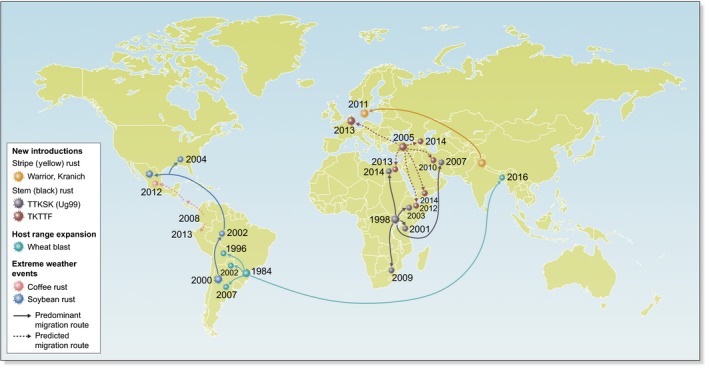
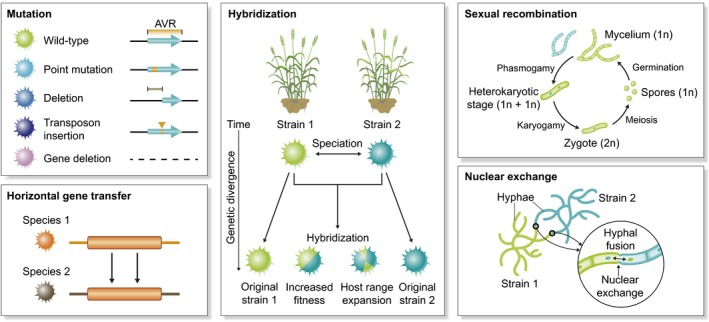
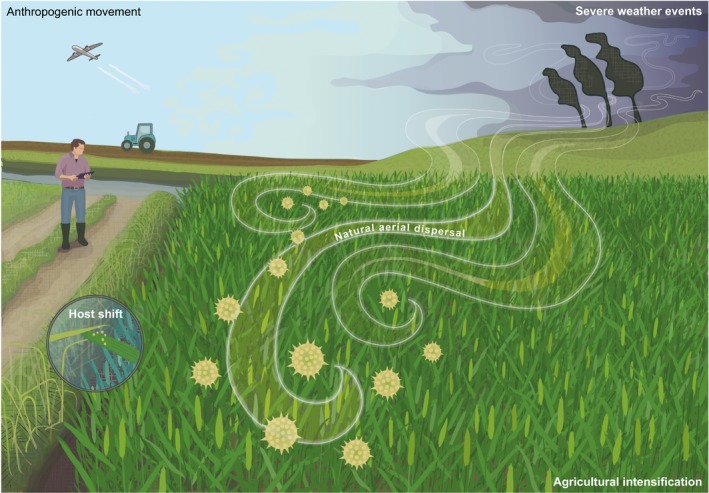
In recent years, the number of emergent plant pathogens (EPPs) has grown substantially, threatening agroecosystem stability and native biodiversity. Contributing factors include, among others, shifts in biogeography, with EPP spread facilitated by the global unification of monocultures in modern agriculture, high volumes of trade in plants and plant products and an increase in sexual recombination within pathogen populations. The unpredictable nature of EPPs as they move into new territories is a situation that has led to sudden and widespread epidemics. Understanding the underlying causes of pathogen emergence is key to managing the impact of EPPs. Here, we review some factors specifically influencing the emergence of oomycete and fungal EPPs, including new introductions through anthropogenic movement, natural dispersal and weather events, as well as genetic factors linked to shifts in host range.
近年来,紧急植物病原体 (EPP) 的数量大幅增加,威胁着农业生态系统的稳定性和本地生物多样性。促成因素包括生物地理学的变化,EPP 的传播得益于现代农业中单一种植的全球化统一、植物和植物产品的大量贸易以及病原体种群内有性重组的增加。EPP 进入新领地时的不可预测性导致了突然和广泛的流行。了解病原体出现的根本原因是管理 EPP 影响的关键。在这里,我们回顾了一些特别影响卵菌和真菌 EPP 出现的因素,包括通过人为活动、自然扩散和天气事件的新引入,以及与宿主范围变化相关的遗传因素。