Díaz Andrés Felipe, Polo Sara, Gallardo Núria, Leánez Sergi, Pol Olga
Grup de Neurofarmacologia Molecular, Institut d'Investigació Biomèdica Sant Pau, Hospital de la Santa Creu i Sant Pau, 08025 Barcelona, Spain.
Institut de Neurociències, Universitat Autònoma de Barcelona, 08193 Barcelona, Spain.
J Clin Med. 2019 Jun 21;8(6):890. doi: 10.3390/jcm8060890.
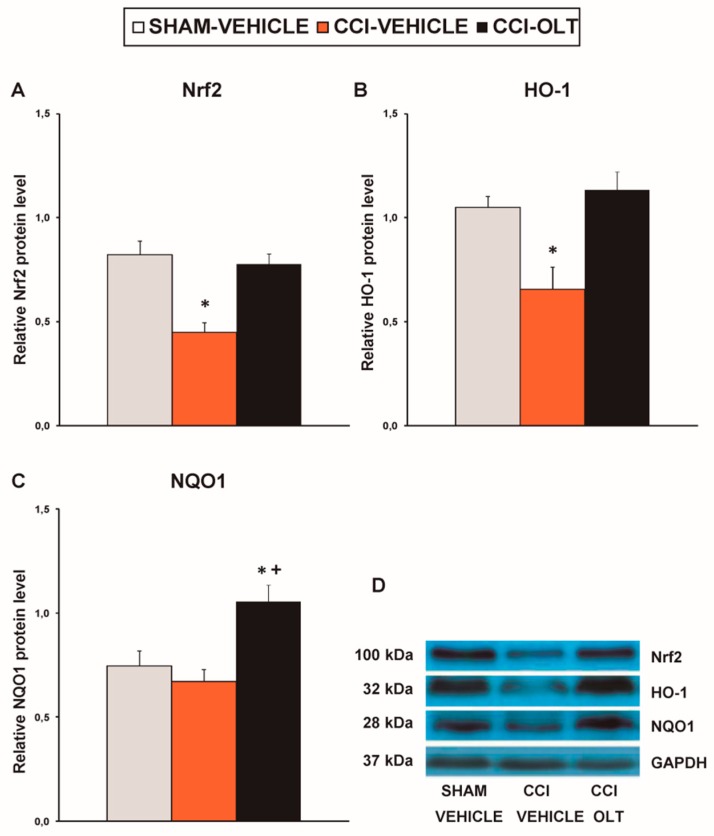
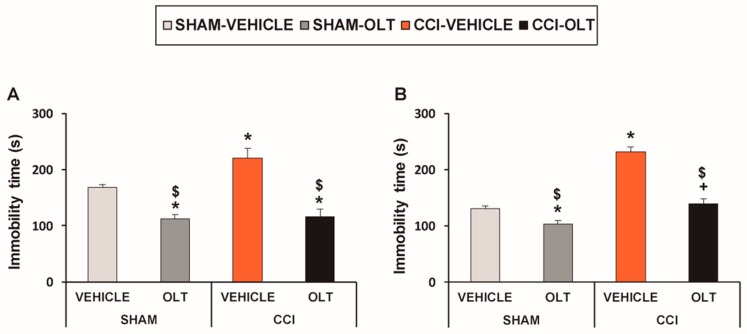
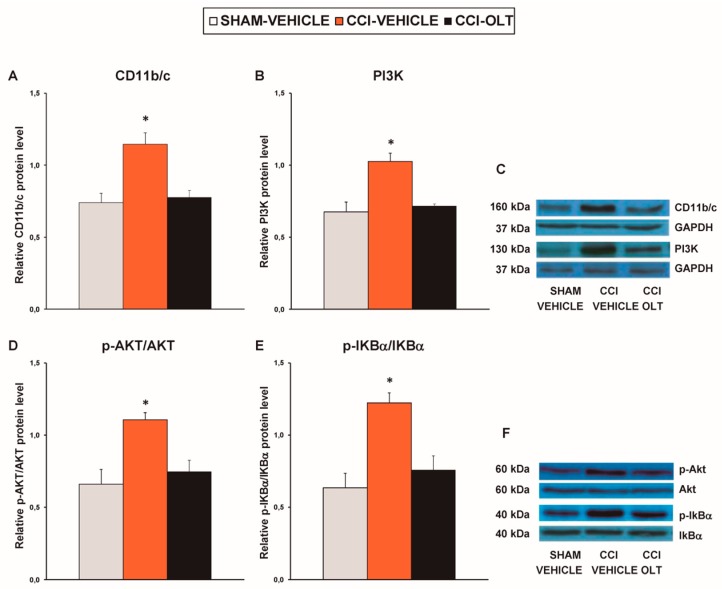
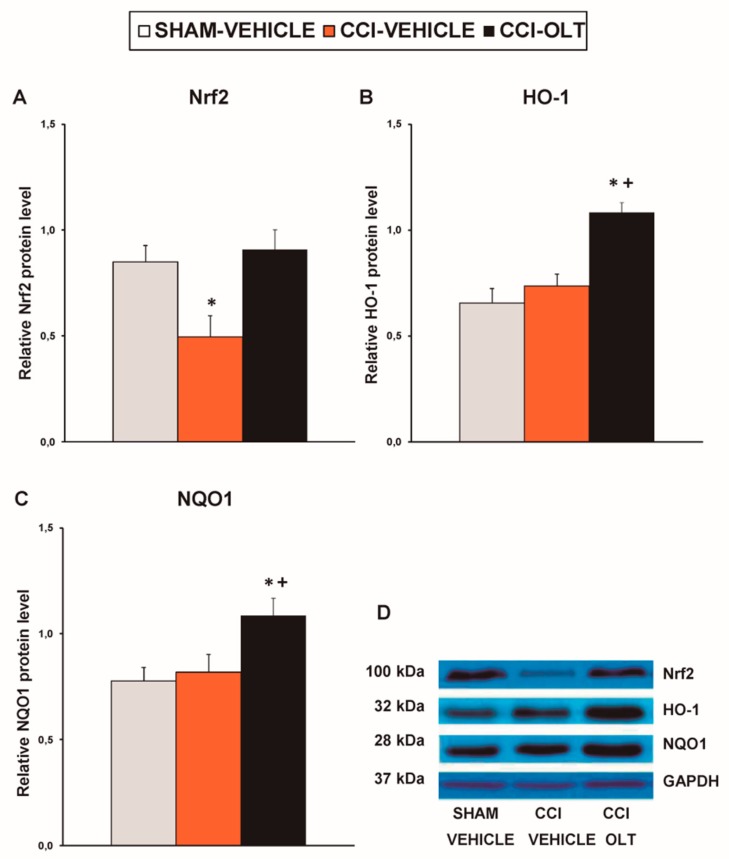
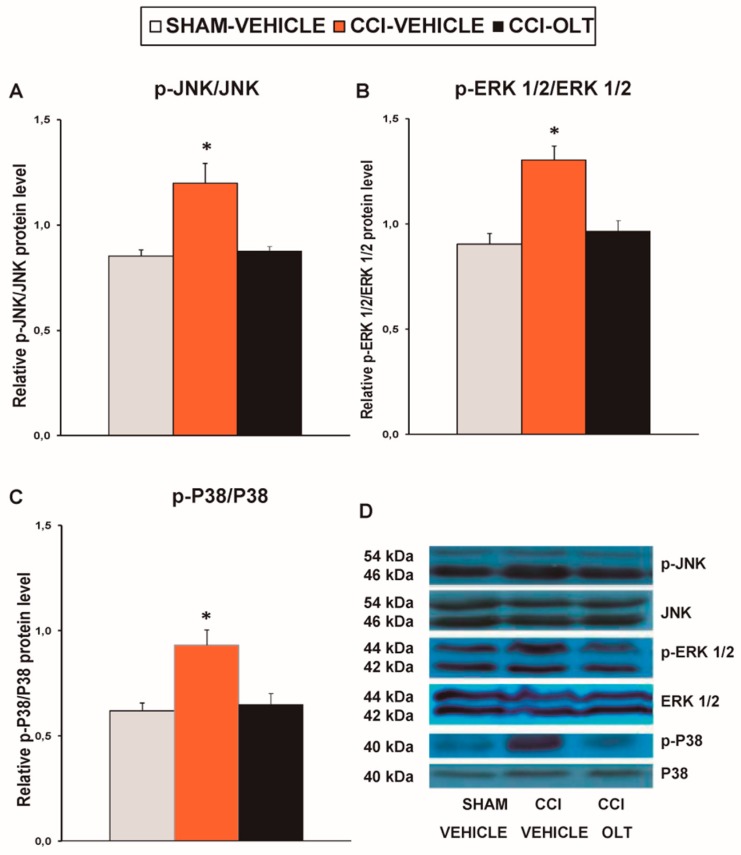
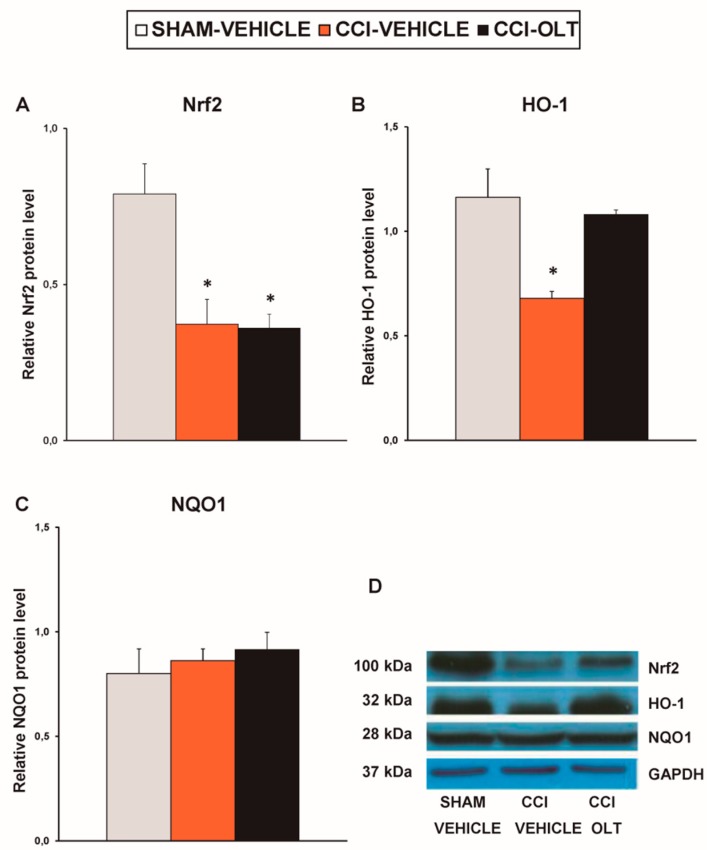
Nerve injury provokes microglial activation, contributing to the sensory and emotional disorders associated with neuropathic pain that do not completely resolve with treatment. In C57BL/6J mice with neuropathic pain induced by chronic constriction of the sciatic nerve (CCI), we evaluated the effects of oltipraz, an antioxidant and anticancer compound, on (1) allodynia and hyperalgesia, (2) microglial activation and pain signaling pathways, (3) oxidative stress, and (4) depressive-like behaviors. Twenty-eight days after surgery, we assessed the effects of oltipraz on the expression of CD11b/c (a microglial marker), phosphoinositide 3-kinase (PI3K)/ phosphorylated protein kinase B (p-Akt), nuclear factor-κB (NF-κB) transcription factor, and mitogen activated protein kinases (MAPK) in the spinal cord, hippocampus, and prefrontal cortex. Our results show that oltipraz alleviates neuropathic pain by inhibiting microglial activation and PI3K/p-Akt, phosphorylated inhibitor of κBα (p-IκBα), and MAPK overexpression, and by normalizing and/or enhancing the expression of antioxidant proteins, nuclear factor erythroid derived-2-related factor 2 (Nrf2), heme oxygenase 1 (HO-1), and NAD(P)H:quinone oxidoreductase-1 (NQO1) in the spinal cord. The inhibition of microglial activation and induction of the Nrf2/HO-1/NQO1 signaling pathway in the hippocampus and/or prefrontal cortex may explain the antidepressant effects of oltipraz during neuropathic pain. These data demonstrate the analgesic and antidepressant effects of oltipraz and reveal its protective and antioxidant properties during chronic pain.
神经损伤会引发小胶质细胞激活,导致与神经性疼痛相关的感觉和情绪障碍,而这些障碍在治疗后并未完全消除。在坐骨神经慢性缩窄(CCI)诱导的神经性疼痛的C57BL/6J小鼠中,我们评估了oltipraz(一种抗氧化和抗癌化合物)对(1)痛觉过敏和痛觉超敏,(2)小胶质细胞激活和疼痛信号通路,(3)氧化应激,以及(4)抑郁样行为的影响。手术后28天,我们评估了oltipraz对脊髓、海马体和前额叶皮质中CD11b/c(一种小胶质细胞标志物)、磷酸肌醇3激酶(PI3K)/磷酸化蛋白激酶B(p-Akt)、核因子κB(NF-κB)转录因子和丝裂原活化蛋白激酶(MAPK)表达的影响。我们的结果表明,oltipraz通过抑制小胶质细胞激活和PI3K/p-Akt、磷酸化κBα抑制因子(p-IκBα)以及MAPK的过度表达,并通过使脊髓中抗氧化蛋白核因子红系衍生-2相关因子2(Nrf2)、血红素加氧酶1(HO-1)和NAD(P)H:醌氧化还原酶-1(NQO1)的表达正常化和/或增强,从而减轻神经性疼痛。海马体和/或前额叶皮质中小胶质细胞激活的抑制以及Nrf2/HO-1/NQO1信号通路的诱导可能解释了oltipraz在神经性疼痛期间的抗抑郁作用。这些数据证明了oltipraz的镇痛和抗抑郁作用,并揭示了其在慢性疼痛期间的保护和抗氧化特性。