Biological Sciences Department, Egerton University, Egerton, Kenya.
The Pennsylvania State University, 1031 Edgecomb Avenue, York, PA, 1740, USA.
Malar J. 2019 Jun 24;18(1):211. doi: 10.1186/s12936-019-2845-4.
Understanding the complex heterogeneity of risk factors that can contribute to an increased risk of malaria at the individual and household level will enable more effective use of control measures. The objective of this study was to understand individual and household factors that influence clinical malaria infection among individuals in the highlands of Western Kenya.
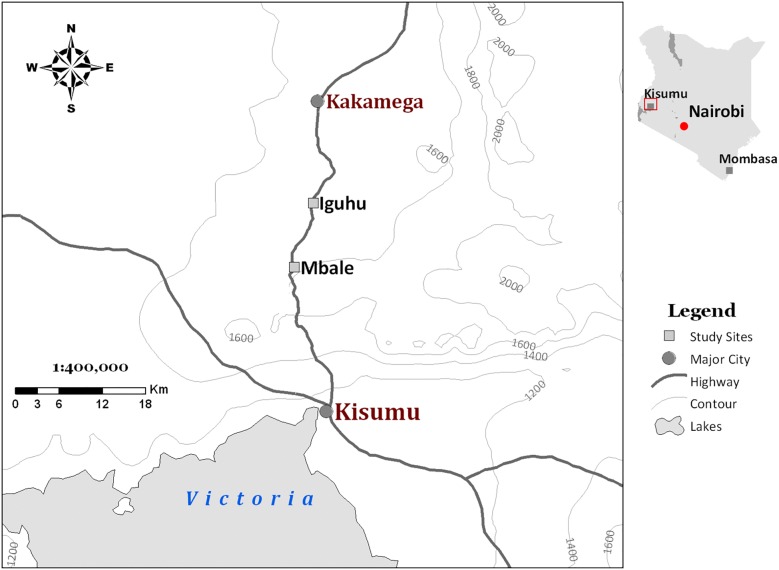
This was a matched case-control study undertaken in the Western Kenya highlands. Clinical malaria cases were recruited from health facilities and matched to asymptomatic individuals from the community who served as controls. Each participant was screened for malaria using microscopy. Follow-up surveys were conducted with individual households to collect socio-economic data. The houses were also checked using pyrethrum spray catches to collect mosquitoes.
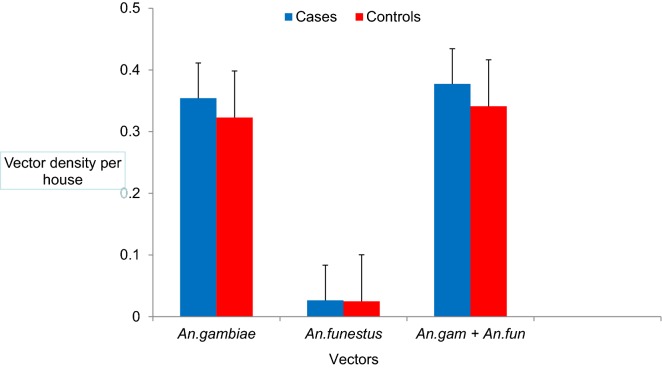
A total of 302 malaria cases were matched to 604 controls during the surveillance period. Mosquito densities were similar in the houses of both groups. A greater percentage of people in the control group (64.6%) used insecticide-treated bed nets (ITNs) compared to the families of malaria cases (48.3%). Use of ITNs was associated with lower level of clinical malaria episodes (odds ratio 0.51; 95% CI 0.39-0.68; P < 0.0001). Low income was the most important factor associated with higher malaria infections (adj. OR 4.70). Use of malaria prophylaxis was the most important factor associated with less malaria infections (adj OR 0.36). Mother's (not fathers) employment status (adj OR 0.48) and education level (adj OR 0.54) was important malaria risk factor. Houses with open eaves was an important malaria risk factor (adj OR 1.72).
The identification of risk factors for clinical malaria infection provides information on the local malaria epidemiology and has the potential to lead to a more effective and targeted use of malaria control measures. These risk factors could be used to assess why some individuals acquire clinical malaria whilst others do not and to inform how intervention could be scaled at the local level.
了解可能导致个体和家庭疟疾风险增加的复杂异质性因素,将使控制措施得到更有效的利用。本研究旨在了解个体和家庭因素,以了解肯尼亚西部高地个体临床疟疾感染的影响。
这是在肯尼亚西部高地进行的一项匹配病例对照研究。临床疟疾病例从医疗机构招募,并与作为对照的社区无症状个体相匹配。每位参与者均通过显微镜检查筛查疟疾。对个体家庭进行随访调查,收集社会经济数据。还使用除虫菊酯喷雾捕捉法检查房屋以收集蚊子。
在监测期间,共招募了 302 例疟疾病例和 604 例对照病例。两组房屋中的蚊虫密度相似。对照组(64.6%)使用经杀虫剂处理的蚊帐(ITN)的人数比例高于疟疾病例组(48.3%)。使用 ITN 与较低水平的临床疟疾发作相关(优势比 0.51;95%CI 0.39-0.68;P<0.0001)。低收入是与较高疟疾感染相关的最重要因素(调整后 OR 4.70)。使用疟疾预防药物是与较少疟疾感染相关的最重要因素(调整后 OR 0.36)。母亲(而非父亲)的就业状况(调整后 OR 0.48)和教育水平(调整后 OR 0.54)是重要的疟疾危险因素。屋檐敞开的房屋是一个重要的疟疾危险因素(调整后 OR 1.72)。
确定临床疟疾感染的危险因素可提供有关当地疟疾流行病学的信息,并有可能导致更有效和有针对性地使用疟疾控制措施。这些危险因素可用于评估为什么有些个体获得临床疟疾而其他个体则不会,并告知如何在当地层面扩大干预措施。