Department of Immunology, SA Pathology at Women's and Children's Hospital, North Adelaide, South Australia, Australia.
The Robinson Research Institute and School of Medicine, University of Adelaide, South Australia, Australia.
Sci Rep. 2019 Jun 25;9(1):9263. doi: 10.1038/s41598-019-45507-2.
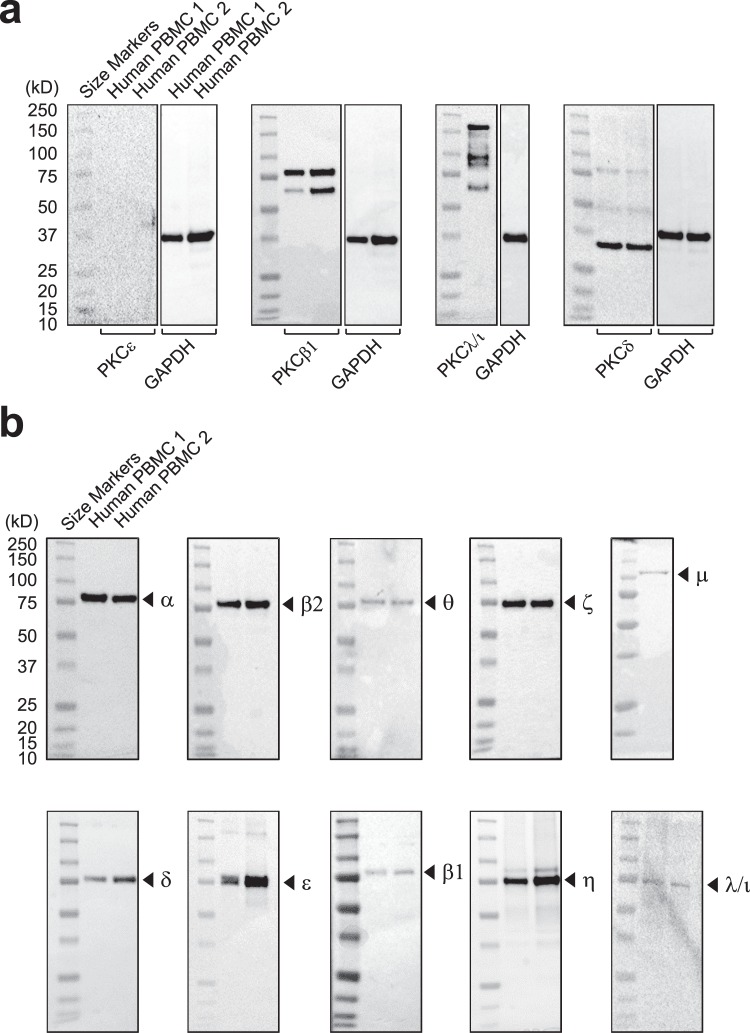
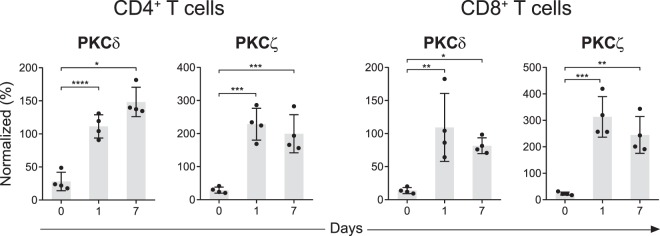
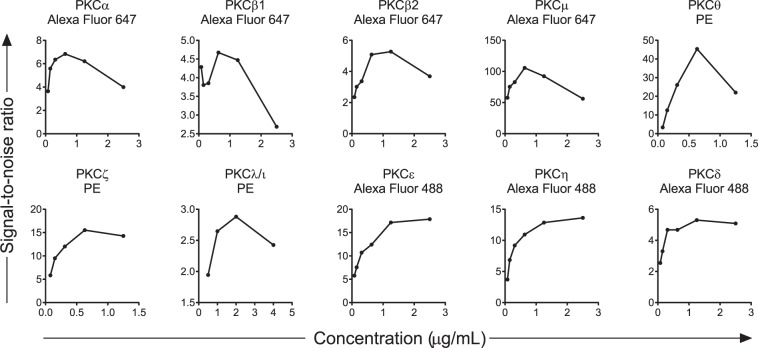
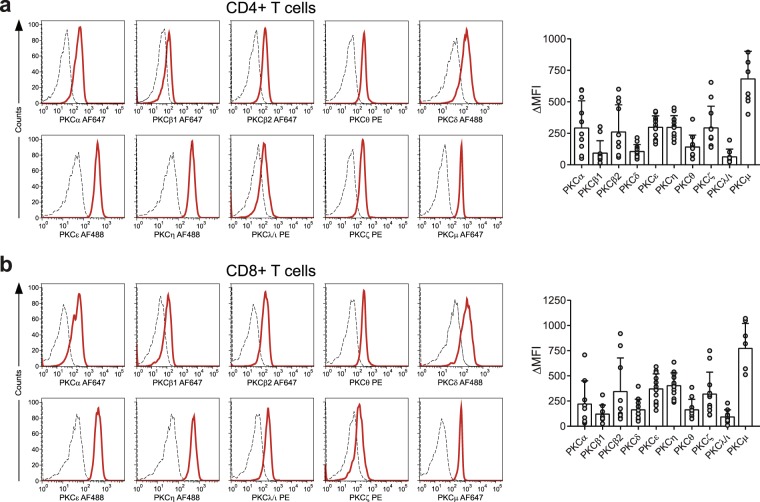
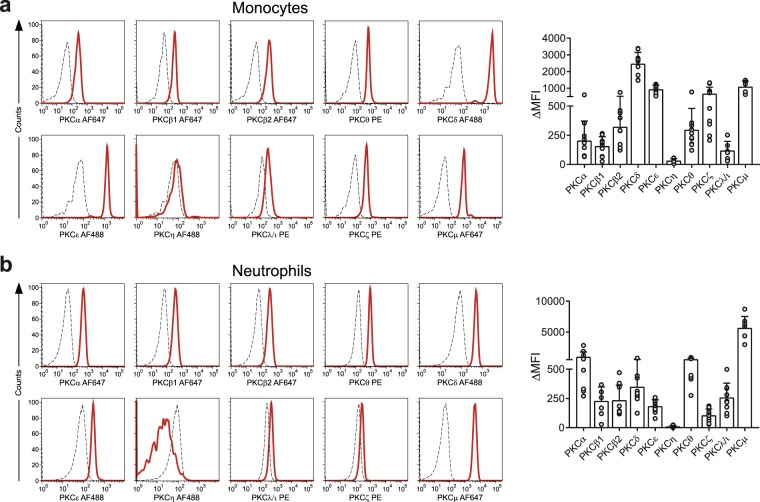
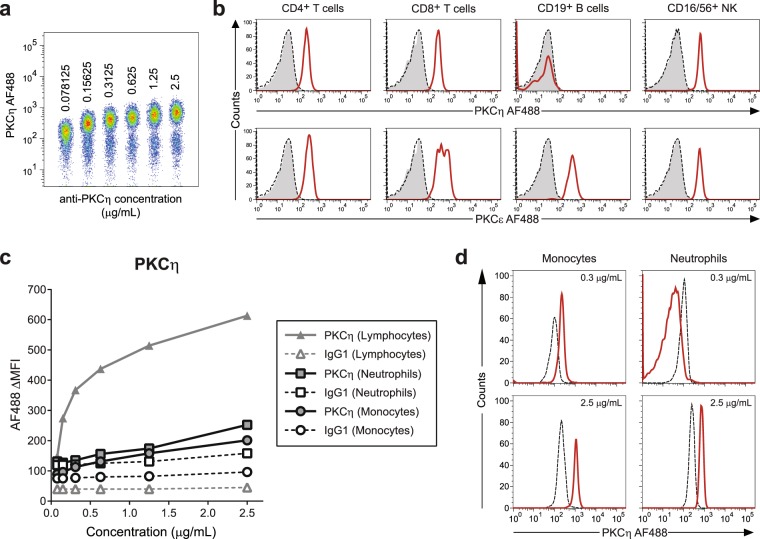
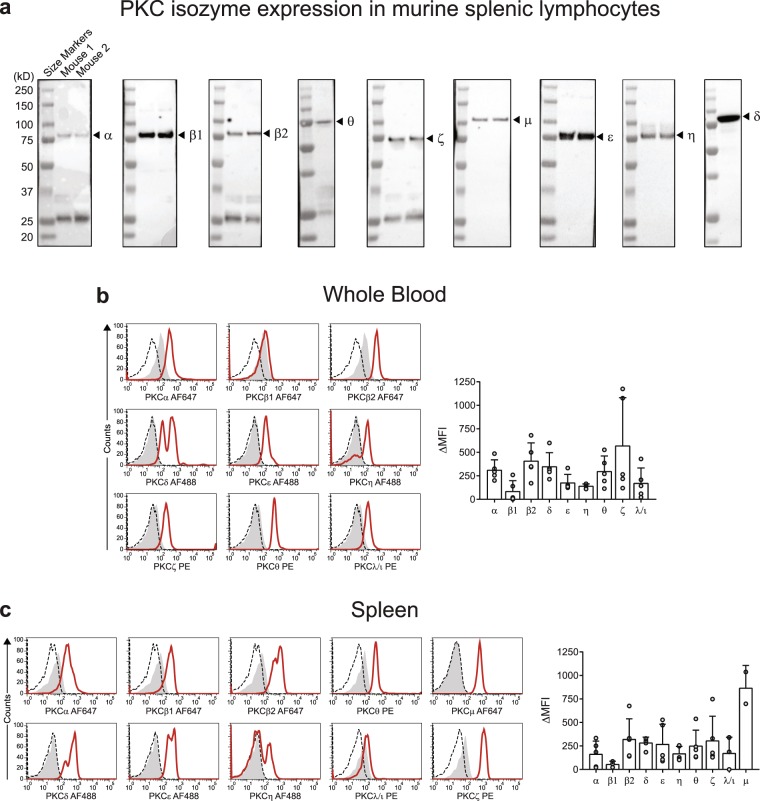
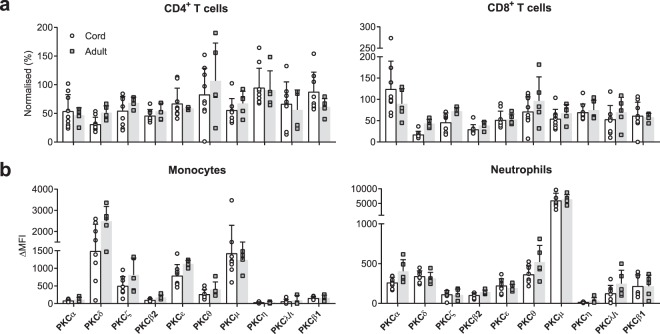
T cells from neonates (cord blood) with a tendency to develop allergic diseases express low PKCζ levels. More extensive investigations into PKC isozyme levels in T cell subsets and changes during neonatal T cell maturation are hampered by limitations of Western blot analyses. We have undertaken to validating the specificity of commercially available antibodies marketed for flow cytometry to measure PKCα, βI, βII, δ, ε, η, θ, ζ, ι/λ and μ. Western blot analyses of human peripheral blood mononuclear cell (PBMC) lysates demonstrated that some antibodies were unsuitable for flow cytometry assays. A panel of antibodies with the desirable specificity and reliability in the flow cytometry assay were identified using both PBMC and whole blood assays. The results showed that all PKC isozymes were expressed in CD4 and CD8 T cells, monocytes and neutrophils. Murine lymphocytes showed similar patterns of expression. A major finding was that 35.2% and 38.5% of cord blood samples have low PKCζ (≤the 5 percentile of adult levels) in the CD4 and CD8 subsets, respectively, consistent with the incidence of allergy development in the population. Furthermore, these low PKCζ levels 'normalised' within 24 h after initiation of maturation of these cells in culture, providing a 'window of opportunity' for altering PKCζ levels.
新生儿(脐血)中易于发生过敏疾病的 T 细胞表达低水平的 PKCζ。由于 Western blot 分析的局限性,更广泛地研究 T 细胞亚群中的 PKC 同工酶水平及其在新生儿 T 细胞成熟过程中的变化受到阻碍。我们已经着手验证市售用于流式细胞术测量 PKCα、βI、βII、δ、ε、η、θ、ζ、ι/λ 和 μ 的商业抗体的特异性。人外周血单核细胞(PBMC)裂解物的 Western blot 分析表明,一些抗体不适合流式细胞术检测。通过 PBMC 和全血检测,确定了一组具有所需特异性和可靠性的抗体用于流式细胞术检测。结果表明,所有 PKC 同工酶均在 CD4 和 CD8 T 细胞、单核细胞和中性粒细胞中表达。鼠淋巴细胞表现出相似的表达模式。一个主要发现是,35.2%和 38.5%的脐带血样本在 CD4 和 CD8 亚群中的 PKCζ 水平较低(≤成人水平的第 5 个百分位数),与人群中过敏发展的发生率一致。此外,这些低 PKCζ 水平在这些细胞在培养中开始成熟后的 24 小时内“正常化”,为改变 PKCζ 水平提供了“机会之窗”。