Harb Hani, Irvine James, Amarasekera Manori, Hii Charles S, Kesper Dörthe A, Ma YueFang, D'Vaz Nina, Renz Harald, Potaczek Daniel P, Prescott Susan L, Ferrante Antonio
Institute of Laboratory Medicine and Pathobiochemistry, Molecular Diagnostics, Philipps University Marburg, Marburg, Germany.
Department of Immunopathology, SA Pathology, Women and Children's Hospital Campus, School of Medicine; Robinson Research Institute and School of Biological Science, University of Adelaide, Adelaide, South Australia, Australia.
Biosci Rep. 2017 Mar 27;37(2). doi: 10.1042/BSR20160485. Print 2017 Apr 28.
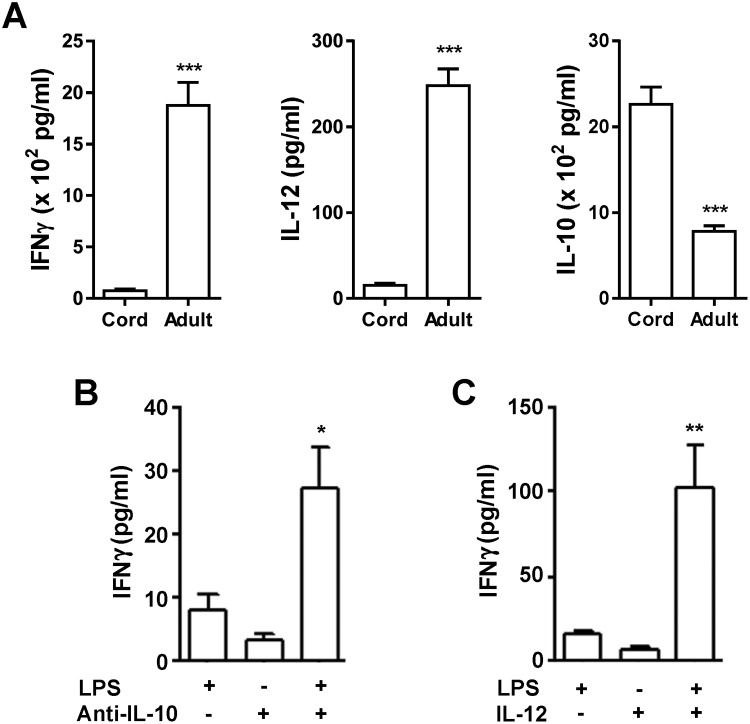
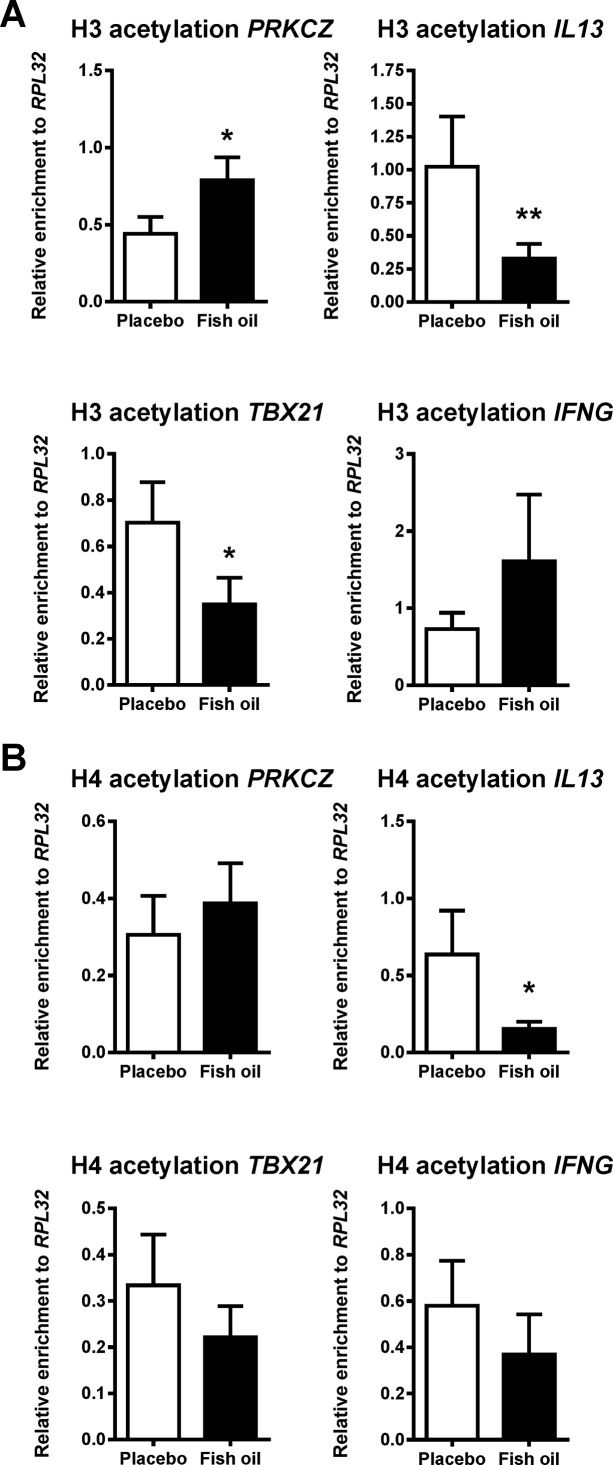
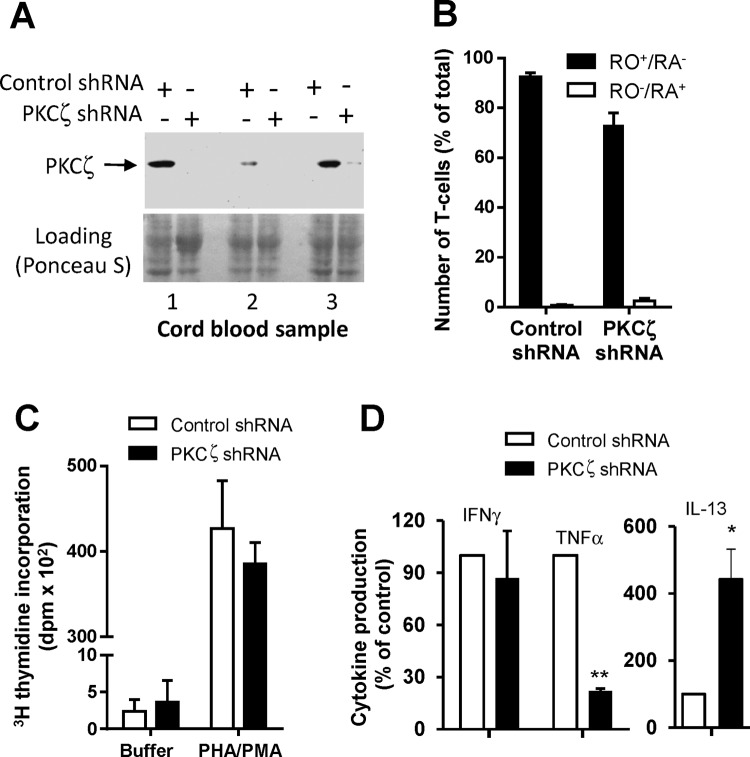
While immunodeficiency of immaturity of the neonate has been considered important as the basis for unusual susceptibility to infection, it has also been recognized that the ability to progress from an immature Th2 cytokine predominance to a Th1 profile has relevance in determining whether children will develop allergy, providing an opportunity for epigenetic regulation through environmental pressures. However, this notion remains relatively unexplored. Here, we present evidence that there are two major control points to explain the immunodeficiency in cord blood (CB) T-cells, a deficiency in interleukin (IL)-12 (IL-12) producing and IL-10 overproducing accessory cells, leading to a decreased interferon γ (IFNγ) synthesis and the other, an intrinsic defect in T-cell protein kinase C (PKC) ζ (PKCζ) expression. An important finding was that human CB T-cells rendered deficient in PKCζ, by shRNA knockdown, develop into low tumour necrosis factor α (TNFα) and IFNγ but increased IL-13 producing cells. Interestingly, we found that the increase in PKCζ levels in CB T-cells caused by prenatal supplementation with fish oil correlated with modifications of histone acetylation at the PKCζ gene () promoter. The data demonstrate that PKCζ expression regulates the maturation of neonatal T-cells into specific functional phenotypes and that environmental influences may work via PKCζ to regulate these phenotypes and disease susceptibility.
虽然新生儿免疫不成熟导致的免疫缺陷被认为是其易感染的重要基础,但人们也认识到,从以不成熟的Th2细胞因子为主导转变为Th1细胞因子模式的能力,对于决定儿童是否会发生过敏具有重要意义,这为通过环境压力进行表观遗传调控提供了机会。然而,这一观点仍有待深入研究。在此,我们提供证据表明,有两个主要控制点可解释脐血(CB)T细胞中的免疫缺陷,一是产生白细胞介素(IL)-12(IL-12)和过度产生IL-10的辅助细胞存在缺陷,导致干扰素γ(IFNγ)合成减少;另一个是T细胞蛋白激酶C(PKC)ζ(PKCζ)表达存在内在缺陷。一个重要发现是,通过短发夹RNA(shRNA)敲低使PKCζ缺乏的人CB T细胞,会发育为产生低水平肿瘤坏死因子α(TNFα)和IFNγ但产生IL-13增加的细胞。有趣的是,我们发现产前补充鱼油导致CB T细胞中PKCζ水平升高,这与PKCζ基因()启动子处组蛋白乙酰化的修饰有关。这些数据表明,PKCζ表达调节新生儿T细胞向特定功能表型的成熟,并且环境影响可能通过PKCζ来调节这些表型和疾病易感性。