1 Institute of Cardiovascular Disease Research Xuzhou Medical University Xuzhou Jiangsu China.
2 Department of Cardiology The Affiliated Hospital of Xuzhou Medical University Xuzhou Jiangsu China.
J Am Heart Assoc. 2019 Jul 2;8(13):e012272. doi: 10.1161/JAHA.119.012272. Epub 2019 Jun 26.
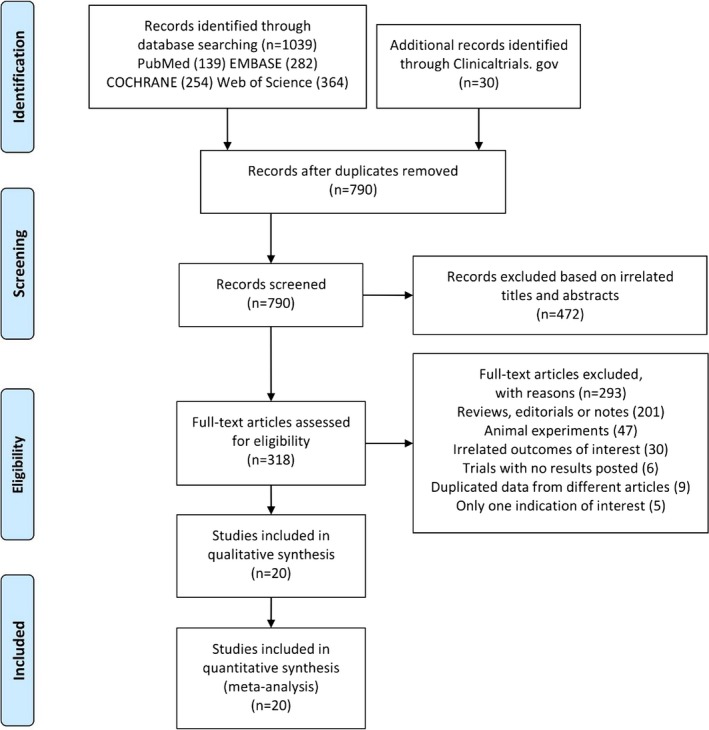
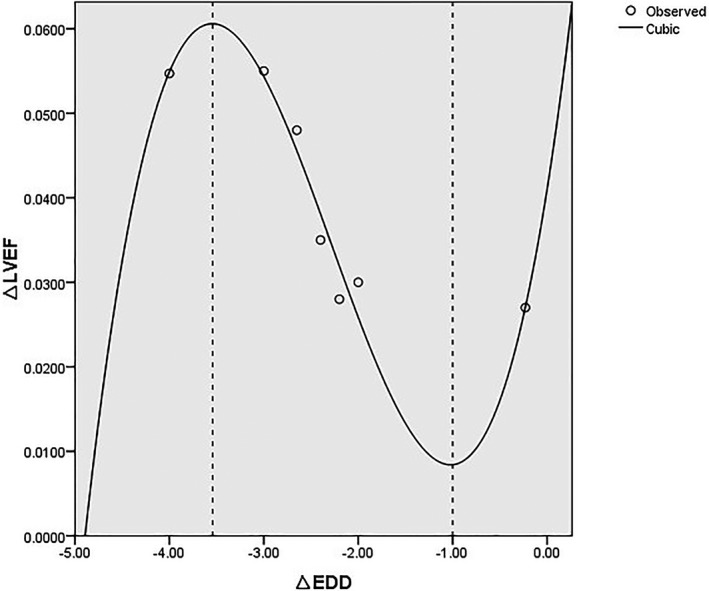
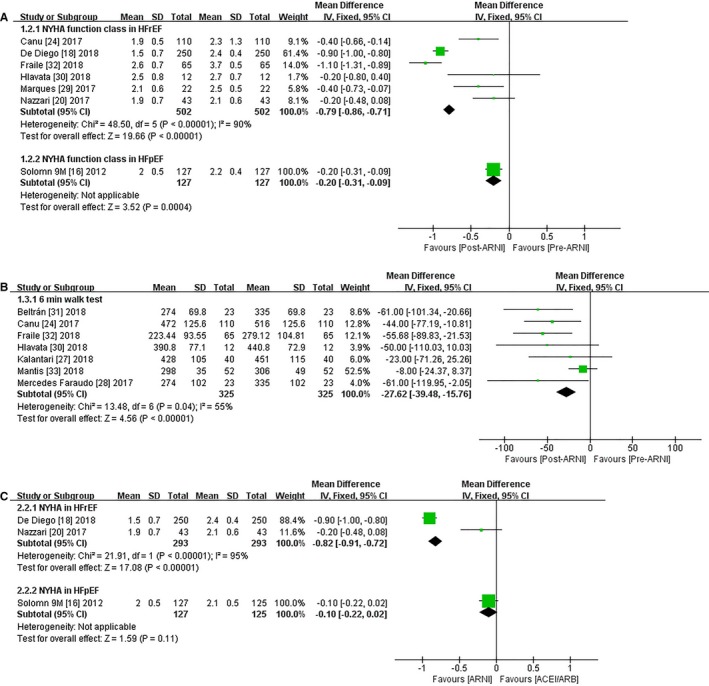
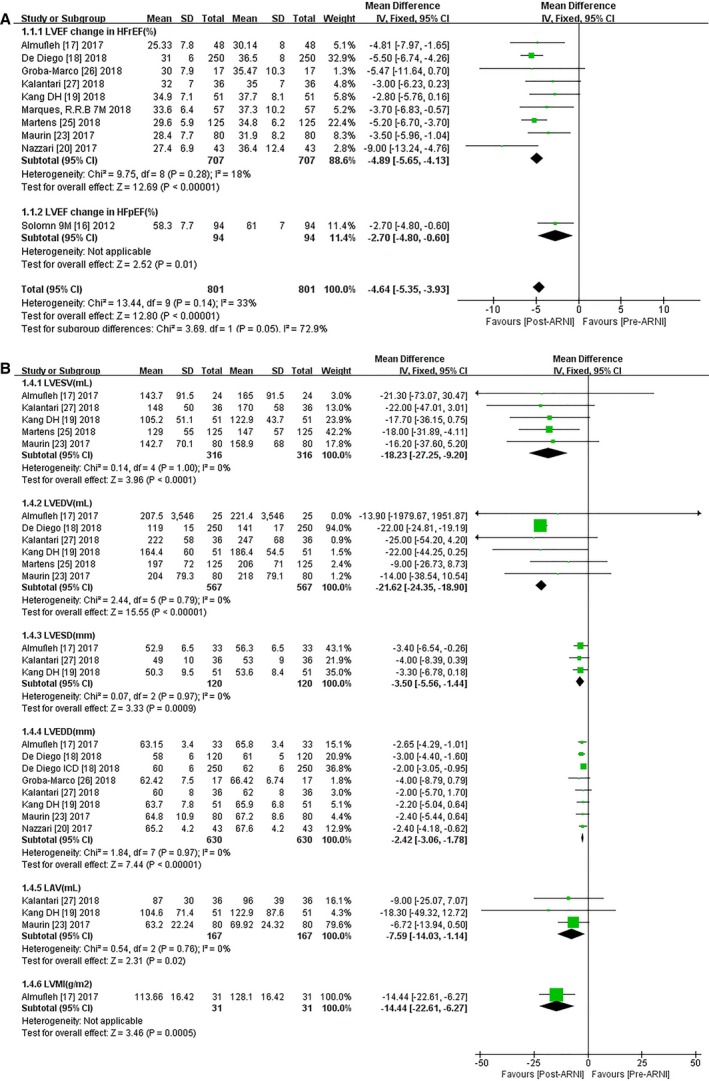
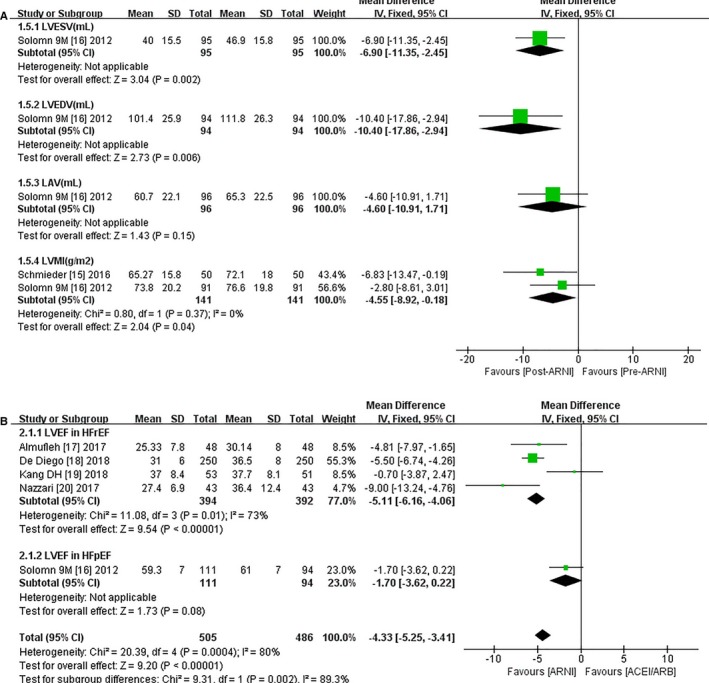
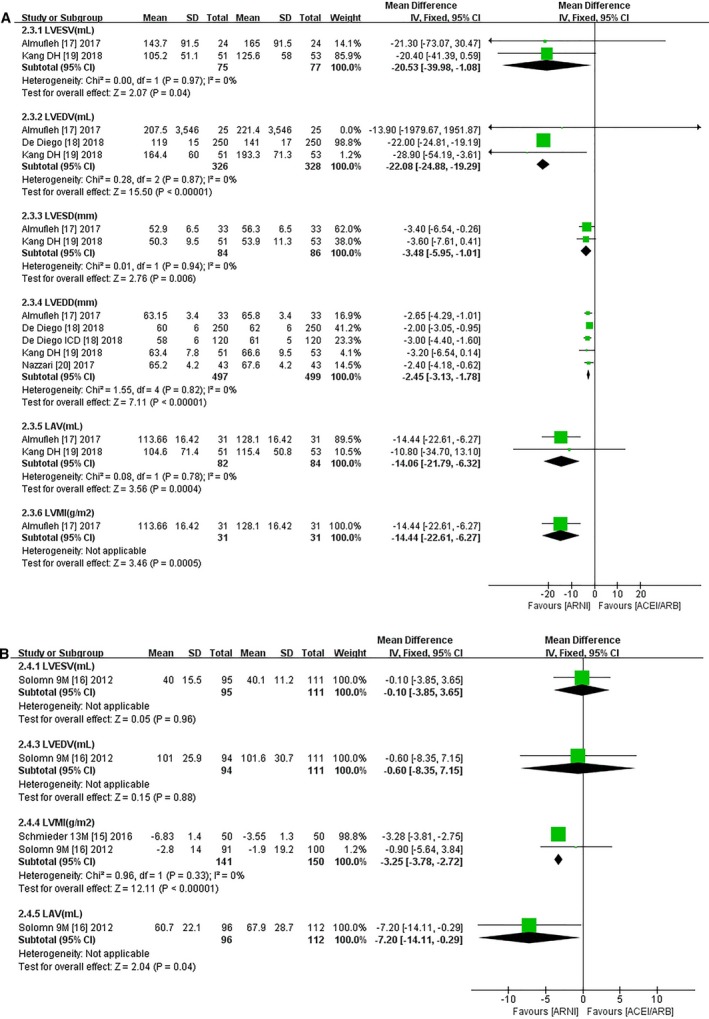
Background The angiotensin-receptor neprilysin inhibitor (ARNI) sacubitril/valsartan was shown to be superior to the angiotensin-converting enzyme inhibitor enalapril in terms of reducing cardiovascular mortality in the PARADIGM-HF (Prospective Comparison of ARNI with angiotensin-converting enzyme inhibitor to Determine Impact on Global Mortality and Morbidity in Heart Failure) study. However, the impact of ARNI on cardiac reverse remodeling (CRR) has not been established. Methods and Results We conducted a meta-analysis to compare the effects of ARNI versus angiotensin-converting enzyme inhibitors or angiotensin receptor blockers on CRR indices. We searched databases for studies published between 2010 and 2019 that reported CRR indices following ARNI administration. Effect size was expressed as mean difference (MD) with 95% CIs. Twenty studies enrolling 10 175 patients were included. ARNI improved functional capacity in patients with heart failure (HF) and a reduced ejection fraction (EF), including increasing New York Heart Association functional class (MD -0.79, 95% CI -0.86, -0.71) and 6-minute walking distance (MD 27.62 m, 95% CI 15.76, 39.48). ARNI outperformed angiotensin-converting enzyme inhibitors/angiotensin receptor blockers in terms of CRR indices, with striking changes in left ventricular EF, diameter, and volume. However, there were no significant improvements in indices except left ventricular mass index (MD -3.25 g/m, 95% CI -3.78, -2.72) and left atrial volume (MD -7.20 mL, 95% CI -14.11, -0.29) in HF patients with preserved EF treated with ARNI. Improvements in CRR indices were observed at 3 months and became more significant with longer follow-up to 12 months. The regression equation for the relationship between left ventricular EF and end-diastolic dimension was y=0.041+0.071x+0.045x+0.006x. Conclusions ARNI distinctly improved left ventricular size and hypertrophy compared with angiotensin-converting enzyme inhibitors/angiotensin receptor blockers in HF with reduced EF patients, even after short-term follow-up. Patients appeared to benefit more in terms of CRR treated with ARNI as early as possible and for at least 3 months. Further large sample trials are required to determine the effects of ARNI on CRR in HF with preserved EF patients.
血管紧张素受体脑啡肽酶抑制剂(ARNI)沙库巴曲缬沙坦在降低 PARADIGM-HF(血管紧张素受体脑啡肽酶抑制剂与血管紧张素转换酶抑制剂比较以确定心力衰竭全球死亡率和发病率影响的前瞻性研究)研究中心血管死亡率方面优于血管紧张素转换酶抑制剂依那普利。然而,ARNI 对心脏逆重构(CRR)的影响尚未确定。
我们进行了一项荟萃分析,比较了 ARNI 与血管紧张素转换酶抑制剂或血管紧张素受体阻滞剂对 CRR 指标的影响。我们在数据库中搜索了 2010 年至 2019 年期间发表的报告 ARNI 给药后 CRR 指标的研究。效应大小表示为均值差(MD),置信区间(CI)为 95%。共纳入 20 项纳入 10175 例患者的研究。ARNI 改善了射血分数降低的心力衰竭(HF)患者的功能能力,包括增加纽约心功能协会(NYHA)功能分级(MD-0.79,95%CI-0.86,-0.71)和 6 分钟步行距离(MD 27.62m,95%CI 15.76,39.48)。与血管紧张素转换酶抑制剂/血管紧张素受体阻滞剂相比,ARNI 在 CRR 指标方面表现更为出色,左心室射血分数、直径和体积均有明显变化。然而,除了射血分数保留的 HF 患者左心室质量指数(MD-3.25g/m,95%CI-3.78,-2.72)和左心房容积(MD-7.20mL,95%CI-14.11,-0.29)外,其他指标均无明显改善。在 3 个月时观察到 CRR 指标的改善,并且随着随访时间延长至 12 个月,改善更为显著。左心室射血分数与舒张末期内径之间关系的回归方程为 y=0.041+0.071x+0.045x+0.006x。
与血管紧张素转换酶抑制剂/血管紧张素受体阻滞剂相比,ARNI 可明显改善射血分数降低的 HF 患者的左心室大小和肥大,甚至在短期随访后也是如此。ARNI 治疗的患者在 CRR 方面似乎更早获益,至少在 3 个月时获益更多。需要进一步的大型样本试验来确定 ARNI 对射血分数保留的 HF 患者的 CRR 影响。